 Save
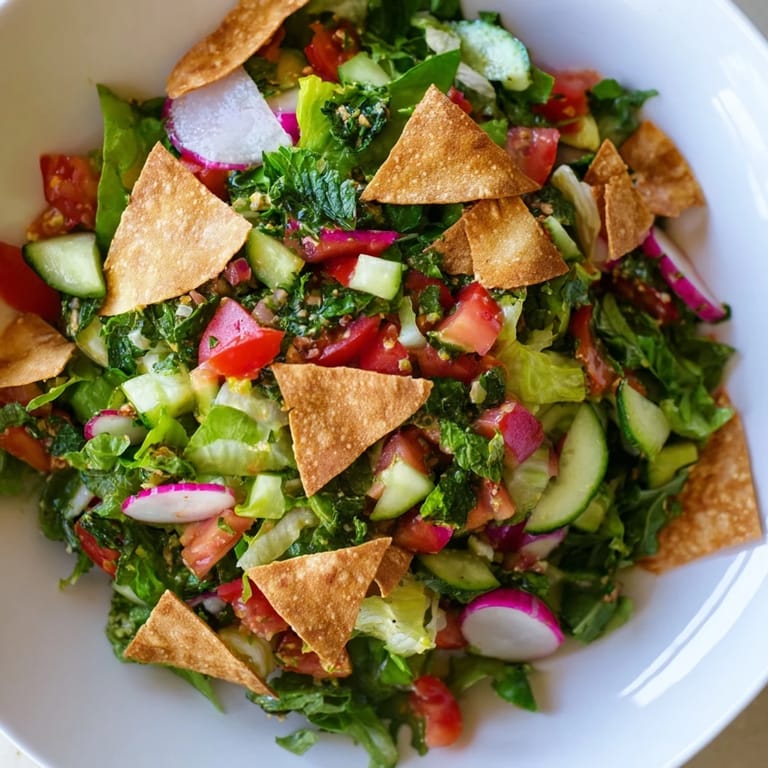
Save My neighbor surprised me one afternoon with a container of fattoush she'd made that morning, and I was instantly transported to Beirut by the brightness of it all—the sharp lemon cutting through crispy pita, fresh herbs practically glowing green against the tomatoes. The salad was so alive and unpretentious that I spent the next week figuring out exactly how she'd done it, building the layers in my own kitchen until I got that perfect balance of tangy dressing and crunch. Now I make it whenever I need to feel like I'm eating outdoors, even in winter.
I once brought this to a potluck where everyone else had brought warm casseroles, and it somehow became the thing people kept coming back to, piling their plates high with greens and asking for the recipe. My friend's five-year-old actually ate the radishes without complaining, which felt like winning the lottery. That's when I realized fattoush isn't just a salad—it's a conversation starter.
Ingredients
- Mixed greens: Use whatever's fresh—romaine holds up best, but arugula adds peppery bite and purslane brings a subtle brightness if you can find it.
- Tomatoes: Choose ripe ones that smell sweet; watery tomatoes will make your salad soggy no matter what.
- Cucumber: Persian cucumbers are smaller and seedier, which honestly works better than those massive regular ones.
- Radishes: Slice them thin enough that they're crisp but not so thin they disappear; they should have presence.
- Red onion: It's sharp on its own, but the acid in the dressing mellows it out beautifully.
- Fresh parsley and mint: These aren't garnish—they're the backbone of the flavor, so don't skimp and don't use dried.
- Pita bread: Day-old pita is actually better because it's slightly drier and crisps up faster in the oven.
- Extra-virgin olive oil: This is where the salad gets its richness, so use something you actually like tasting on its own.
- Sumac: This is the secret ingredient that makes people ask what you did differently; it's tart and lemony without being acidic.
Tired of Takeout? 🥡
Get 10 meals you can make faster than delivery arrives. Seriously.
One email. No spam. Unsubscribe anytime.
Instructions
- Make the pita chips:
- Heat your oven to 375°F and cut the pita into roughly bite-sized pieces—they don't need to be perfect. Toss them in olive oil and salt, spread them out so they're not crowded, and bake for 8 to 10 minutes until they're golden and smell incredible; they'll crisp up even more as they cool.
- Prep the vegetables:
- Chop everything roughly the same size so the salad has even texture; you want bites that feel balanced, not some big chunks and some tiny bits. Do this while the pita chips are cooling.
- Build the dressing:
- Whisk the olive oil, lemon juice, vinegar, sumac, and minced garlic together until it looks a little cloudy and emulsified. The sumac will bloom when it hits the acid, so taste it and adjust the amounts to your preference before you add salt and pepper.
- Assemble:
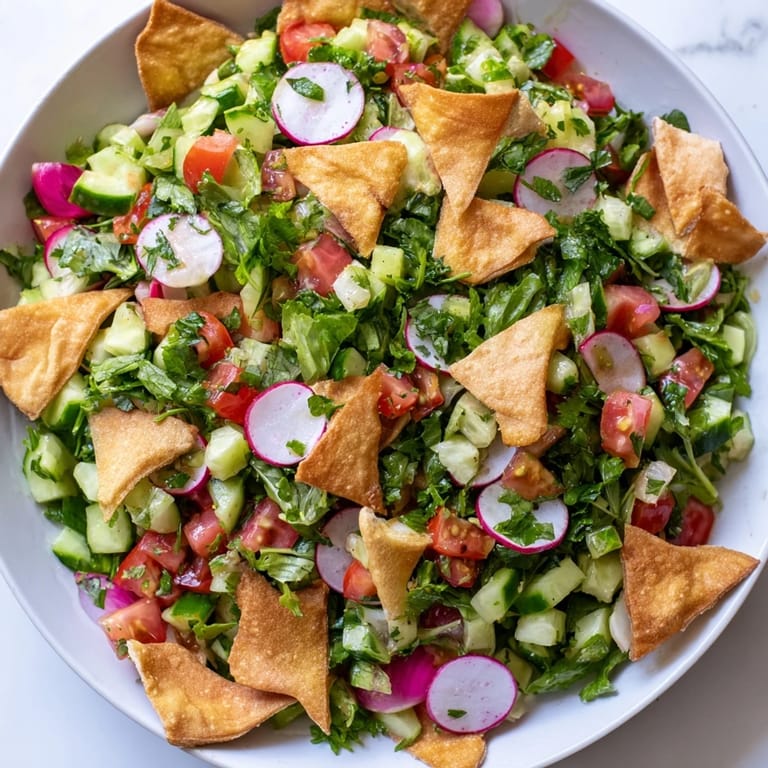
- Toss the greens, tomatoes, cucumber, radishes, onion, and herbs together in a large bowl, then add the pita chips at the very last second—this is crucial. Pour the dressing over everything and gently toss until every leaf is coated, then taste and adjust.
 Save
Save There's a moment when all the components come together—the cool crispness of the greens against the warmth of those pita chips, the brightness of the herbs, the tangy dressing that ties it all together—where a simple salad becomes something you actually want to eat slowly and savor. That's the moment this dish stopped being just a recipe for me and started being a small way to bring something alive to the table.
The Sumac Difference
Sumac is what separates fattoush from every other Mediterranean salad you've ever made. It's a deep burgundy spice made from dried sumac berries, and it tastes like tart lemonade had a baby with white wine vinegar—bright and complex without being sharp. The first time someone explained that sumac was the thing I'd been tasting all along, I felt like I'd learned a secret language. Now I use it in dressings for roasted vegetables, on grilled fish, even sprinkled on hummus, but nowhere does it shine quite like it does here, cutting through the richness of the olive oil and making every vegetable taste more like itself.
Pita Chip Secrets
The difference between crispy pita chips and chewy bread squares comes down to one thing: the oven temperature and your attention span. You have to watch them, because once they start browning, they can go from golden to burned in about 30 seconds. I learned this the hard way, filling my kitchen with smoke and wondering why everyone else's pita chips tasted so good. Now I set a timer for eight minutes, check at seven, and pull them out the second they look like they've turned from pale to light golden. They continue crisping as they cool, so take them out a hair before you think they're done.
Variations and Seasons
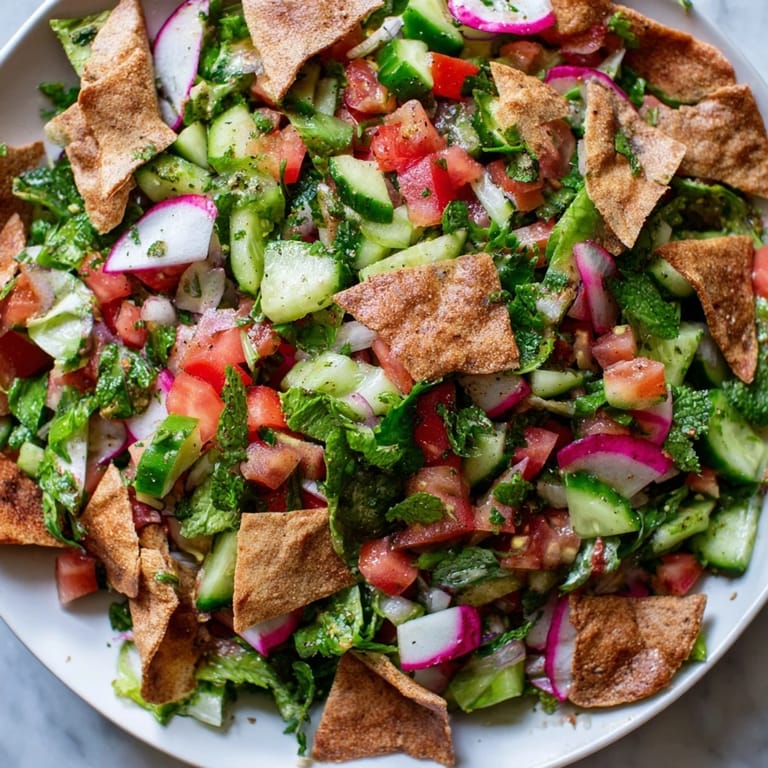
Fattoush is the kind of salad that grows and changes with what's in season and what's in your garden or the farmer's market that day. In summer, I add diced bell peppers and sometimes grilled zucchini if I'm feeling ambitious. In winter, when tomatoes are sad, I've thrown in pomegranate seeds for tartness and brightness, or diced roasted beets for earthiness. The core of fresh herbs and tangy dressing holds everything together, so you can play with the rest without losing the soul of the dish.
- Try adding pomegranate seeds for winter brightness or grilled vegetables for something more substantial.
- Crumble some feta or labneh on top if you want richness, though the salad is perfect vegan as written.
- Make extra dressing because once you taste how good it is, you'll want more on everything.
 Save
Save This salad has a way of turning an ordinary meal into something you'll remember, and once you make it a few times, you won't need a recipe anymore—it'll just live in your hands. That's when you know a dish has become truly yours.
Recipe FAQs
- → What makes the dressing tangy in this salad?
The tangy flavor comes from a mix of lemon juice, red wine vinegar, and ground sumac, creating a bright and zesty dressing.
- → How are the pita chips prepared for the salad?
Pita bread is cut into bite-sized pieces, tossed with olive oil and sea salt, then baked until golden and crisp to add a crunchy texture.
- → Can this salad be modified for gluten-free diets?
Yes, substitute pita chips with gluten-free alternatives or omit them to keep the salad gluten-free.
- → What herbs enhance the fresh flavors in the salad?
Fresh parsley and mint leaves are used to boost the bright, herbaceous notes in the mix of greens and vegetables.
- → Is this salad suitable for vegan and dairy-free preferences?
Absolutely, all ingredients are plant-based and free from dairy, making it ideal for vegan and dairy-free diets.
- → How should the salad be served for best texture?
Add the crispy pita chips just before serving and toss gently with the dressing to maintain crunchiness.