 Save
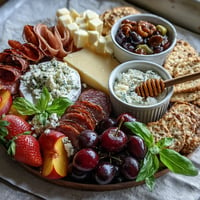
Save Moving day chaos had just settled when my friend texted asking what to bring to the housewarming dinner. Instead of suggesting wine, I found myself promising a charcuterie board—something I'd admired at galleries and markets but never attempted myself. Standing in my new kitchen, surrounded by unpacked boxes, I realized this board would be my first real meal shared in the space. There's something about arranging beautiful food that transforms a house into a home before anything else does.
I still remember my neighbor's daughter making a beeline for the blue cheese and grapes combination, something I would never have paired together but suddenly made perfect sense. That moment taught me that a good board isn't about matching flavors—it's about giving people permission to discover their own combinations. Watching eight people reach for different things, creating their own flavor journeys, made that kitchen feel less empty than it had been all week.
Ingredients
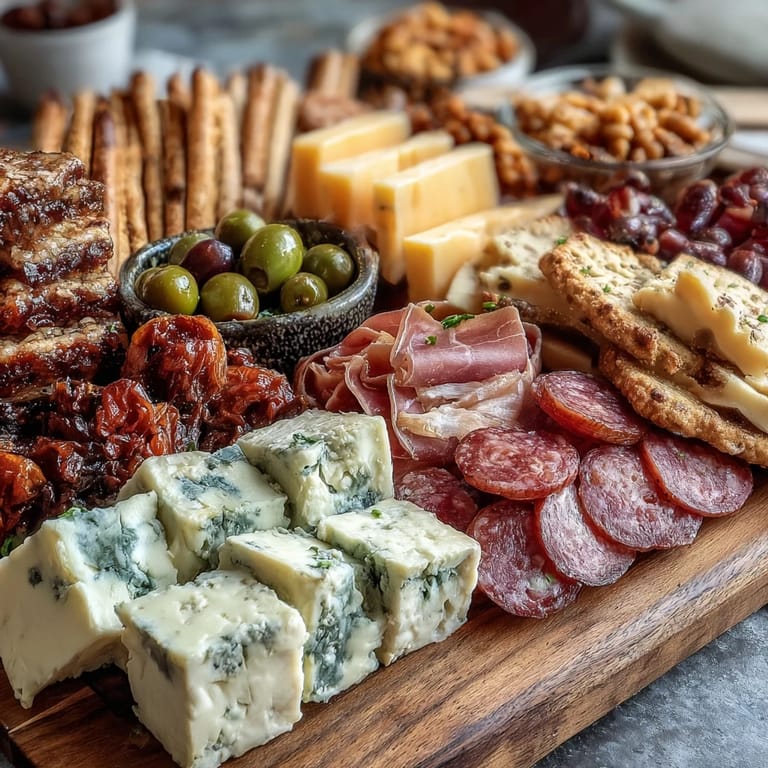
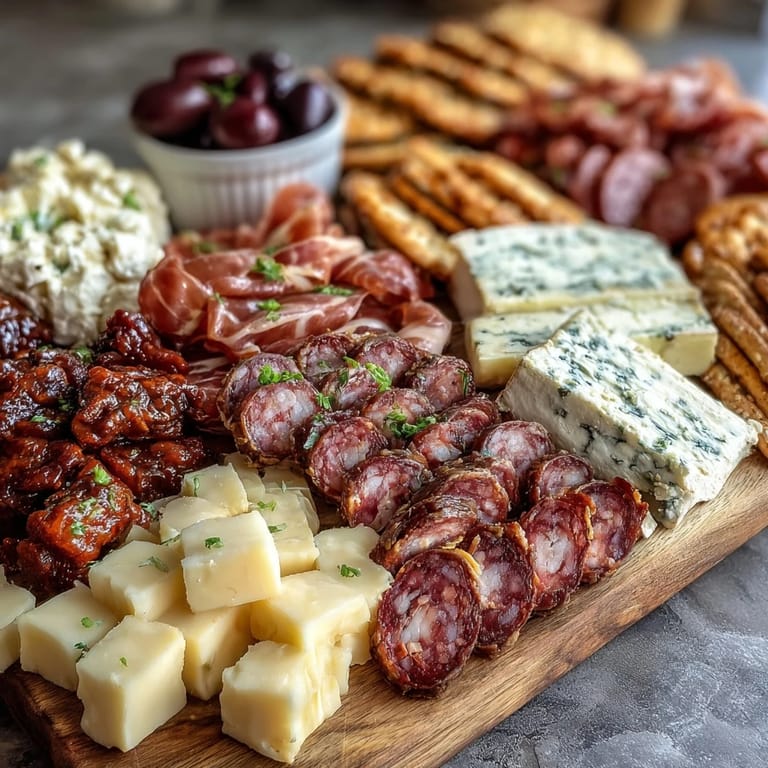
- Prosciutto, salami, and smoked ham (360 g total): These three provide different salt levels and textures, creating contrast that keeps people coming back for more bites.
- Chorizo slices (100 g): A spicy anchor that makes the board feel bolder and more interesting than just mild cured meats alone.
- Brie, aged cheddar, gouda, and blue cheese (520 g total): This mix gives creamy, sharp, nutty, and pungent options so every preference gets represented without argument.
- Hummus, tzatziki, and roasted red pepper dip (300 g total): Dips are the secret weapon—they stretch the board further and give people something to anchor crackers and veggies to.
- Assorted crackers, baguette, and breadsticks (350 g total): Different textures matter; some crackers shatter while others hold up to wet dips, so variety prevents frustration.
- Red and green grapes, cherry tomatoes, cucumber, bell pepper, and carrots (3+ cups total): Fresh produce adds brightness and hydration, cutting through the richness of meats and cheeses so people don't feel weighed down.
- Mixed nuts, olives, dried apricots, and figs (1 cup total): These fill gaps both visually and nutritionally, and dried fruit next to salty cheese creates an addictive balance.
- Fresh rosemary and thyme: Sprinkled on top, these don't just look beautiful—they release subtle flavor when people brush past the board, creating an invisible scent memory.
Tired of Takeout? 🥡
Get 10 meals you can make faster than delivery arrives. Seriously.
One email. No spam. Unsubscribe anytime.
Instructions
- Start with the foundation:
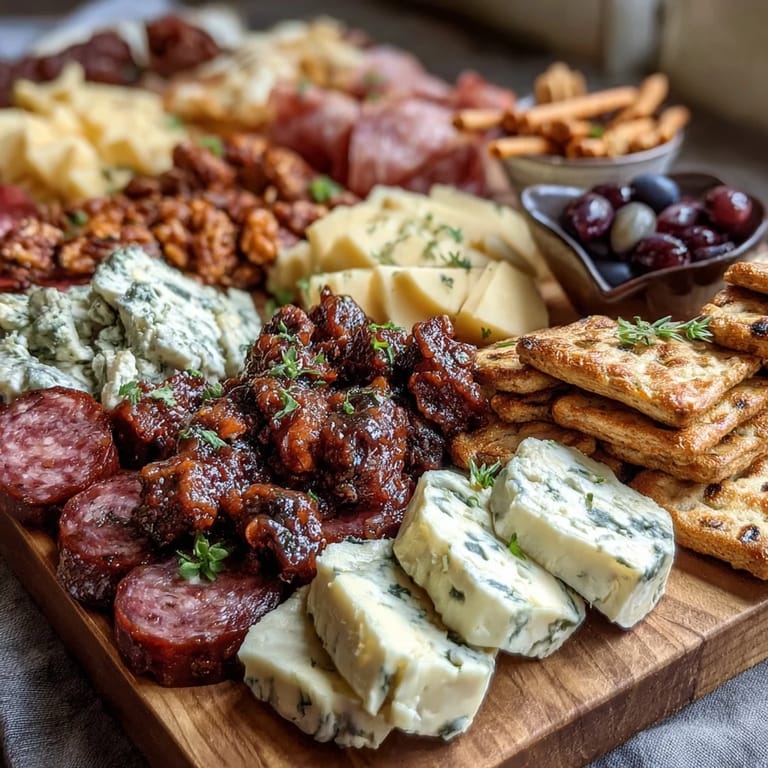
- Arrange your cured meats in loose, natural folds across the board—never lay them flat and organized like a butcher counter. The rumpled, casual look invites people to dive in without feeling like they're disturbing something precious.
- Build around the meats:
- Place your cheeses in small clusters around the board, leaving breathing room between them. I learned the hard way that crowding cheeses together makes them sweat and look less appetizing, so think islands, not a solid shore.
- Nestle the dips strategstrong:
- Pour each dip into its own small bowl and tuck them into gaps like little treasure chests. Position them slightly higher than the surrounding items so people can see them from across the room.
- Fan out your crackers:
- Don't pile crackers all in one spot—create three or four small fan arrangements in different sections of the board. This prevents the frustrating moment where one person depletes an entire stack before others realize they're there.
- Fill the gaps with fresh produce:
- This is where the board transforms from nice to stunning, so don't skimp on the visual. Scatter grapes, tomatoes, and cucumber slices in the empty pockets, letting colors speak for themselves.
- Scatter your finishing touches:
- Distribute nuts, olives, and dried fruit in small clusters rather than spreading them thin. These feel like little rewards when guests discover them tucked between other items.
- Garnish with fresh herbs:
- Just before serving, tuck sprigs of rosemary and thyme around the board as if you placed them there minutes before, not hours in advance. The freshness of those herbs is what makes the whole thing feel alive.
- Serve with intention:
- Place it where people gather naturally, then step back and let them create their own experience. Keep extra items nearby to replenish without hovering—this is about abundance, not scarcity.
 Save
Save Later that evening, after everyone had left, I stood looking at what remained on the board—random scraps of cheese, a few stray grapes, empty dip bowls. Instead of feeling like failure, it felt like proof that the food had been loved. That board had done what I needed it to do: it made a house feel like a place where people wanted to gather.
Choosing Your Meats Wisely
Not all cured meats are created equal on a board, and I discovered this by accident when I grabbed whatever looked interesting at the market. The key is variety in both flavor intensity and how they interact with other elements. Prosciutto is delicate and plays well with fruit, salami brings smokiness, and chorizo adds spice—together they create a narrative instead of just salty noise. Buy from a good butcher if you can; they'll often give you advice about what pairs with specific cheeses, which is worth more than any recipe instruction.
The Cheese Arrangement Strategy
Cheese placement isn't random, even though it should look that way. I learned to think about flavor progression as people move around the board—starting with milder cheeses near the fruit, building to sharper ones near the cured meats. Brie wants to be near grapes, aged cheddar works with nuts, and blue cheese sits comfortably next to honey or dried fruit. If you arrange thoughtfully but loosely, guests naturally discover combinations that work, and they feel like geniuses for doing so.
Timing and Presentation Secrets
The trick to a board looking fresh and abundant is understanding that people eat in waves, not all at once. I arrange everything about 30 minutes before guests arrive so dips are cold and meats are at the right temperature, then I resist the urge to touch it again until I notice empty spaces. The moment something looks picked over, that's when I refill it—keeping the board in a state of beautiful abundance throughout the gathering.
- Keep extra ingredients hidden in the kitchen so you can subtly replenish without making it obvious you prepared backup quantities.
- Arrange items at slightly different heights using small bowls or bread underneath to create visual interest and make everything look more abundant.
- Always include more than you think you'll need—abundance on a board makes people feel welcome and sets the tone for generosity.
 Save
Save A charcuterie board isn't about being a perfect host—it's about creating a space where people can feed themselves and feel cared for. Every element on that board is an invitation to relax and enjoy, and that's what makes it truly special.
Recipe FAQs
- → How should meats be prepared for the board?
Arrange cured meats in loose folds or rolls for easy picking and a visually appealing presentation.
- → What cheeses work well together?
Combining brie, aged cheddar, gouda, and blue cheese offers a variety of textures and flavors that balance creamy, sharp, and tangy notes.
- → Which dips complement the charcuterie selection?
Hummus, tzatziki, and roasted red pepper dip provide creamy, zesty elements that enhance the savory meats and cheeses.
- → How can freshness be added to the board?
Incorporate fresh grapes, cherry tomatoes, cucumber slices, and bell pepper to add color, crunch, and lightness.
- → Are there tips for accommodating dietary restrictions?
Offer gluten-free crackers for those with sensitivities and substitute meats or cheeses to cater to vegetarian or other preferences.