 Save
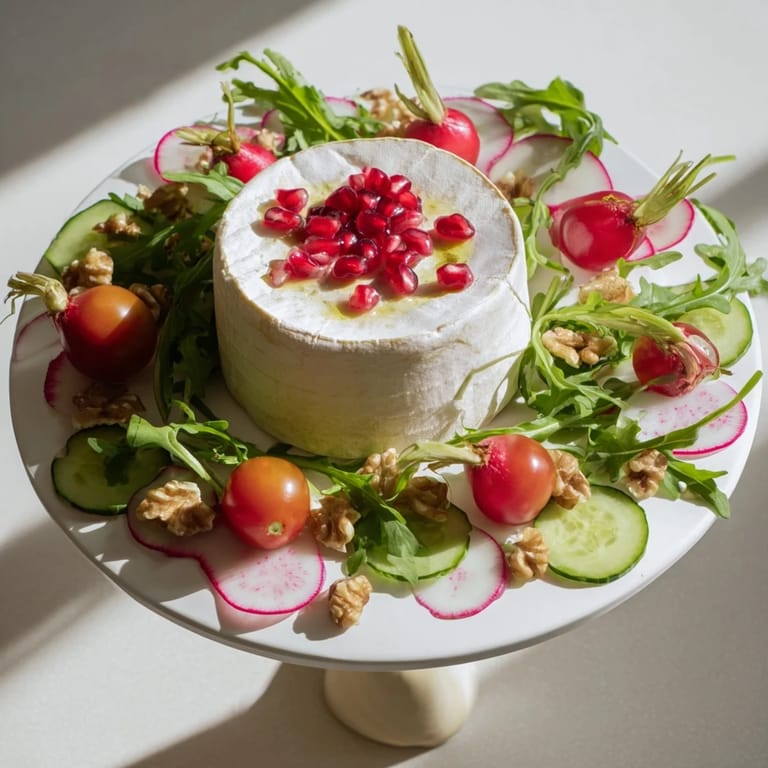
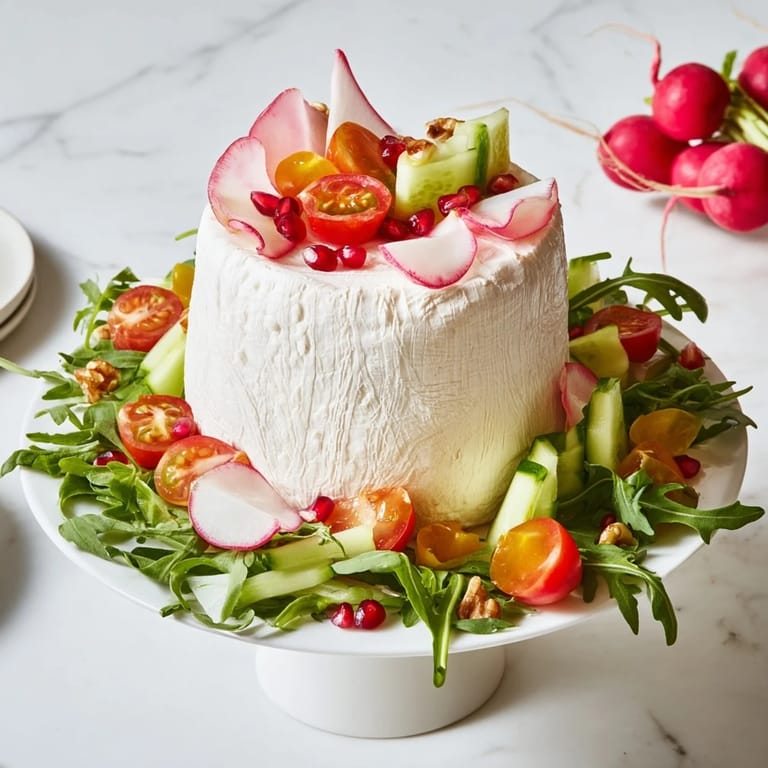
Save I discovered this salad by accident when I was arranging a cheese board for dinner guests and realized the ingredients around the cheese looked like they were all pointing inward, like little arrows. Instead of the usual scattered presentation, I started layering everything deliberately toward the center, and suddenly it felt less like a side dish and more like an edible artwork. My guests spent the first five minutes just admiring it before anyone dared to take a bite, which honestly felt like the highest compliment a cook could get.
There was this moment during a spring dinner party when someone cut into the cheese while everyone was still arranged around the board, and the soft cheese started melting slightly under the knife. The way it paired with the bright arugula and the sweet pop of pomegranate seeds made people go quiet—not awkward quiet, but the kind where everyone's tasting something and actually thinking about what they're eating.
Ingredients
- Baby arugula: Use the smallest, most tender leaves you can find—they'll create the smoothest, most elegant sweeping arc from cheese to platter edge.
- Cherry tomatoes: Halving them reveals the bright interior, and they stay in place better than whole ones when you're arranging everything.
- Cucumber: A mandoline makes thin, consistent slices that catch light beautifully and layer without buckling.
- Watermelon radish: The hidden pink rings are the real magic here—slice them thin enough to see the pattern through, and arrange them cut-side up.
- Pomegranate seeds: These act like little garnish jewels, and their tartness cuts through the richness of the cheese perfectly.
- Toasted walnuts: Toast them yourself just before assembly if you can—the warm, nutty aroma makes the whole board smell irresistible.
- Extra-virgin olive oil: The dressing relies on this to shine, so use something you actually love tasting on its own.
- White balsamic vinegar: It's milder and more elegant than dark balsamic, and it won't stain your carefully arranged colors.
- Honey: Just a touch rounds out the dressing and adds a subtle sweetness that makes everything else taste better.
- Dijon mustard: The tiniest amount brings a quiet sharpness that keeps the flavors from feeling flat.
- Artisanal cheese wheel: Choose something soft enough to cut easily but structured enough not to collapse—a young Brie, Saint-Marcellin, or local camembert all work beautifully.
Tired of Takeout? 🥡
Get 10 meals you can make faster than delivery arrives. Seriously.
One email. No spam. Unsubscribe anytime.
Instructions
- Position your centerpiece:
- Place the cheese wheel slightly off-center on your platter, elevated on a small pedestal or plate if you have one. This makes it the obvious visual anchor everything else will point toward.
- Create the arugula sweep:
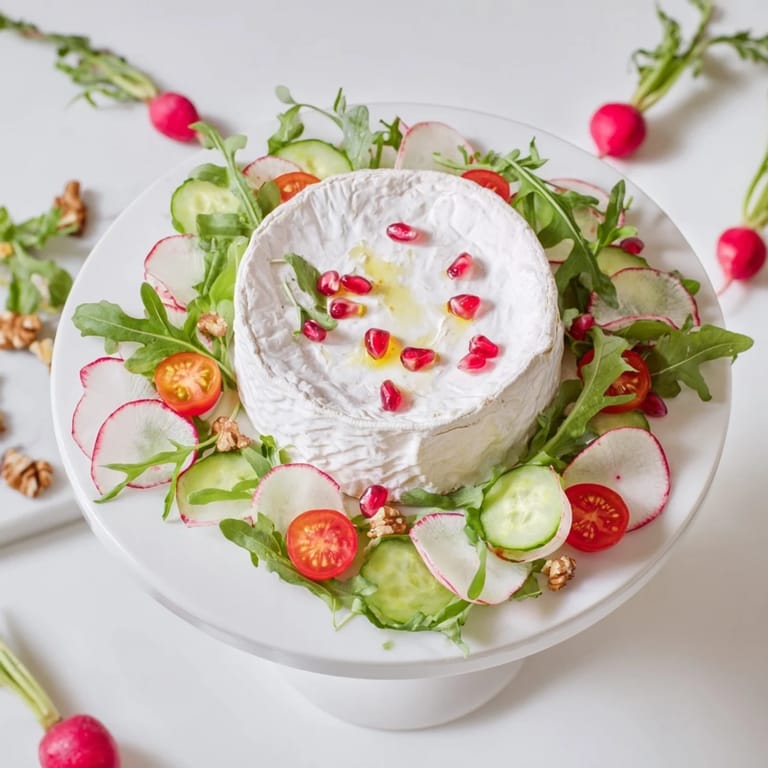
- Starting from the cheese, arrange the arugula in a gentle arc that radiates outward, like lines drawn with a compass. The leaves should all angle toward the cheese, not away from it.
- Layer the vegetables:
- Working in sections, arrange cucumber slices, tomato halves, and watermelon radish in neat, parallel rows—all angled toward the cheese as the focal point. Think of it like creating a visual pattern rather than just placing ingredients randomly.
- Scatter the final touches:
- Distribute pomegranate seeds and toasted walnuts along the arranged rows, keeping the directional pattern consistent. These little bits fill the negative space and add color variation.
- Make the dressing:
- Whisk the olive oil, white balsamic, honey, and mustard in a small bowl until emulsified, then taste and adjust salt and pepper. It should taste bright and just slightly sweet.
- Dress and serve:
- Drizzle the dressing lightly—and I mean lightly—over the vegetables only, avoiding the cheese wheel so it stays pristine. Serve immediately and let guests construct their own bites by cutting from the center and pairing cheese with whatever vegetables they choose.
 Save
Save I remember my neighbor asking if I'd learned to arrange food in culinary school, and I had to laugh because it was really just geometry and the understanding that your eyes eat first. Something about making food beautiful enough to hesitate over actually makes people taste it better.
The Cheese Wheel as Anchor
The entire concept hinges on that central cheese wheel—it's not just an ingredient, it's the reason everything else matters. Soft, creamy, slightly tangy artisanal cheese becomes the textural and flavor anchor that brings all the bright, acidic, crunchy components together. When guests actually cut into it and start mixing it with the vegetables around it, they're building their own flavor experience, which feels infinitely more satisfying than being handed a pre-tossed salad.
Playing with Color and Contrast
The visual magic happens because you're working with natural color contrast—deep green arugula, bright red tomato, pale cucumber, shocking pink watermelon radish, jewel-toned pomegranate. Arrange them strategically and you're not just serving food, you're creating something people want to photograph. I've had guests ask for the arrangement before taking it apart, and honestly, that's when you know you've nailed it.
Customization and Flexibility
The beauty of this salad is that you can swap almost any component based on season, preference, or what your local market has looking beautiful that day. Spring calls for tender lettuces and fresh peas, summer screams for stone fruits and heirloom tomatoes, fall begs for roasted beets and crispy chickpeas. The structure stays the same—everything points toward the cheese—but the personality changes with your choices.
- Try blue cheese, aged gouda, or a peppery aged cheddar if soft cheese doesn't appeal to you.
- Add smoked salmon, prosciutto, or roasted chickpeas for different protein dimensions.
- Edible flowers scattered at the end elevate the presentation from dinner party to something almost gallery-worthy.
 Save
Save This salad taught me that sometimes the presentation is half the experience, and that taking an extra five minutes to arrange something thoughtfully changes the entire mood of a meal. It's become my go-to move when I want people to feel like something special is happening.
Recipe FAQs
- → What type of cheese works best for the centerpiece?
Soft-ripened cheeses like Saint-Marcellin, Brie, Camembert, or a mild blue cheese provide creamy texture and pair well with the fresh salad ingredients.
- → Can I add protein to this dish?
Yes, thinly sliced prosciutto or smoked salmon can be added for extra protein and depth of flavor.
- → How should the dressing be applied?
Drizzle the olive oil and balsamic-based dressing lightly over the arranged salad ingredients, avoiding direct contact with the cheese wheel to maintain its texture.
- → What nuts are included in the salad?
Toasted walnuts add a crunchy texture and a nutty complement to the fresh, crisp vegetables.
- → Are there any suggested wine pairings?
This salad pairs beautifully with a chilled Sauvignon Blanc or a dry rosé to enhance its fresh and vibrant flavors.