 Save
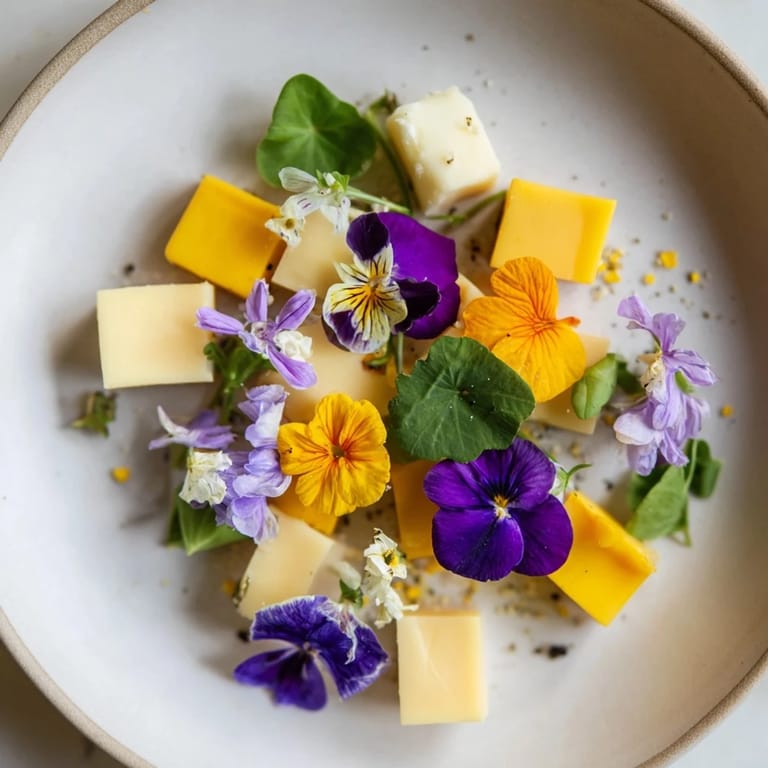
Save I discovered this dish accidentally while arranging a charcuterie board for a dinner party, suddenly realizing I had far more edible flowers than I knew what to do with. Instead of scattering them aimlessly, I thought: what if guests had to actually hunt for the cheese? What if the plate itself became a little garden, full of pleasant surprises? That's when The Secret Garden was born—a playful appetizer that transforms the simple act of eating into an adventure.
I'll never forget my neighbor's face when she lifted a violet and found aged cheddar underneath—she laughed like a child finding Easter eggs. That's when I realized this wasn't just about serving cheese and flowers; it was about creating a moment of delight, a reason to pause and actually notice what was on the plate.
Ingredients
- Aged cheddar, cubed: The sharpness cuts through the delicate floral notes, grounding the dish with umami depth.
- Goat cheese, cubed: Creamy and slightly tangy, it's the softest introduction to the board and often the first thing guests reach for.
- Gruyère, cubed: This adds nuttiness and a bit of sophistication; it's the cheese that makes people pause and ask what it is.
- Microgreens: Pea shoots bring sweetness, radish greens add peppery bite—choose whatever speaks to your palate and what's available at your market.
- Edible flowers: Nasturtiums taste peppery, pansies are mild and sweet, violets feel almost magical, and calendula petals are surprisingly savory; buy from trusted sources and inspect carefully.
- Extra virgin olive oil: A whisper of this is optional, but it ties the whole composition together with a golden shimmer.
- Flaky sea salt and freshly ground black pepper: These are the finishing notes that make each bite sing.
Tired of Takeout? 🥡
Get 10 meals you can make faster than delivery arrives. Seriously.
One email. No spam. Unsubscribe anytime.
Instructions
- Cube your cheeses with intention:
- Use a sharp knife and cut everything into roughly half-inch cubes so they're substantial enough to find but delicate enough to eat in one satisfying bite. Chill them briefly if your kitchen is warm so they hold their shape.
- Create your cheese landscape:
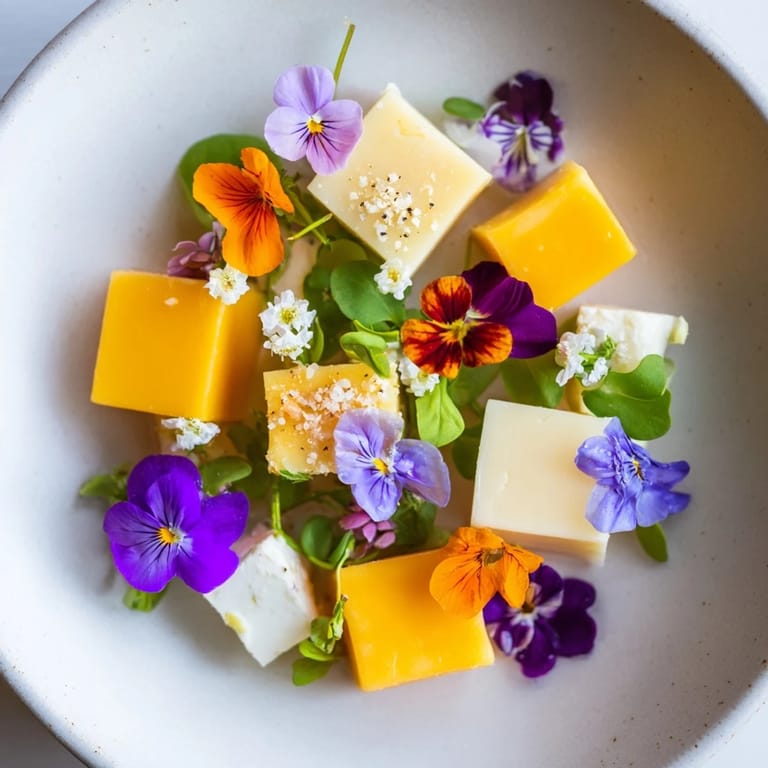
- Arrange the three cheeses across your serving board in a loose pattern, leaving breathing room between them; think of it like placing stones in a garden path.
- Layer in the microgreens generously:
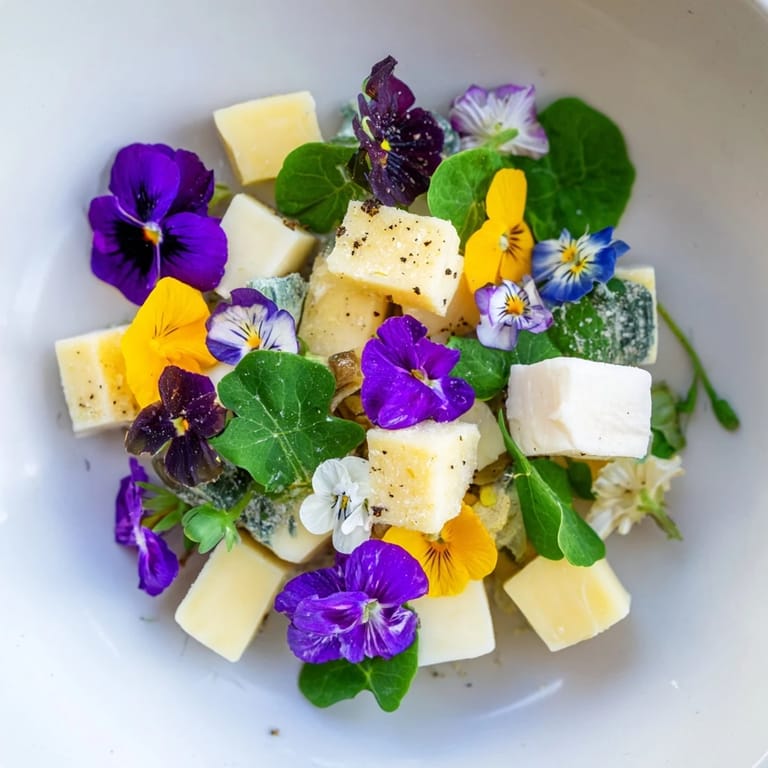
- Don't be shy here—scatter them in loose piles that partially obscure the cheese cubes beneath, creating little peaks and valleys. You want some cheese visible but most of it hidden.
- Tuck flowers with care:
- Place edible flowers between and around the microgreens, letting some nestle into the leaves and others sit proud on top. This is where the magic happens, where the board becomes a living garden.
- Add olive oil if you're feeling it:
- A light drizzle across the whole board adds a luxurious sheen and helps the flavors meld slightly without overwhelming the delicate flowers.
- Season and serve with fanfare:
- A pinch of flaky salt and a few grinds of black pepper right before serving ensure maximum impact. Invite your guests to explore and discover rather than simply eat.
 Save
Save A moment I cherish is watching someone's hesitation transform into joy as they realize this isn't a show-off dish designed to make them feel unsophisticated—it's genuinely fun, accessible, and delicious. That shift in someone's face is worth every careful arrangement.
Cheese Selection & Sourcing
The beauty of this dish lies in playing with contrasts: creamy against crumbly, sharp against mild, familiar against adventurous. I've learned that visiting a proper cheese counter and asking for recommendations specific to your gathering transforms the whole experience. The cheesemonger often suggests a fourth option you hadn't considered, and suddenly your board tells a more interesting story. Don't settle for pre-cubed cheese from the supermarket—the texture and flavor of a freshly cut wedge is incomparably better.
Building Flavor Through Flowers
Each flower variety brings its own personality to the bite: nasturtiums are your peppery dare, pansies are the gentle introduction, violets taste almost like a memory of something you can't quite place, and borage flowers carry a subtle cucumber whisper that surprises people every time. I spend a moment before any gathering just tasting each flower on its own, remembering what they contribute so I can arrange them strategically—placing borage near the sharpest cheddar, pansies near the softest goat cheese. This isn't overthinking; it's composing a little song on a plate.
Timing, Storage & Serving Strategy
The golden rule I've learned is to prep everything in advance but assemble only when guests are about to arrive. Cubed cheeses stay fresh in the refrigerator for days, microgreens last longest in a paper-towel-lined container, and flowers benefit from being stored in a shallow dish with barely-dampened paper towels underneath. When you're ready to build, work quickly but with intention—your hands and energy set the tone. The moment you step back and see the whole composition is when you'll know you've created something special.
- Chill your serving board if possible so the cheese stays cool and the flowers don't wilt from warm surfaces.
- Place a small pair of tongs or even clean fingers beside the board so guests feel invited to interact rather than admire from afar.
- Pair this with chilled white wine or sparkling rosé that mirrors the delicate, garden-fresh feeling of the dish.
 Save
Save This dish reminds me that sometimes the most memorable meals are the ones where guests feel genuinely delighted, not just fed. Make this for someone you care about, and watch what happens.
Recipe FAQs
- → What types of cheese work best?
Aged cheddar, goat cheese, and Gruyère provide a balanced flavor and firm texture ideal for cubing and presentation.
- → Can other greens be used instead of microgreens?
Yes, pea shoots, radish greens, or any tender mixed micro herbs can substitute to maintain freshness and texture.
- → How should edible flowers be selected?
Use pesticide-free, labeled edible flowers like nasturtiums, pansies, or violets to ensure safety and vibrant color.
- → Is olive oil necessary in the preparation?
Olive oil is optional but adds a subtle richness and helps to lightly moisten the greens and flowers for enhanced flavor.
- → What serving tools are recommended?
A large serving board and a sharp knife are essential, while small tongs can assist guests in foraging the cheese cubes beneath the greens.
- → Can this be paired with beverages?
Crisp white wines or sparkling rosé complement the fresh and savory elements beautifully, enhancing the overall experience.