 Save
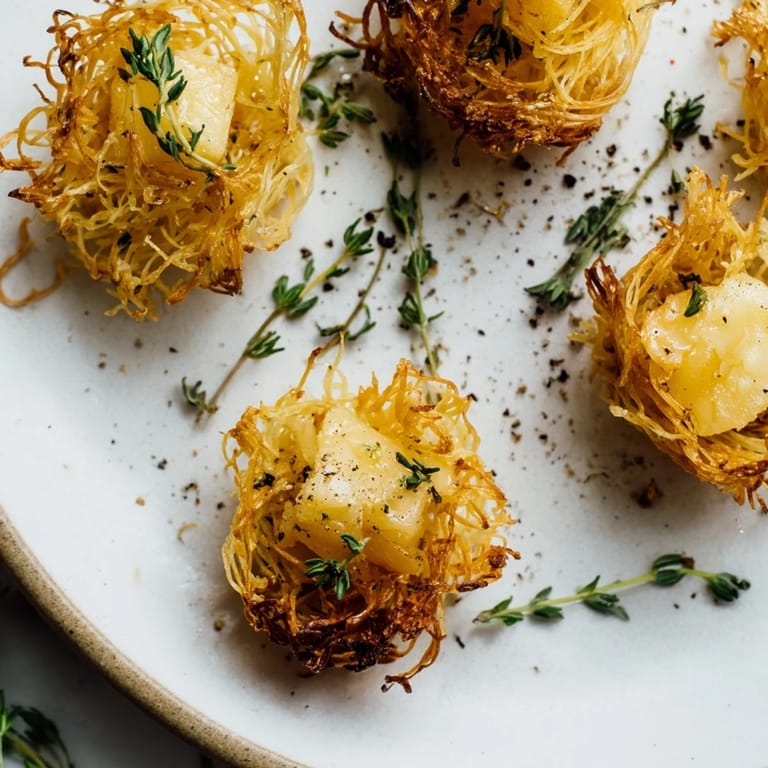
Save I discovered this little treasure during a weekend visit to a French countryside farmhouse, where my host pulled out a wooden board lined with these golden phyllo nests and the most incredible wedges of farmhouse cheese. There was something about the contrast—crispy, delicate hay-like nests cradling chunky, unapologetic pieces of cheese—that felt both elegant and utterly unpretentious. I spent the afternoon watching how she assembled them with such casual confidence, and I knew I had to recreate that moment back home.
The first time I made these for friends, I worried the phyllo nests would collapse or burn, so I hovered by the oven like an anxious parent. They emerged perfectly golden, and watching people's faces light up when they bit into the crispy phyllo and found that dense, creamy cheese inside made all that hovering worth it. One friend asked if I'd bought them from a fancy shop, and I'll admit I let her believe it for just a moment before confessing.
Ingredients
- Shredded phyllo dough (kataifi), 200 g: This is the backbone of everything—those wispy, thread-like strands create that impossibly delicate, crispy texture that makes people gasp when they bite into it. Don't skip the quality here; proper kataifi has a completely different structure than regular phyllo sheets.
- Unsalted butter, 50 g melted: The fat is what turns the phyllo into something genuinely crackling and golden rather than just pale and limp, so don't be shy with it.
- Olive oil, 1 tsp: A small amount keeps things from becoming too heavy, adding a whisper of flavor and preventing butter from burning.
- Sea salt, pinch: Just enough to wake up the phyllo's subtle, almost corn-like flavor without making it taste salty.
- Farmhouse cheddar, 200 g cut into rustic hunks: The sharpness cuts through the richness of the phyllo and provides an anchor of flavor that feels grounded and real.
- Aged gouda, 150 g cut into rustic hunks: This brings sweetness and a slightly nutty depth that keeps the plate interesting rather than one-dimensional.
- Tomme de Savoie or similar semi-soft farmhouse cheese, 150 g: The creamy texture bridges the crispy and the firm, and its earthy notes remind you that this is country food, not fussy food.
- Fresh thyme sprigs, for garnish: A small green gesture that says you care without trying too hard.
- Honey, for drizzling: A delicate drizzle creates little moments of sweetness that play beautifully against the salty cheese.
- Cracked black pepper, for finishing: This adds pepper texture and a quiet heat that ties everything together.
Tired of Takeout? 🥡
Get 10 meals you can make faster than delivery arrives. Seriously.
One email. No spam. Unsubscribe anytime.
Instructions
- Heat your oven and prep your workspace:
- Set your oven to 180°C (350°F) and line a baking sheet with parchment paper—this is your safety net for keeping the phyllo from sticking. Having everything ready before you touch the phyllo matters because kataifi dries out quickly if exposed to air.
- Loosen and coat the phyllo:
- Gently separate the shredded phyllo dough with your fingers so the strands aren't clumped together, then drizzle with melted butter, olive oil, and salt. Toss it gently and consistently until every wispy strand glistens slightly—this is what makes them crispy, not soggy.
- Form your nests:
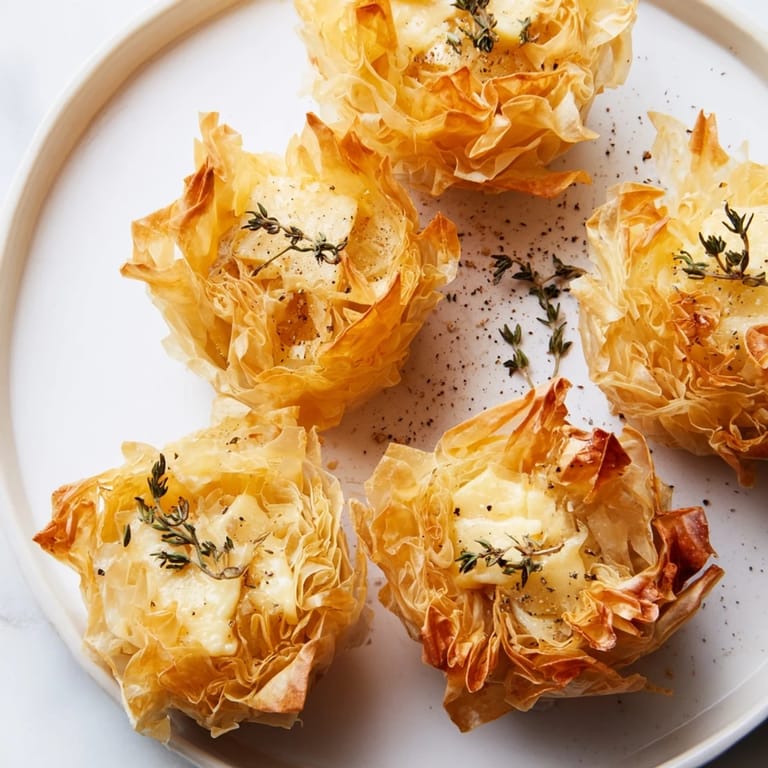
- Gather small handfuls of the buttered phyllo and press them into loose nest shapes on the parchment, aiming for piles about 5–6 cm wide. Press just enough so they hold together without compressing them into dense little hockey pucks.
- Bake until golden and crispy:
- Slide them into the oven for 10–12 minutes, watching after the 8-minute mark—you want them golden and shattering-crisp, not dark brown. The smell will shift from buttery and mild to toasted and nutty when they're ready.
- Cool and settle:
- Let the nests cool completely on the pan before moving them; they'll crisp up even more as they cool, which is where the magic happens. They're delicate when warm but become wonderfully sturdy once they've cooled.
- Assemble with intention:
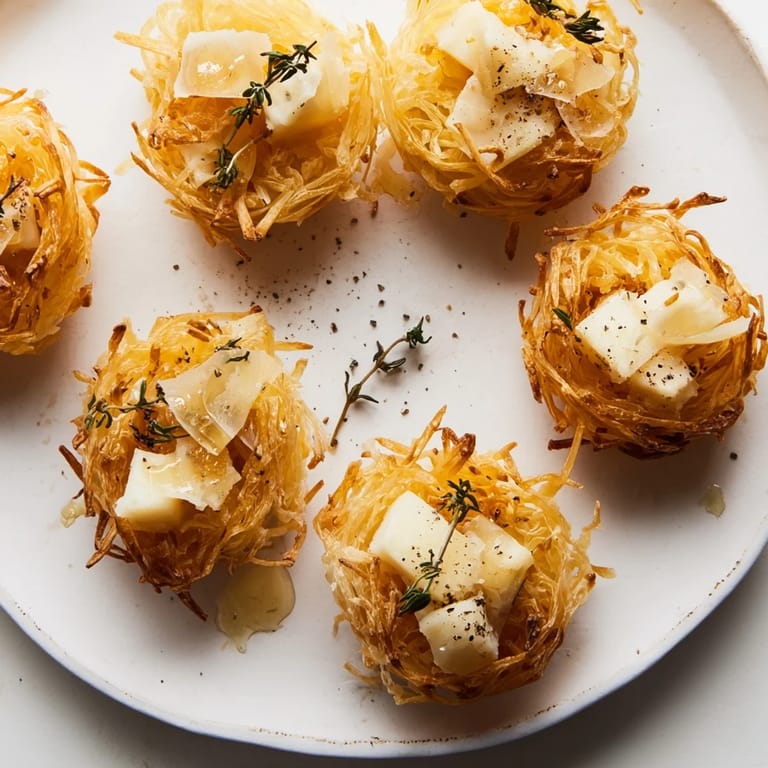
- Arrange the cooled nests on your serving board and top each one with a generous hunk of cheese—think rustic and casual, not perfectly geometric. Finish with a sprig of thyme, a light drizzle of honey, and a crack of fresh black pepper.
 Save
Save What I love most about serving these is that moment when someone picks one up, uncertain how to approach it, and then just goes for it—lifting the whole nest, cheese and all, and taking a bite without worrying about technique. That's when a recipe stops being just food and becomes an invitation to relax and enjoy something genuinely delicious without overthinking it.
Choosing Your Cheeses
The beauty of this dish is that you're not locked into the exact cheeses I suggested; in fact, some of my best batches happened when I experimented. Manchego brings a slightly salty, firm quality that contrasts beautifully with the crispy phyllo. Comté adds a deeper, caramel-like sweetness that feels almost luxurious. Smoked farmhouse cheeses create an entirely different mood, leaning toward something more dramatic and unexpected. The only rule I follow is mixing cheeses with different textures and intensities—a firm one, a semi-soft one, and something with real personality—so the plate stays interesting from the first bite to the last.
Building Flavor Beyond the Basics
Sometimes I dust the phyllo with a pinch of herbes de Provence before baking, which transforms the entire character without overwhelming anything—suddenly it tastes like it was made for a summer garden party instead of a winter gathering. Other times I keep it pure and let the cheese take center stage. I've learned that honey doesn't have to be a finishing flourish; a very subtle amount mixed into the melted butter before coating the phyllo adds a whisper of sweetness that nobody can quite identify but everyone notices. The thyme and pepper aren't just garnish either; they complete a flavor story that moves from crispy to rich to herbal, with pepper as the final punctuation.
Serving and Timing
The magic window for these nests is about an hour after they come out of the oven—they're still crispy but have settled into themselves. If you're entertaining, bake them an hour or so before guests arrive and assemble them just before serving; this removes the stress of perfectly timing everything and lets you actually enjoy your own party. They pair beautifully with apple slices or grapes if you want to add freshness, or even a small glass of crisp white wine or cider. Some guests will eat them with their hands, some will use a fork and knife like they're dining at a formal table, and that variety in how people enjoy food is part of what makes it special.
- You can make the nests up to a day ahead and store them in an airtight container; just assemble with cheese shortly before serving.
- If you're scaling up for a crowd, the phyllo nests freeze beautifully after baking, so you can make them weeks in advance.
- Don't stress about perfect nest shapes; rustic and imperfect actually looks more charming and authentic than precision-engineered towers.
 Save
Save This dish reminded me why I fell in love with cooking in the first place: the joy of turning a handful of simple ingredients into something that feels both impressive and deeply comforting. It's the kind of recipe that tastes like care without tasting like work.
Recipe FAQs
- → What type of dough is used for the nests?
Shredded phyllo dough (kataifi) is used to create light, crispy nests resembling hay.
- → How do I achieve a golden, crisp texture?
Toss the phyllo strands with melted butter and olive oil, form nests on parchment, then bake at 180°C (350°F) until golden, about 10–12 minutes.
- → Which cheeses work best for topping?
Rustic farmhouse cheeses like cheddar, aged gouda, and tomme de Savoie create rich, savory contrasts to the crisp phyllo.
- → Can I add herbs or garnishes?
Fresh thyme sprigs are suggested for aroma, and a light honey drizzle adds a subtle sweetness. Black pepper enhances flavor complexity.
- → Are there serving suggestions to complement the nests?
Serve alongside apple slices or grapes for freshness and balance to the rich, crispy bites.