 Save
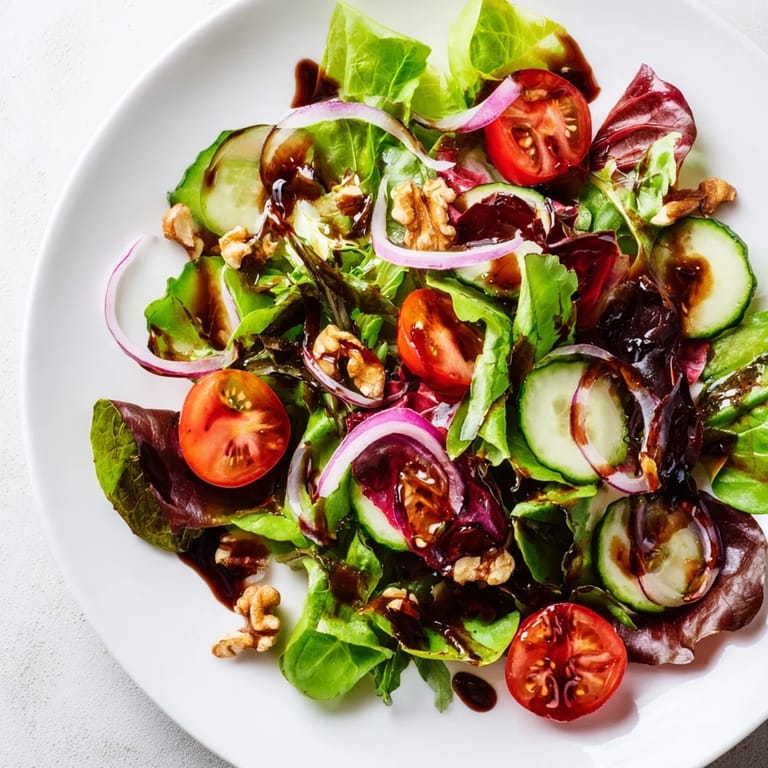
Save There's something almost magical about the moment balsamic vinegar hits a hot pan and transforms into liquid silk. I stumbled onto this salad by accident one weeknight when I was trying to use up a bottle of aged balsamic before it got pushed to the back of the pantry. The kitchen filled with this deep, sweet aroma, and I realized I'd discovered something far better than a quick side dish—a way to make simple greens taste like they'd been tended to with real care.
I made this for a small dinner party last spring, and what I loved most was watching people slow down to actually taste their salad instead of rushing through it. The balsamic had caught the light just so, and someone asked what fancy restaurant I'd ordered it from—the look on their face when I said it came from my own kitchen was worth every second.
Ingredients
- Mixed salad greens (6 cups): Use whatever combination speaks to you—arugula brings a peppery snap, spinach adds earthiness, romaine gives structure, and radicchio contributes a subtle bitterness that plays beautifully against the sweet dressing.
- Cherry tomatoes (1 cup, halved): The smaller they are, the sweeter they taste, and halving them lets the dressing coat them properly instead of sliding off.
- Red onion (½ small, thinly sliced): Slice it thin enough that you can almost see through it—you want the bite without overwhelming everything else.
- English cucumber (½, sliced): English cucumbers have fewer seeds and thinner skins, so you don't need to peel them, which saves time and keeps the salad looking fresh.
- Toasted walnuts (¼ cup, optional): The toasting step matters more than you'd think; it wakes up their flavor and adds a subtle crunch that anchors the whole dish.
- Balsamic vinegar (½ cup): Look for one that's aged at least twelve years if you can—the complexity makes a noticeable difference once it reduces.
- Extra-virgin olive oil (2 tablespoons): This is where you taste the quality, so don't reach for the industrial bottle; something peppery or fruity will elevate everything.
- Dijon mustard (1 teaspoon, optional): It acts as an emulsifier and adds a subtle depth that most people can't quite identify but absolutely notice.
- Sea salt (½ teaspoon) and freshly ground black pepper (¼ teaspoon): Season to your taste at the end; the reduction intensifies flavors, so hold back slightly at first.
Tired of Takeout? 🥡
Get 10 meals you can make faster than delivery arrives. Seriously.
One email. No spam. Unsubscribe anytime.
Instructions
- Reduce that balsamic:
- Pour the vinegar into a small saucepan over medium heat and let it simmer gently, stirring once or twice, for 6–8 minutes until it's reduced by about half and coats the back of a spoon. You'll smell when it's ready—it becomes deeper and sweeter, almost caramel-like.
- Cool it down:
- Let the reduction sit off the heat for 2 minutes so you don't wilt the greens when you dress them.
- Assemble your greens:
- Toss the mixed greens, tomatoes, red onion, cucumber, and walnuts into a large bowl—no need to be precious about it.
- Make the dressing:
- Whisk together the olive oil, Dijon mustard if you're using it, salt, and pepper in a small bowl, then drizzle in the cooled balsamic reduction while whisking so everything emulsifies into something silky.
- Dress and serve:
- Pour the dressing over the salad and toss gently but thoroughly so every leaf gets coated. Serve right away with a crack of fresh pepper on top.
 Save
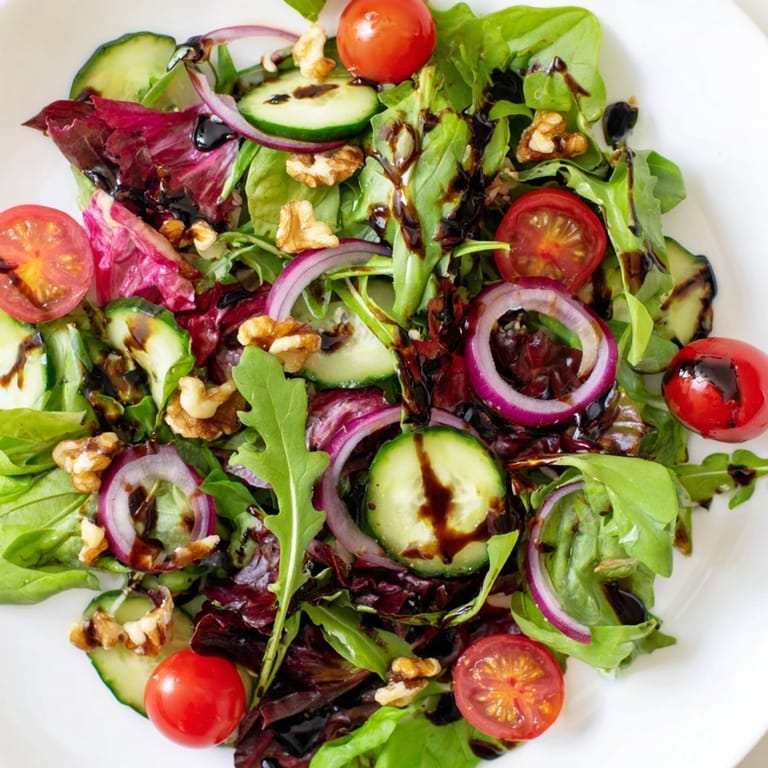
Save There was this moment, maybe thirty seconds after serving, when the kitchen fell completely quiet except for the sound of forks on plates. That's when I knew I'd nailed it—not because it was complicated, but because something so simple had become genuinely delicious.
Why Balsamic Reduction Changes Everything
The magic isn't just that balsamic vinegar tastes good—it's that concentrating it transforms it into something almost syrupy and complex. When you reduce it, the acidity mellows out and the natural sweetness deepens, turning what could have been a sharp, harsh dressing into something balanced and refined. It's the kind of small technique that makes people think you've spent hours in the kitchen when you've really just spent eight minutes paying attention.
Building Flavor Through Salad Architecture
I learned to think about salad ingredients in layers—you need soft greens, something crisp, something juicy, something a little spicy or bitter, and ideally something with texture. This salad hits all those notes, which is why it doesn't need much beyond the dressing. The walnuts add earthiness and crunch, the cucumber brings freshness, the tomatoes give sweetness and moisture, and the red onion and arugula keep things from feeling one-dimensional.
Serving Suggestions and Variations
This salad works beautifully as a side dish, but it can also be the main event if you add protein—grilled chicken, chickpeas, or even crumbled feta if you're open to dairy. You can also prep everything except the dressing an hour or two ahead; just keep the greens and dressing separate until the moment you serve. Some nights I make the balsamic reduction the day before, which is especially handy when you're already short on time.
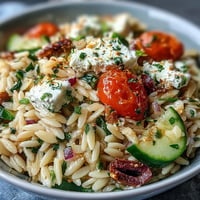
- A handful of goat cheese crumbles adds creaminess without overwhelming the delicate balance of flavors.
- Grilled chicken or roasted chickpeas turn this into a complete meal that's still light enough for warm weather eating.
- The balsamic reduction keeps in the fridge for up to a week, so you can make extra and use it on grain bowls, roasted vegetables, or even strawberries.
 Save
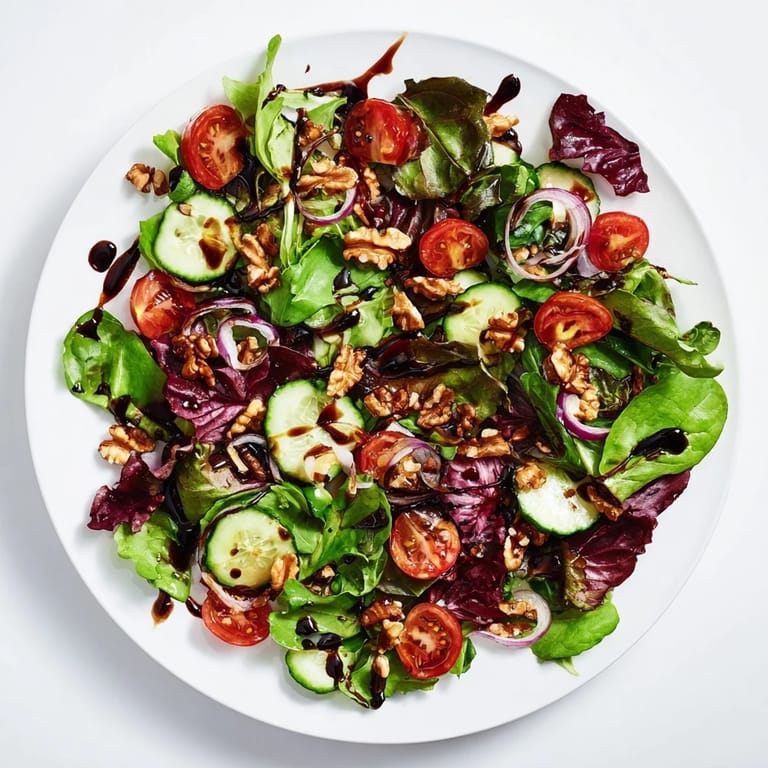
Save This is the kind of salad I make when I want something that tastes deliberately made but doesn't ask for much effort in return. It's become the dish I reach for when I need something to feel intentional without being complicated.
Recipe FAQs
- → How do I make the balsamic reduction?
Simmer balsamic vinegar over medium heat for 6–8 minutes until it reduces by half and thickens slightly. Let it cool before using.
- → Can I add protein to this dish?
Yes, adding grilled chicken or chickpeas works well for extra protein and makes the dish more filling.
- → What greens are best for this salad?
Arugula, spinach, romaine, and radicchio offer a vibrant mix of textures and flavors, balancing bitterness and crispness.
- → Can I prepare the balsamic reduction in advance?
Absolutely, it can be made ahead and stored in the fridge for up to a week, ready to drizzle when needed.
- → Are there any common allergens I should be aware of?
The walnuts are tree nuts and optional; Dijon mustard may contain allergens. Cheese additions introduce dairy considerations.