 Save
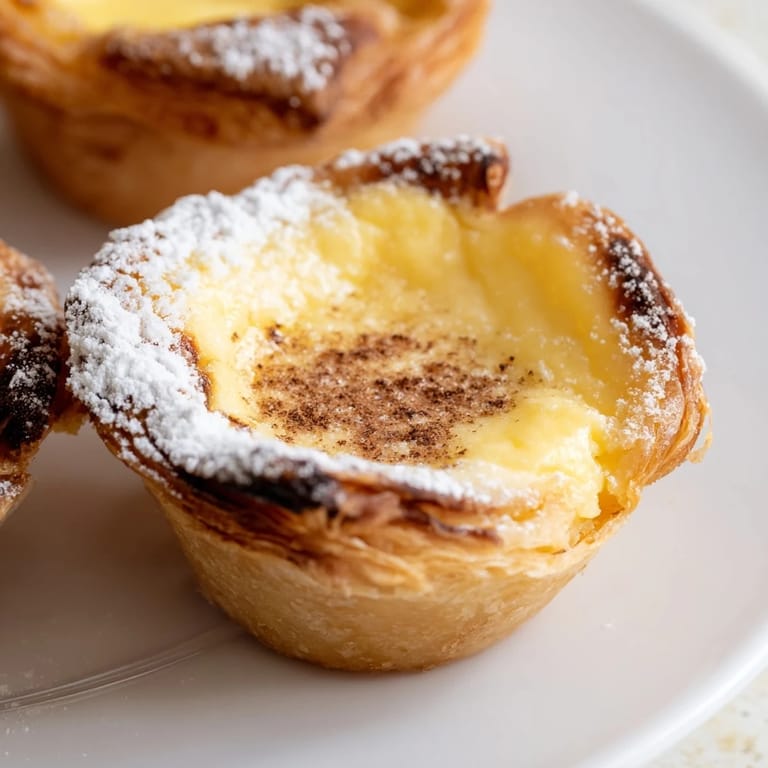
Save The first time I bit into a Portuguese egg tart at a small bakery in Lisbon, I understood why they're called pastéis de nata—it was pure gold in phyllo form. The crispy shell shattered between my teeth, giving way to this impossibly silky custard that was somehow both delicate and deeply satisfying. Years later, standing in my own kitchen on a quiet Sunday morning, I realized these weren't as intimidating to make as I'd feared. What felt like a patisserie secret turned out to be wonderfully achievable with patience and butter.
I made these for my neighbor once, fresh from the oven, still warm enough that the powdered sugar melted into the cinnamon. The way her eyes lit up—that exact moment—I knew I'd cracked something special. She asked for the recipe immediately, and when I hesitated, she laughed and said some things are worth the effort. That afternoon taught me that homemade pastries carry a different kind of love than store-bought ones ever could.
Ingredients
- Phyllo pastry (12 sheets): The foundation of everything—thin, delicate, and prone to drying out, so keep it covered with a damp towel while you work.
- Unsalted butter, melted (60 g): This is what transforms phyllo from papery to golden and crisp; don't skip the brushing between layers.
- Whole milk (250 ml): The base of your custard, and using whole milk makes a noticeable difference in richness compared to lower-fat versions.
- Cornstarch (2 tbsp): The secret thickener that gives custard its creamy body without curdling; whisking it smooth with milk first prevents lumps.
- Heavy cream (125 ml): This elevates the custard from simple to luxurious, adding a silky mouthfeel that milk alone can't achieve.
- Granulated sugar (100 g): Sweetness balanced so the custard isn't cloying; I've learned that slightly less sugar actually lets the egg and spice shine.
- Egg yolks (4 large): These are what make the filling custard-like and golden; whole eggs create a different, less rich texture.
- Pure vanilla extract (1 tsp): A small amount goes a long way; I taste the difference between pure and imitation every single time.
- Ground cinnamon (½ tsp in filling, 1 tsp for topping): The warm spice that ties this whole thing together; it's the unmistakable flavor of a proper Portuguese tart.
- Salt (pinch): Just enough to deepen the other flavors without tasting salty.
- Powdered sugar (2 tbsp for topping): The final dusting that melts slightly into the warm custard and looks beautiful.
Tired of Takeout? 🥡
Get 10 meals you can make faster than delivery arrives. Seriously.
One email. No spam. Unsubscribe anytime.
Instructions
- Heat your oven and gather your tools:
- Set the oven to 200°C (400°F)—it needs time to reach temperature before the phyllo goes in. Having your muffin tin and pastry brush ready means you're not fumbling around once you touch that phyllo.
- Layer and butter the phyllo:
- Working with one sheet at a time, brush it lightly with melted butter, then lay another sheet on top and repeat—three layers per tart. The butter creates the layers that will crisp up beautifully in the oven, so don't be stingy but don't drown them either.
- Cut and form the cups:
- Use a sharp knife or pizza cutter to cut your stacked phyllo into squares that fit your muffin tin with just a bit of overhang. Gently press each stack into a cup, letting the edges rise slightly above the rim for that signature fluted edge.
- Pre-bake the shells:
- Bake for 8–10 minutes until they're lightly golden and starting to crisp. They won't be fully crisp yet—that happens when the custard bakes—but you'll see the color change and smell that buttery, toasted aroma.
- Make the custard while shells bake:
- In a saucepan, whisk the milk with cornstarch until completely smooth, then add the cream, sugar, egg yolks, vanilla, cinnamon, and salt. The key is whisking out any lumps before heat touches it, because once cinnamon and egg yolks are involved, lumps won't smooth out later.
- Cook the custard slowly:
- Over medium heat, whisk constantly—and I mean constantly—for about 5–7 minutes until it thickens enough to coat the back of a spoon. You'll feel it transform from liquid to creamy, and the moment it starts to bubble slightly at the edges, you're done; any longer and you risk scrambling the eggs.
- Fill and finish baking:
- Divide the warm custard among the phyllo cups, pouring carefully so none spills onto the pastry. Bake for another 8–10 minutes until the custard is just set—it should still have a slight jiggle in the center, not be completely firm.
- Cool, dust, and serve:
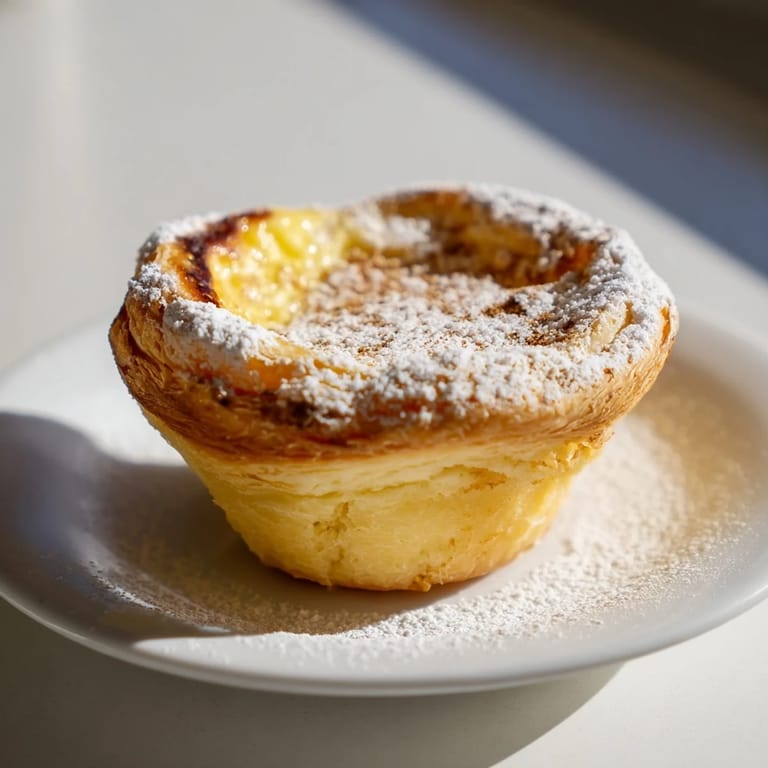
- Let them cool for a few minutes so the custard firms up slightly, then sift the cinnamon and powdered sugar over the top. The warmth will carry the spice aroma straight up to your nose, and that's how you know you've done it right.
 Save
Save There's a moment, right when you pull these tarts from the oven the second time, when the kitchen fills with this warmth and sweetness that makes you understand why people have been making these for centuries. I've given these as gifts more than once, wrapped carefully in a box, and watched someone taste one for the first time with that same look of surprise and joy I felt in Lisbon years ago.
Why Temperature and Timing Matter
I learned the hard way that oven temperature isn't just a suggestion—it's the difference between a tart that's crispy on the outside and creamy inside versus one that's either soggy or overcooked. The phyllo needs enough heat to crisp and brown, but not so much that it burns before the custard sets. Watching your oven on the second bake and pulling them out when the custard is just barely set means you get that perfect texture every single time, and honestly, a kitchen timer has saved me more than once from distraction.
The Spice Is Everything
Cinnamon is the unmistakable signature of these tarts, and I've experimented enough to know that the quantity matters. Too little and it's just custard in pastry; too much and it overpowers everything else. That half teaspoon in the filling and the dusting on top creates a balance where you taste the vanilla, the egg richness, and the warm spice all at once. Some bakers add a whisper of nutmeg or a hint of lemon zest, which I love, but the cinnamon is never negotiable.
Serving and Storage Wisdom
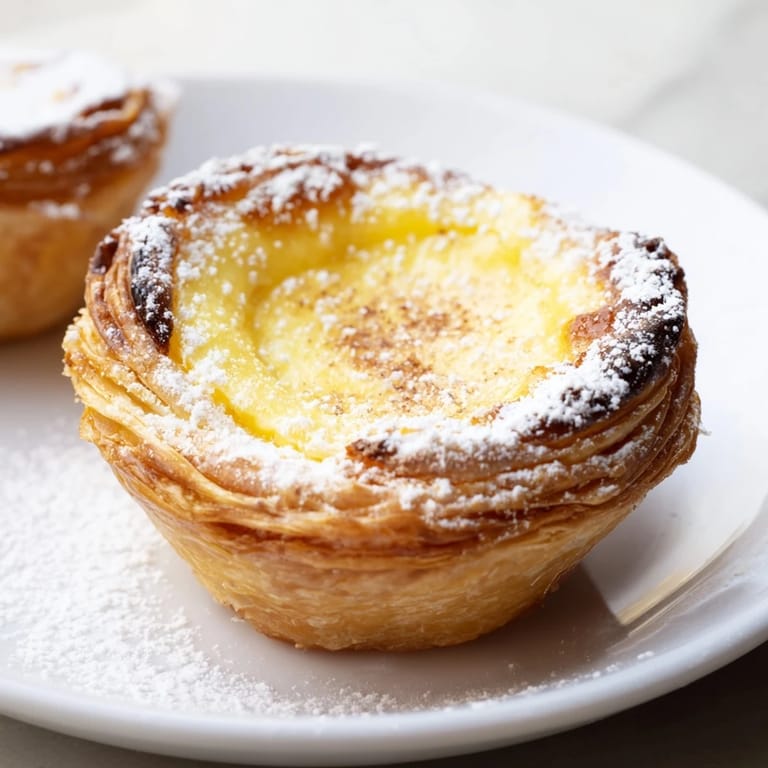
These tarts shine when they're still warm, when the custard is creamy and the pastry is at its crispest. Serve them as soon as you can, maybe with a small espresso or a glass of chilled white port if you're feeling Portuguese. Leftovers keep beautifully in the fridge for a few days, and a brief warm-up in a 180°C oven brings back their crispness better than anything else I've tried.
- Slightly warm is the sweet spot—not hot enough to burn your tongue, but warm enough that the flavors bloom and the pastry still has texture.
- Store them in an airtight container in the refrigerator, and they'll keep for up to three days without losing their charm.
- If you're making these ahead for a gathering, bake them earlier in the day and warm them just before serving for maximum impact.
 Save
Save There's something deeply satisfying about making these tarts, something that connects you to bakers across centuries and continents. Every time someone bites into one and closes their eyes for that moment of pure pleasure, I'm reminded why this recipe belongs in a home kitchen, not hidden away in a professional pastry shop.
Recipe FAQs
- → How do I achieve crisp phyllo cups?
Brush phyllo sheets lightly with melted butter, layer three sheets per cup, and bake until golden for a flaky, crisp base.
- → What gives the custard its creamy texture?
A combination of whole milk, heavy cream, egg yolks, and cornstarch cooked gently while whisking ensures a smooth, creamy custard.
- → Can the cinnamon flavor be adjusted?
Yes, you may vary the ground cinnamon amount in the custard and for dusting according to your taste preferences.
- → What is the best way to serve these tarts?
Serve them slightly warm to enjoy the perfect custard texture and crispiness of the phyllo cups.
- → How should leftovers be stored?
Keep leftovers refrigerated and briefly reheat in the oven to restore the crisp texture before serving.