 Save
Save There's something about the way cherry tomatoes burst in a hot skillet that makes you pause mid-conversation. A friend visiting from Rome had just settled into my kitchen on an ordinary weeknight, and I wanted something that felt both effortless and special—something that would let the tomatoes speak for themselves. That's when I remembered this simple orzo dish, the kind that comes together in under half an hour but tastes like you've been planning it all day.
I made this for my neighbor one evening when she brought over fresh tomatoes from her garden, and watching her eyes light up when she tasted it—that moment when she went quiet except for the fork clinking against the bowl—that's when I knew this recipe was a keeper. She asked for the ingredients list before she'd even finished eating.
Ingredients
- Orzo pasta (250 g): These tiny rice-shaped noodles hold sauce in every curve and cook tender faster than you'd expect, creating a creamy texture that fooled everyone into thinking there was cream involved.
- Cherry tomatoes (300 g, halved): The smaller, sweeter cousins of regular tomatoes, they collapse into themselves when heated, releasing their juice to become the soul of this dish.
- Garlic (2 cloves, minced): Just 30 seconds in hot oil transforms it from sharp to mellow and deeply aromatic—don't skip this moment.
- Fresh basil (2 tbsp, chopped): Add it at the end so it stays bright and peppery rather than turning dark and muted.
- Parmesan cheese (60 g, freshly grated): Pre-grated cheese has anti-caking agents that prevent it from melting as smoothly, so take the extra minute to grate it yourself.
- Extra-virgin olive oil (3 tbsp): This is the one ingredient where quality actually shows up on your palate, so choose something you'd taste straight from the bottle.
- Salt and black pepper: Taste as you go near the end—the pasta water and cheese already bring saltiness, so you need less than you'd think.
Tired of Takeout? 🥡
Get 10 meals you can make faster than delivery arrives. Seriously.
One email. No spam. Unsubscribe anytime.
Instructions
- Boil the orzo:
- Bring a large pot of salted water to a rolling boil, then add the orzo and cook according to package directions until al dente—you want it tender but still with a slight resistance when you bite down. Before draining, grab a mug and scoop out about 1/4 cup of the starchy cooking water; this is liquid gold for making everything creamy later.
- Bloom the garlic:
- Heat 2 tablespoons of olive oil in a large skillet over medium heat until it shimmers slightly, then add the minced garlic. You'll smell it change from raw and spiky to sweet and caramelized in about 30 seconds—that's your signal to move to the next step before it starts to brown.
- Soften the tomatoes:
- Scatter the halved cherry tomatoes into the skillet and let them cook undisturbed for a minute or so, then stir occasionally for 3 to 4 minutes total. You're waiting for them to lose their firmness and start releasing their juices, which will pool around them in the pan.
- Combine and warm through:
- Add the drained orzo to the skillet along with the reserved pasta water, then toss everything gently for about a minute just to heat it all through and let the flavors mingle.
- Finish with richness:
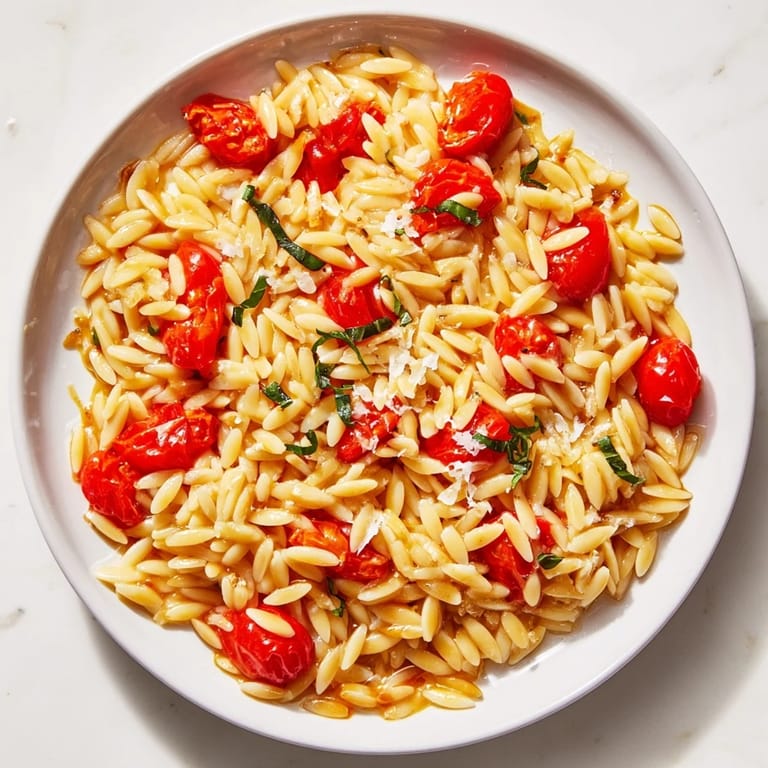
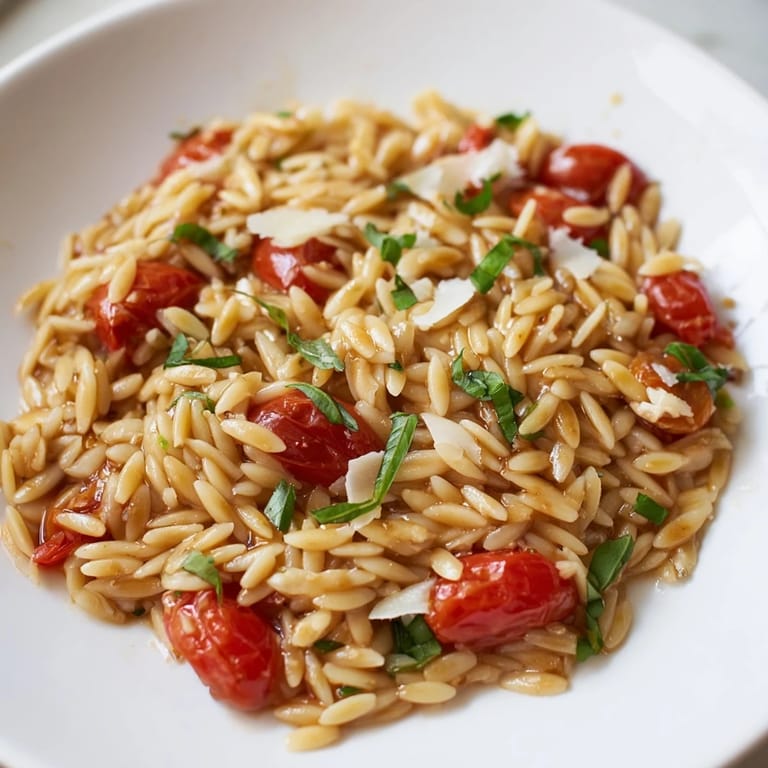
- Remove from heat, then stir in the remaining tablespoon of olive oil, most of the Parmesan, the chopped basil, and a pinch each of salt and pepper. The mixture should feel loose and silky, clinging to every piece of orzo.
- Plate and garnish:
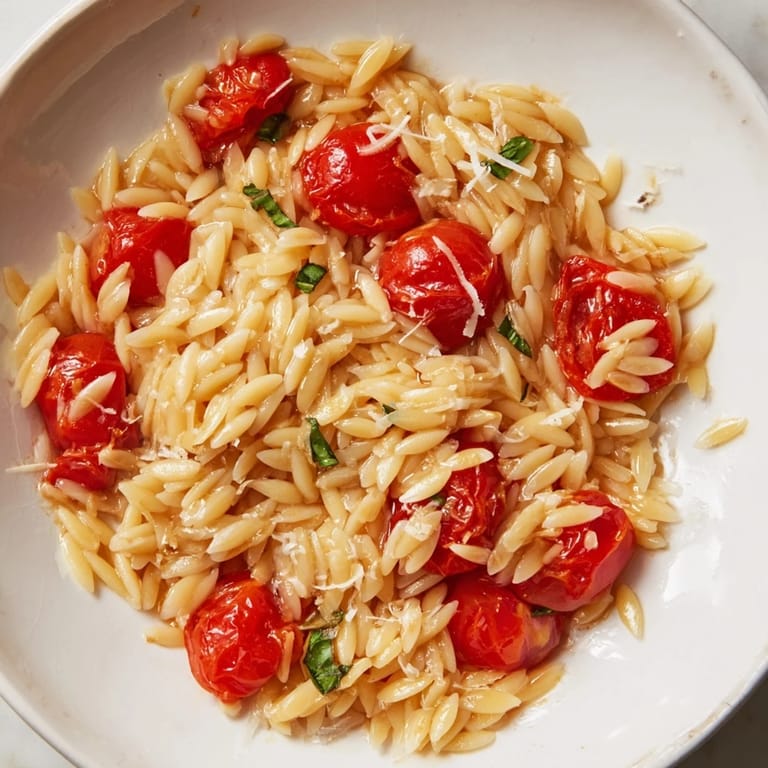
- Divide among bowls and finish with a shower of extra Parmesan and a few torn basil leaves so each bite carries that fresh herb punch.
 Save
Save There was a moment at a summer lunch when my daughter, who usually picks around at everything, asked for seconds without being prompted. It reminded me that sometimes the simplest dishes—just good tomatoes, good cheese, good oil—are the ones that linger in memory longer than the elaborate ones ever do.
Variations That Work
This dish is forgiving and flexible, which is part of why I keep coming back to it. I've added a pinch of red pepper flakes while the garlic blooms for a subtle heat that builds quietly on the palate. Other times I've swapped the Parmesan for Pecorino Romano when I wanted something sharper and more assertive. Once, on an evening when I had fresh spinach that needed using, I sautéed it separately and folded it in at the end, which added color and a slight earthiness that didn't overpower the tomatoes.
Wine and Table Pairings
I learned the hard way that heavy wines clash with this dish—something bright and crisp like a Pinot Grigio or even a light Sauvignon Blanc lets the tomato and basil shine instead of competing with them. It's light enough to serve as a main course in summer, but it also works beautifully as a side dish next to grilled fish or chicken, where its acidity and freshness balance out something richer.
Tips for Success
The secret is moving at a gentle pace rather than rushing—let each ingredient have its moment. Don't skip the starchy pasta water because that's what creates the coating that makes everything taste cohesive. Taste near the end and adjust the salt, remembering that the cheese brings saltiness you might not expect.
- Grate your Parmesan fresh just before cooking if you can, as it melts and combines more smoothly than pre-grated.
- Use medium heat throughout so nothing scorches or browns too dark, which would make the tomatoes taste bitter.
- Serve this immediately while it's warm and the basil is still vibrant.
 Save
Save This is the kind of recipe that proves you don't need a long ingredient list or complicated steps to create something genuinely delicious. It's become my go-to when I want to feel like I've cooked something real without spending the evening in the kitchen.
Recipe FAQs
- → What is the best way to cook orzo for this dish?
Cook orzo in salted boiling water until al dente, then drain and reserve some pasta water to help blend the dish.
- → Can I substitute Parmesan in this dish?
Yes, Pecorino Romano makes a sharper alternative, adding a different but complementary flavor.
- → How do the cherry tomatoes enhance this meal?
Cherry tomatoes soften when cooked, releasing juices that add a sweet and tangy freshness to the orzo.
- → Is extra-virgin olive oil essential here?
Extra-virgin olive oil adds richness and depth, enhancing the Mediterranean flavor profile of the dish.
- → Can this dish be made vegan?
Use a vegan Parmesan substitute and ensure the orzo is free from eggs for a plant-based version.