 Save
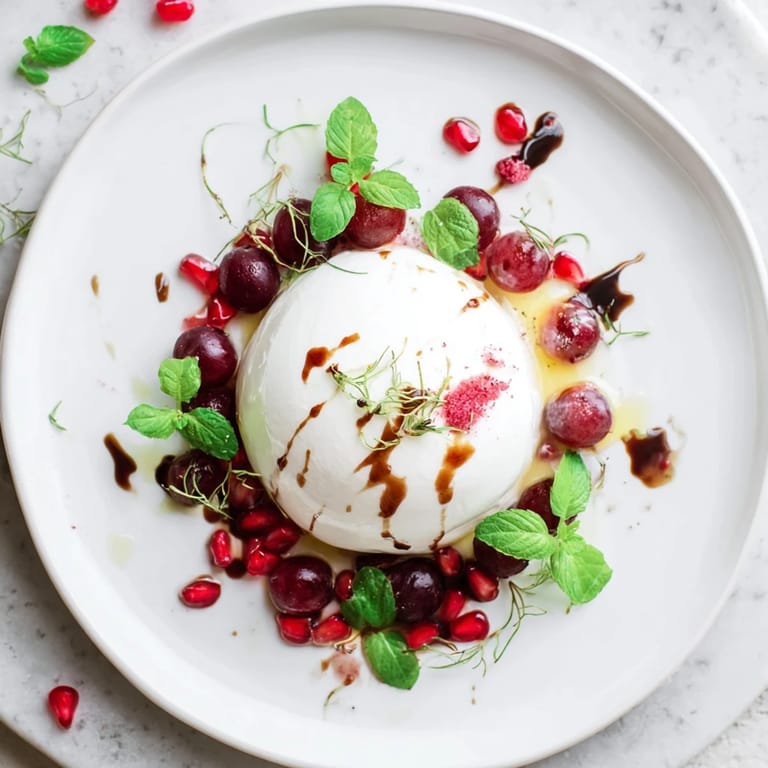
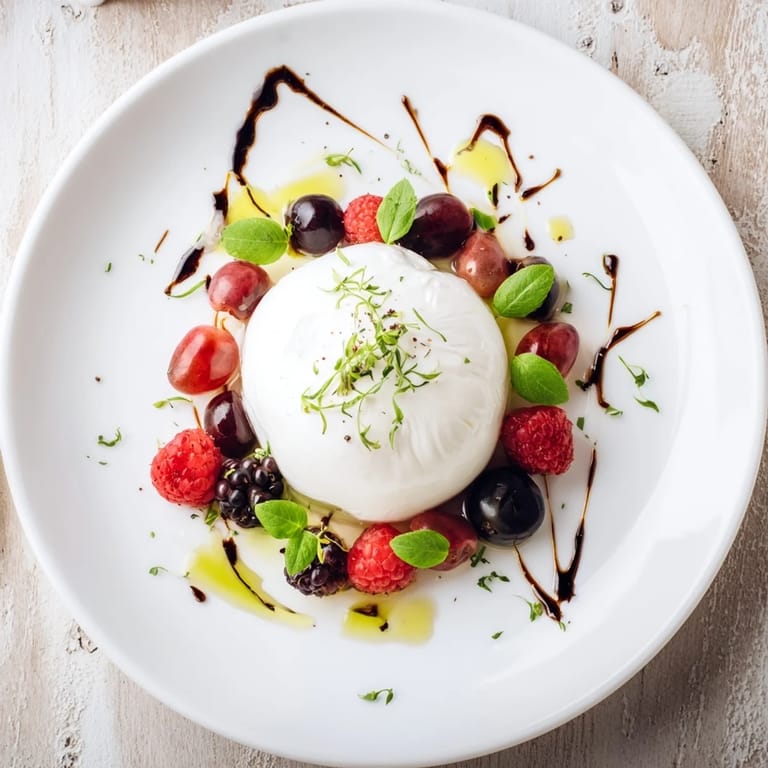
Save There's something about summer evenings that makes you want to create something beautiful to eat. I was arranging ingredients on a platter one June night when the full moon caught my eye through the kitchen window, and suddenly I had the image of a creamy white burrata glowing like that moon, surrounded by jewel-toned berries. The dish practically assembled itself from there, and when I set it down on the table, my guests actually paused before eating it—which doesn't happen often.
I made this for a small dinner party on the longest day of the year, and people kept coming back to it between courses, sneaking bites even though it was technically just the opener. Someone asked if the colors were intentional—the deep purples, the creamy white, the green basil—and I realized I'd accidentally created something that felt a little bit like edible art. That's when I knew it was keeper.
Ingredients
- Fresh blueberries: Use them when they're darkest and firmest; when they start getting soft, save them for smoothies and grab fresher ones for this.
- Seedless purple grapes: Halving them releases their juice slightly, which mingles beautifully with the balsamic—don't skip this step even though it takes an extra minute.
- Burrata cheese: Buy it as close to serving time as possible; the creamier the center, the more impressive your plating moment will be.
- Fresh basil leaves: Tear them by hand rather than cutting, which bruises the delicate leaves and darkens their color.
- Baby arugula or mixed greens: These are optional but they add a gentle peppery note that keeps the salad from feeling one-dimensional.
- Extra-virgin olive oil: This is tasted raw, so splurge a little on one you actually enjoy; it matters here.
- Balsamic glaze: The reduced version works best because it clings to the fruit and burrata without pooling.
- Lemon zest: A microplane makes this almost effortless, and those bright flecks add an unexpected pop of citrus.
Tired of Takeout? 🥡
Get 10 meals you can make faster than delivery arrives. Seriously.
One email. No spam. Unsubscribe anytime.
Instructions
- Set your stage:
- If using greens, spread them across a wide shallow bowl or platter—think of it as your canvas, something that lets the fruit and burrata shine without competing for space. I use a white ceramic platter because the colors just absolutely glow against it.
- Create the frame:
- Scatter the blueberries and halved grapes in a generous ring around the edge, leaving a clear space in the very center. This is where you'll place the burrata, so imagine that moon sitting in the middle of a jeweled orbit.
- Place the centerpiece:
- Set the burrata ball right in the center, intact and proud. At this point, resist the urge to cut into it; that happens only when people are actually eating.
- Dress and finish:
- Drizzle the olive oil evenly over the fruit and the burrata, then spoon the balsamic glaze in a thin stream—I do it in a loose spiral pattern that feels less formal. Sprinkle the torn basil, lemon zest if using it, and a good pinch of salt and pepper, then serve immediately while everything is still cool.
 Save
Save A friend took a photo of this dish that morning and texted it to me weeks later, saying she'd made it for her own dinner party and her kids actually asked for seconds of a salad. That's the moment I knew this wasn't just pretty food—it was actually delicious.
When Color Becomes Flavor
There's a reason this dish works so well visually—the colors actually guide your palate. The deep blue and purple berries signal tartness and antioxidants, the creamy white promises richness, and the green basil adds a whisper of something herbal and alive. It's not an accident that when you eat a spoonful of everything together, it feels balanced and complete.
A Salad That Needs No Apologies
Most simple salads feel like a side dish, something you tolerate before the real food arrives. This one commands attention because it announces itself. The burrata is a statement—creamy, luxurious, a little bit indulgent for something so easy to make. Pair it with crusty bread to catch any of the juices, or let it stand beautifully alone as a light opener on warm nights when no one wants anything heavy.
Playing with Possibilities
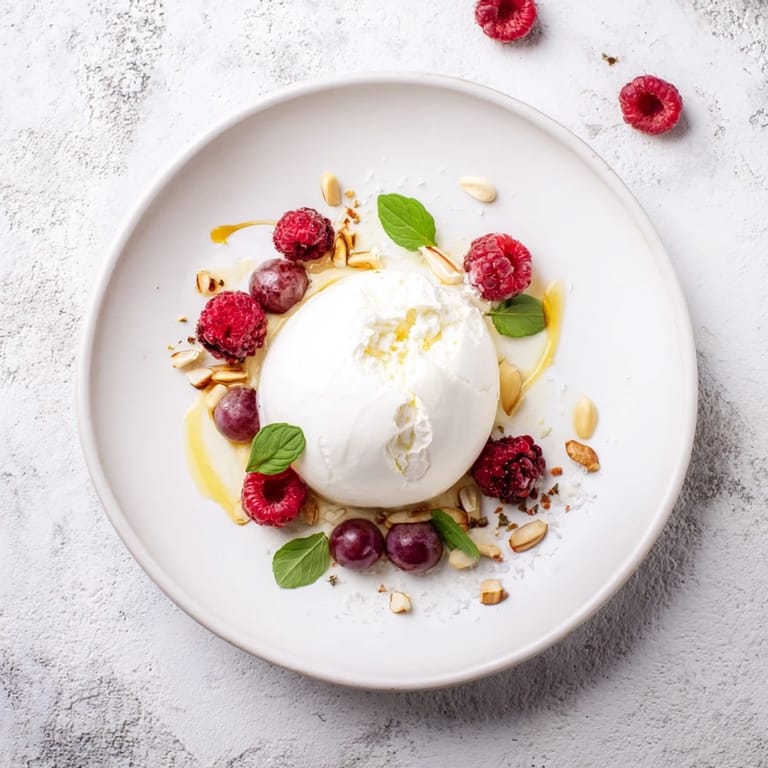
Once you understand this framework, you'll start improvising. Toast some pistachios or walnuts for crunch and earthiness. Swap the blueberries for blackberries if that's what's in season. Try mint instead of basil if you're feeling fresh and bright. The night I made it without the greens, just fruit and cheese on a bare platter, it was somehow even more elegant, like the dish had simplified itself down to pure essentials.
- Add a handful of toasted nuts for texture and a savory note that complements the sweet fruit.
- Try fresh mint in place of basil for a cooling, almost icy flavor that works especially well on humid days.
- If burrata isn't available, fresh mozzarella works too, though you'll lose some of that luxurious creamy center.
 Save
Save This salad taught me that the best dishes aren't always the most complicated ones; sometimes they're just the most honest. It's fruit, cheese, oil, and vinegar, nothing more, and somehow that simplicity is what makes people remember it.
Recipe FAQs
- → What is the best way to serve this salad?
Serve on a wide shallow platter to showcase the beautiful arrangement, accompanied by crusty bread or enjoyed alone for a light meal.
- → Can I substitute the blueberries with other fruits?
Yes, blackberries make a great alternative, providing a similar balance of sweetness and texture.
- → How should the balsamic glaze be applied?
Drizzle the balsamic glaze evenly over the fruit and cheese to enhance flavor without overpowering the fresh ingredients.
- → Are there any optional ingredients to add texture?
Toasted pistachios or walnuts can be sprinkled on top for extra crunch and nutty depth.
- → What herbs complement the flavors in this dish?
Fresh torn basil leaves add a fragrant, slightly sweet flavor that pairs beautifully with the fruit and cheese.
- → Is this dish suitable for a vegetarian diet?
Yes, it includes dairy from burrata but contains no meat or animal-derived gelatin.