 Save
Save I still remember the first time my daughter brought home a craft project from school—a four-leaf clover made from construction paper and glitter. That evening, as we were preparing snacks for her St. Patrick's Day party, I thought, why not make this lucky charm edible? I grabbed some cucumbers, cheese, and grapes from the fridge, and suddenly our kitchen felt like magic. Now, whenever I arrange these little clovers on a plate, I'm transported back to her excited face as she watched food become art.
Last spring, I made a batch of these for my neighbor's daughter's birthday party. Watching twelve kids' faces light up when they realized they were eating four-leaf clovers—and that they could build them themselves—was pure joy. One little boy carefully arranged his clover three times before he was satisfied it was lucky enough. That's when I knew this wasn't just a snack; it was a moment.
Ingredients
- Cucumber slices (16 rounds, about 1/4-inch thick): The foundation of our clover leaves. Cucumbers give you that fresh, crisp bite and a beautiful pale green that reads instantly as natural. I learned the hard way that thicker slices make the whole thing structurally sound—too thin and they bend like sad leaves
- Cheddar cheese slices (16 rounds, same size as cucumbers): The rich, golden layer that makes this snack taste like something special. A small round cookie cutter makes this effortless, but honestly, you can cut squares and it still works perfectly. The cheese is what ties everything together, literally and flavor-wise
- Green grapes or cherry tomatoes (4, halved): Your lucky center stone. Grapes bring sweetness and that pop of juiciness, while cherry tomatoes add a little savory surprise. Either way, this is what catches the eye in the middle of your clover
- Celery sticks or pretzel rods (4 pieces, 3 inches long): The stem that grounds your clover and gives it personality. Celery feels garden-fresh and is naturally gluten-free, while pretzel rods add a salty crunch. Pick based on your mood and who you're feeding
- Cream cheese or hummus (2 tablespoons): Your invisible helper. Just a tiny dab acts like glue to keep everything from sliding around. It's optional if you're arranging these right before serving, but absolutely worth having on hand
- Fresh herbs like parsley or dill (finely chopped): The sprinkle of magic. A tiny pinch of green adds color and a whisper of herbal flavor that makes people pause and think, 'That's clever.'
Tired of Takeout? 🥡
Get 10 meals you can make faster than delivery arrives. Seriously.
One email. No spam. Unsubscribe anytime.
Instructions
- Gather Your Players:
- Slice your cucumbers into thin rounds—about the thickness of a coin. Cut your cheese into rounds the same size using a cookie cutter if you have one, or just eyeball it. Halve your grapes or cherry tomatoes so they sit like little jewels. Cut your celery or pretzel rods to 3-inch lengths. Everything prepped is everything relaxed. Take a breath; the best part is coming.
- Build the Four-Leaf Canvas:
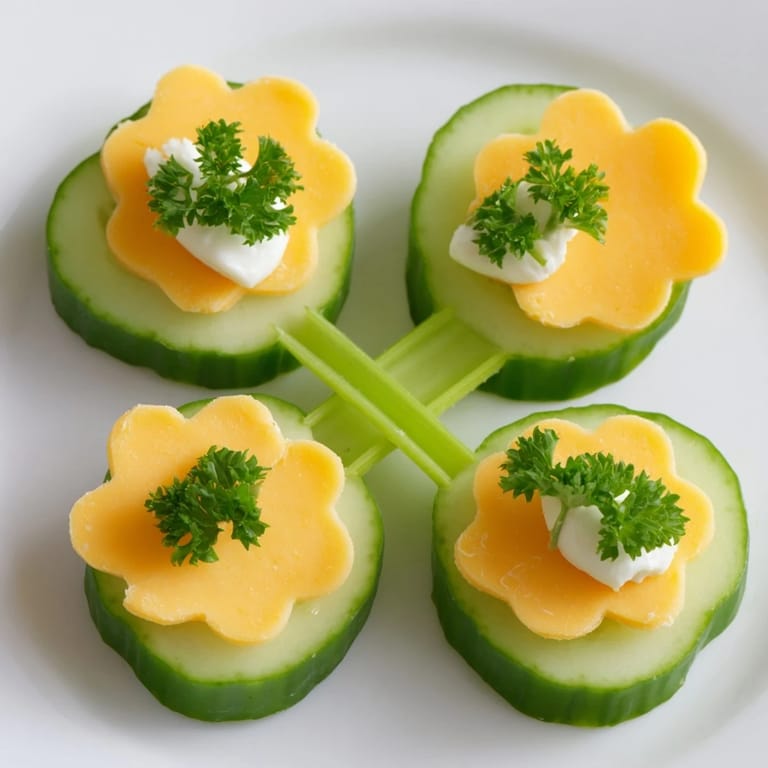
- Find a nice serving plate and imagine the center point where your four leaves will meet. Arrange four cucumber slices in a clover pattern—imagine the points of a compass, with each slice slightly overlapping at the center. They should look like four petals of a flower. This is where precision meets play; don't stress if they're not perfect.
- Layer in the Gold:
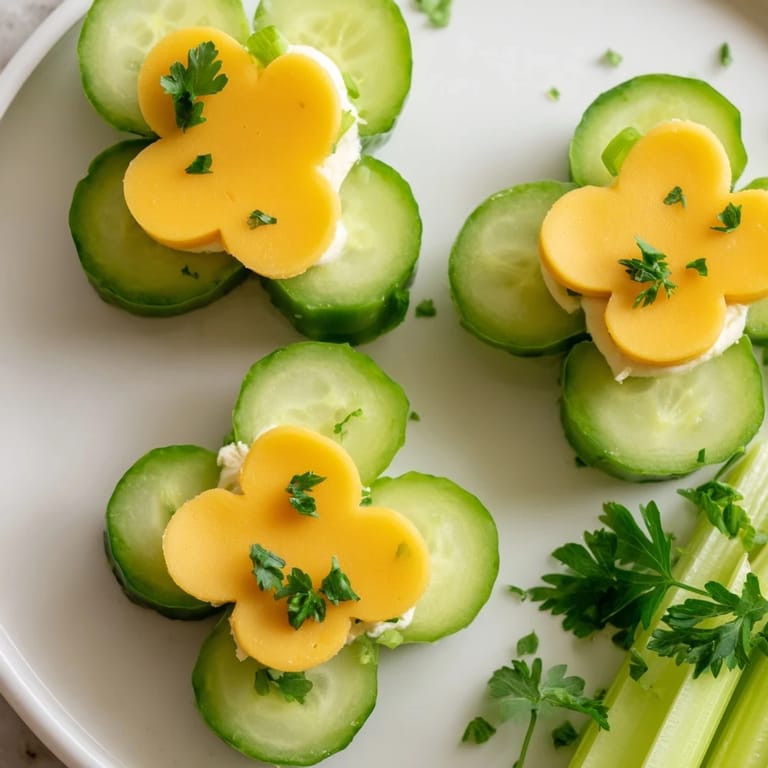
- Place a cheese round on top of each cucumber slice. Watch how the golden cheese against the pale green creates this beautiful, almost stained-glass effect. Press gently so it stays put but doesn't crack.
- Crown Your Clover:
- This is the moment where everything becomes lucky. Place your grape or tomato half right at the center where all four leaves meet. It's the heart of your clover, the thing that makes it special. Step back and look—you've just created something beautiful.
- Set Your Stem:
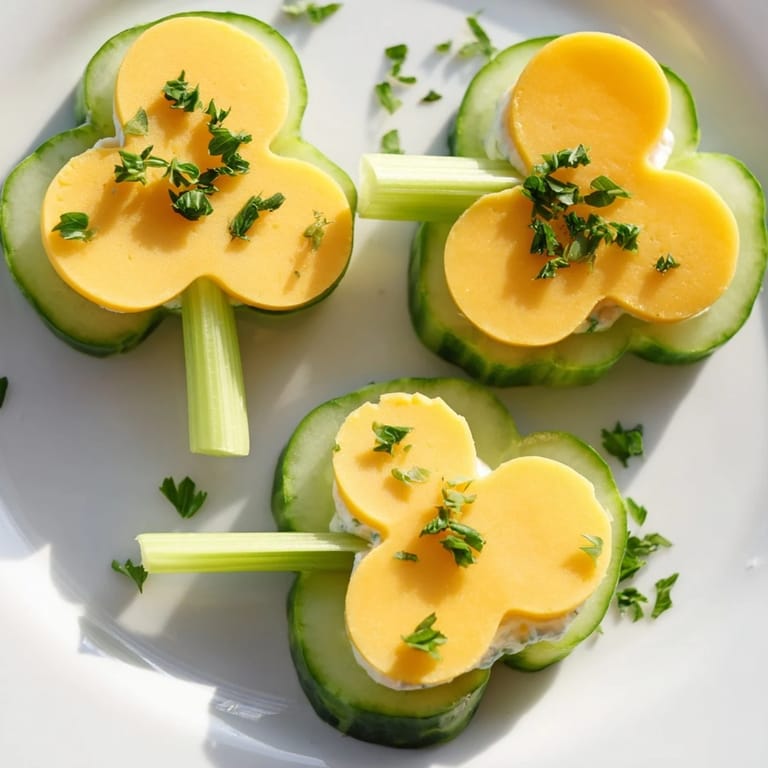
- Position your celery stick or pretzel rod so it extends downward from the center of your clover, like a real stem. Tuck one end slightly under the overlapping leaves so it feels grounded and intentional. This is what transforms the leaves into something that looks alive.
- Secure and Beautify:
- If any pieces feel loose, use a tiny dab of cream cheese or hummus as an edible adhesive between the layers. Sprinkle fresh herbs over the top if you're feeling fancy—it adds color and a hint of flavor that makes people lean in closer.
- Repeat the Magic:
- Make three more clovers using the same method. Each one will be slightly different, and that's exactly right. Food made by hand should have personality.
 Save
Save There was this moment at my son's school luncheon when I spotted his clover snack sitting untouched on his tray while he played with the other kids. For a second, I worried he didn't like it. Then he came running back, scooped it up proudly to show his best friend, and said, 'My mom made this lucky one for me.' That's when I realized this snack isn't about being fancy—it's about being seen and feeling special.
The Art of Presentation
What makes this snack work isn't just the ingredients—it's the arrangement. There's something about transforming ordinary vegetables and cheese into a recognizable shape that shifts the whole experience. When food tells a story, when it asks to be photographed or shared, it becomes memorable. The four-leaf clover shape does that effortlessly. You're not just eating a snack; you're eating a symbol of luck. That matters on a visceral level, especially with kids who suddenly see eating vegetables as participating in magic rather than following rules.
Making It Your Own
This recipe is a framework, not a formula. Swap ingredients based on what you have and who you're feeding. Use different colored peppers instead of cheese for a rainbow clover. Try avocado slices for richness. Use radishes for a peppery bite. The structure stays the same; everything else bends to your mood. The beauty of this snack is that it invites creativity rather than demanding precision, which means even your kitchen disasters will look intentional and adorable.
From Kitchen Craft to Table Magic
This recipe started as a response to a craft project and became a bridge between art and eating. It's the kind of thing that takes 15 minutes but creates a memory that lasts years. It works for St. Patrick's Day, sure, but it also works for those afternoons when you want to remind someone—maybe yourself—that a little luck is always possible when you put in the tiniest bit of effort.
- Make extra stems and components to have on hand; kids love assembling these themselves, turning snack time into a creative activity
- Serve these cold straight from the fridge for the crispest, most refreshing version
- A platter of mismatched clovers is far more charming than perfectly uniform ones
 Save
Save There's something quietly powerful about feeding people food that makes them smile before they even taste it. This little four-leaf clover does exactly that.
Recipe FAQs
- → What ingredients form the clover leaves?
Four overlapping cucumber slices topped with thin cheddar cheese rounds create the clover leaves.
- → What options are there for the clover center?
Either small green grapes or halved cherry tomatoes can be used to form the center of the clover.
- → How can I make the stem part?
The stem is made from celery sticks cut to size or thin pretzel rods, which are placed beneath the leaves.
- → What helps the components stick together?
A small amount of cream cheese or hummus acts as an edible adhesive to hold the snack parts securely.
- → Can this snack be gluten-free?
Yes, using celery sticks as the stem keeps the snack gluten-free, avoiding pretzel rods.