 Save
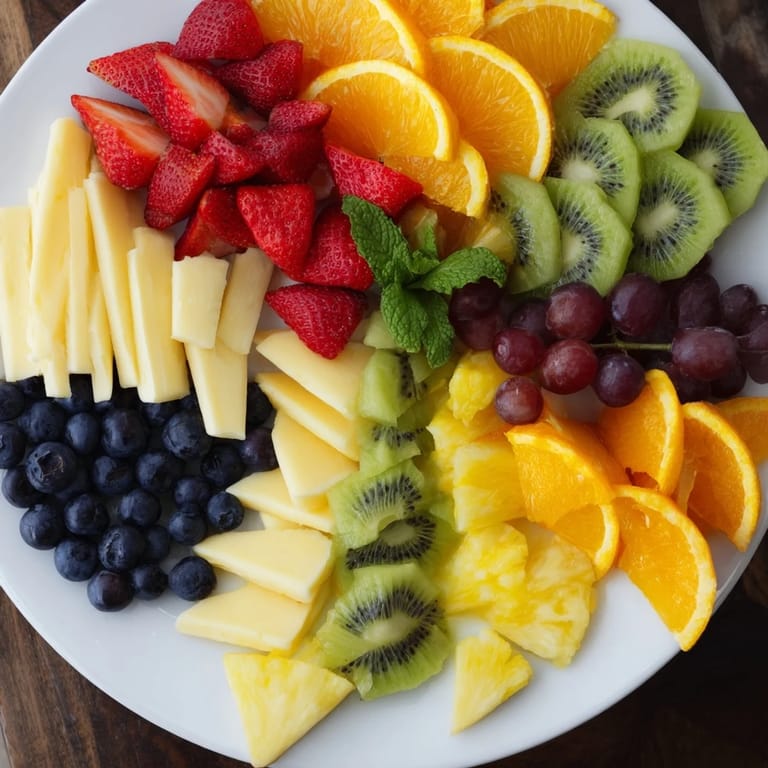
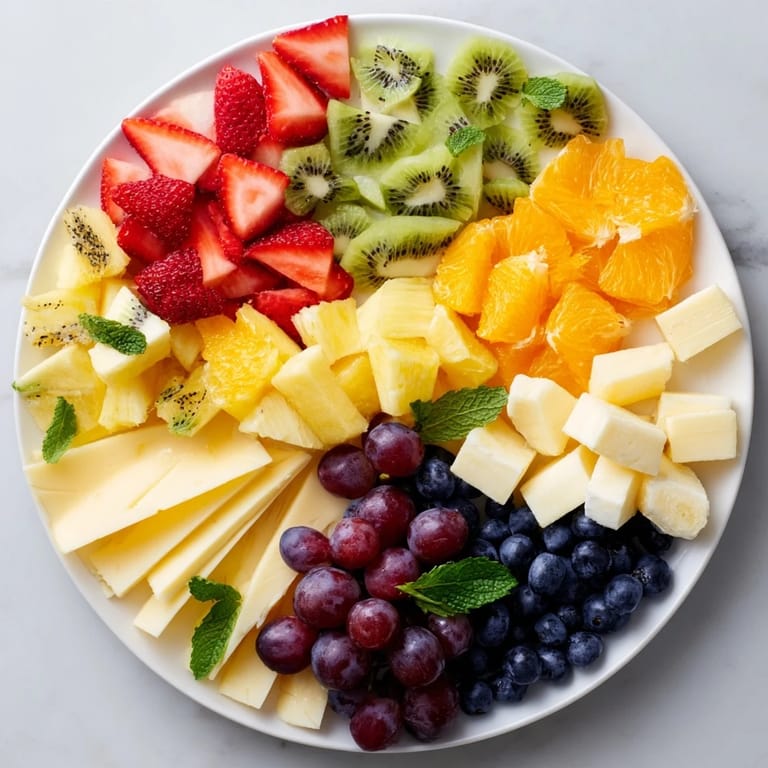
Save My sister arrived at the dinner party with a challenge: make something that would stop everyone mid-conversation. I'd been staring at my round serving board, thinking about patterns and color, when it hit me. What if fruit and cheese weren't just ingredients but paint? Two hours later, people were actually standing in silence, forks hovering, just looking. Sometimes the most memorable dishes aren't about complicated techniques but about making people see food differently.
I learned this lesson hosting a baby shower on a humid Saturday when I'd promised something spectacular. The moment I stepped back and saw that first kaleidoscope circle taking shape, even half-finished, I knew I'd made something worth doing. A friend grabbed her phone to photograph it, and suddenly everyone was invested in watching it come together. That's when I realized this platter does something special: it makes people feel like they're part of the creation, not just consumers of it.
Ingredients
- Seedless red grapes (1 cup): These become your darkest color anchors; their glossy rounds catch light beautifully and provide natural sweetness.
- Fresh strawberries (1 cup, hulled and halved): Cut them consistently or they'll throw off your pattern; their soft red is essential for visual flow.
- Kiwi (1 cup, peeled and wedged): The bright green slices are your pattern-breaker; they make the eye move around the board.
- Pineapple (1 cup, small wedges): Choose a ripe one that smells fragrant; the pale yellow adds warmth without overwhelming the design.
- Blueberries (1 cup): These are your filler and your visual glue; buy them a day or two before so they're at their deepest blue.
- Orange (1 small, peeled and segmented): Segment these carefully over a bowl to catch the juice; they're citrus brightness in every bite.
- Aged cheddar (100 g, triangular wedges): That slight sharpness keeps this from feeling one-note sweet; wedge them thick enough to hold their shape.
- Manchego (100 g, thin wedges): This cheese has a subtle nuttiness that feels sophisticated without being pretentious; it's your golden thread.
- Brie (100 g, small wedges): Cut these just before serving or they'll warm and collapse; they're your creamy moments on the palate.
- Goat cheese (100 g, sliced into rounds): The tanginess here is a secret weapon against monotony; use a thin wire slicer for clean rounds.
- Fresh mint (optional): If you use it, add it at the very last moment and tuck it into small gaps for pops of green.
Tired of Takeout? 🥡
Get 10 meals you can make faster than delivery arrives. Seriously.
One email. No spam. Unsubscribe anytime.
Instructions
- Prep your canvas:
- Wash and dry everything thoroughly because water spots will betray all your careful work. Lay out your round platter and take a breath—this is when you shift from cook to artist.
- Cut with intention:
- Uniform shapes aren't just pretty; they're the language your pattern will speak. Cut strawberries in half, kiwis into wedges, and cheese into matching shapes so pieces talk to each other across the board.
- Start at the edge:
- Place your first fruit or cheese piece right at the outer rim and establish your rhythm from there. Think of it like creating concentric circles on a record; each layer builds on what came before.
- Build your pattern:
- Alternate fruit, cheese, fruit, cheese in a repeating sequence. Work slowly enough to notice when colors complement each other and when something needs adjustment.
- Fill the gaps:
- Blueberries and grapes become your problem-solvers here; they nestle into spaces and pull the design together. Stand back occasionally and squint at the board—this tricks your eye into seeing the overall pattern instead of individual pieces.
- Add the final touch:
- Scatter mint leaves into crevices if using them, just seconds before serving. This is your signature flourish.
 Save
Save What surprised me most wasn't how simple this was to make, but how it changed the entire mood of the meal. People lingered over choosing their pieces, paired fruits with cheeses they'd never tried together, and actually tasted things instead of just eating. A vegetarian friend pulled me aside and said she felt genuinely celebrated by a platter that wasn't an afterthought. That stuck with me.
The Color Hierarchy That Works
I've learned that the strongest kaleidoscope boards follow an unspoken rule: deep colors (dark grapes, aged cheddar) anchor the outer rings, bright colors (kiwi, strawberry) in the middle, and pale colors (pineapple, brie) fill the inner zones. This creates depth even though everything sits flat. When I reverse it or overthink it, the board loses its magnetism. Trust your instinct about which colors need to talk to each other; if you notice two pieces clashing, they probably do, and moving one slightly fixes it instantly.
Seasonal Swaps That Elevate This
Summer calls for cherries, peaches, and berries at their peak; early fall begs for grapes and figs. Winter is when I introduce pomegranate arils for their jewel-like flash, or trade some cheese for candied nuts. The frame stays the same, but the ingredients shift with what's alive in the market. Spring strawberries are so floral and delicate that they deserve their own moment as the primary fruit, surrounded by white cheeses that let them shine.
Making It Yours
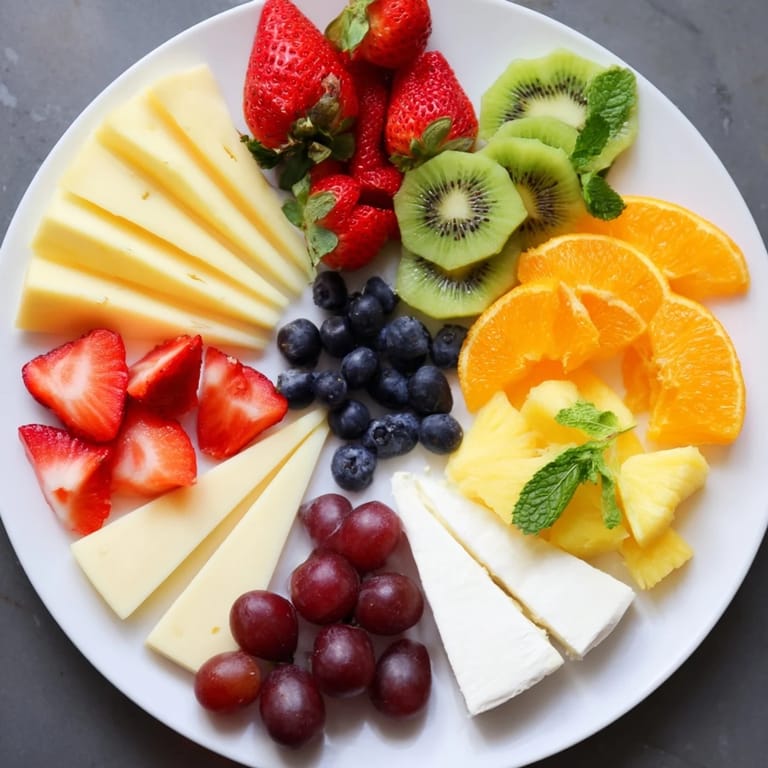
The magic of this platter is that it's yours to customize without losing its soul. I've seen versions with olives and roasted almonds tucked into the gaps, others where fresh herbs like basil replace mint, and one unforgettable version that included candied pecans and a drizzle of honey at service. None of these felt like betrayals of the original; they felt like translations. This dish works because it's a structure, not a prescription.
- Add a small bowl of honey or jam at the center if you want to give the cheese a subtle companion.
- Roasted nuts fill gaps and add textural surprise; toast them fresh the same day.
- If anyone at your table is dairy-free, a cluster of plant-based cheese rounds holds its own visually and keeps everyone included.
 Save
Save This is the kind of dish that reminds you why you cook in the first place: to gather people, to give them something beautiful to look at before they taste it, to make a moment feel intentional. Serve it with sparkling wine or a light rosé and watch what happens.
Recipe FAQs
- → How do I achieve the kaleidoscope effect?
Slice fruits and cheeses into uniform wedges or rounds, then arrange them in alternating, repeating segments on a circular platter to create symmetry and vibrant color patterns.
- → Can I substitute the cheeses with others?
Yes, feel free to swap cheeses with similar textures and shapes to maintain the harmonious presentation and flavor balance.
- → What fruits work best for this platter?
Use colorful fruits like strawberries, kiwi, pineapple, grapes, and blueberries that can be cut into neat wedges or segments for consistent visual appeal.
- → How should I store leftovers?
Cover the platter tightly and refrigerate to preserve freshness, ideally consuming within a day to maintain texture and flavor.
- → Are there any presentation tips?
Fill gaps with small fruits like grapes or blueberries and garnish with fresh mint leaves to enhance color contrast and aroma.
- → Is this suitable for vegetarian diets?
Yes, it fits vegetarian and gluten-free preferences, though some cheeses may contain animal rennet, so check labels if strict vegetarian adherence is needed.