 Save
Save I'll never forget the summer I spent working at my aunt's beach cottage, spending lazy afternoons on the porch overlooking the Atlantic. She had this incredible talent for throwing together the most beautiful charcuterie boards—nothing fussy, just honest ingredients arranged with intention. One afternoon, she created an anchor-shaped board that became the centerpiece of our casual dinner party, and honestly, it was the moment I realized that the presentation of food could be just as meaningful as the food itself. That board sparked something in me: the desire to create edible art that tells a story.
I remember using this exact board design when my sister got engaged—she's always dreamed of a coastal wedding, and we threw her a surprise engagement party right there in our kitchen. Watching her face light up when she saw that anchor, knowing it was meant just for her, reminded me that the best food moments aren't about perfection; they're about intention and love made visible.
Ingredients
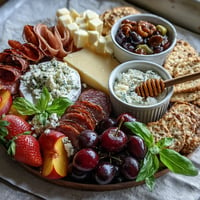
- Creamy brie, cut into wedges (150 g): This is your anchor's foundation—choose a really good brie because its buttery richness will shine. I learned to chill it slightly before cutting so the wedges hold their shape beautifully on the board.
- Herbed goat cheese, rolled into small balls (120 g): The tanginess here balances the richness of the brie and adds visual texture. Rolling them is oddly meditative, and guests always love discovering these little pockets of flavor.
- Blue cheese, crumbled or sliced (100 g): This is your bold statement—it's assertive and coastal, a little nod to that briny, oceanic feeling. Don't be shy with it.
- Smoked salmon slices (120 g, optional): If you're including this, let it be one of your first placements. The deep coral color anchors the blue-and-white palette beautifully and tastes like the sea itself.
- Prosciutto (100 g, optional): Paper-thin and delicate, this adds elegance and a salty contrast that makes everything else taste better.
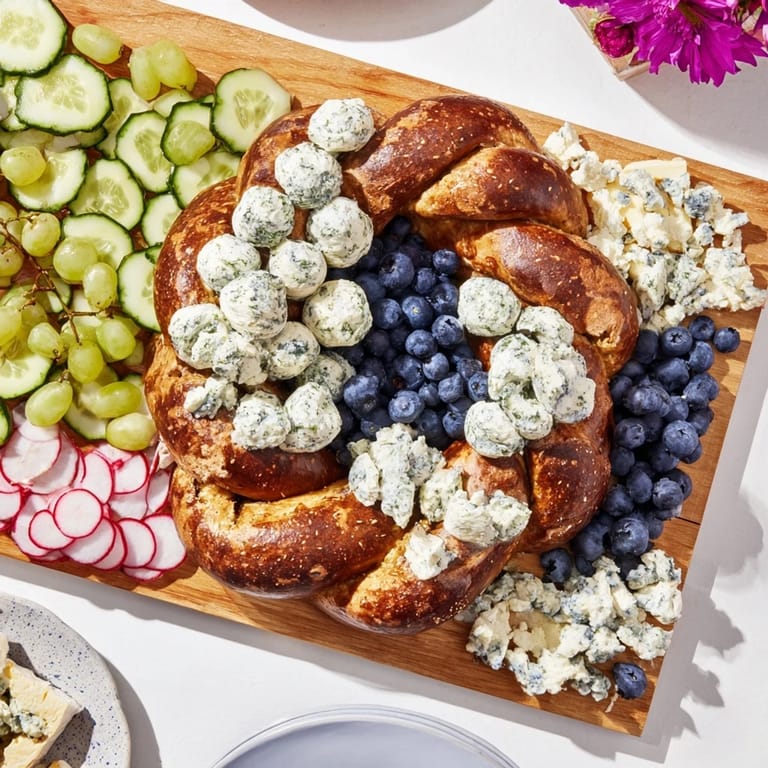
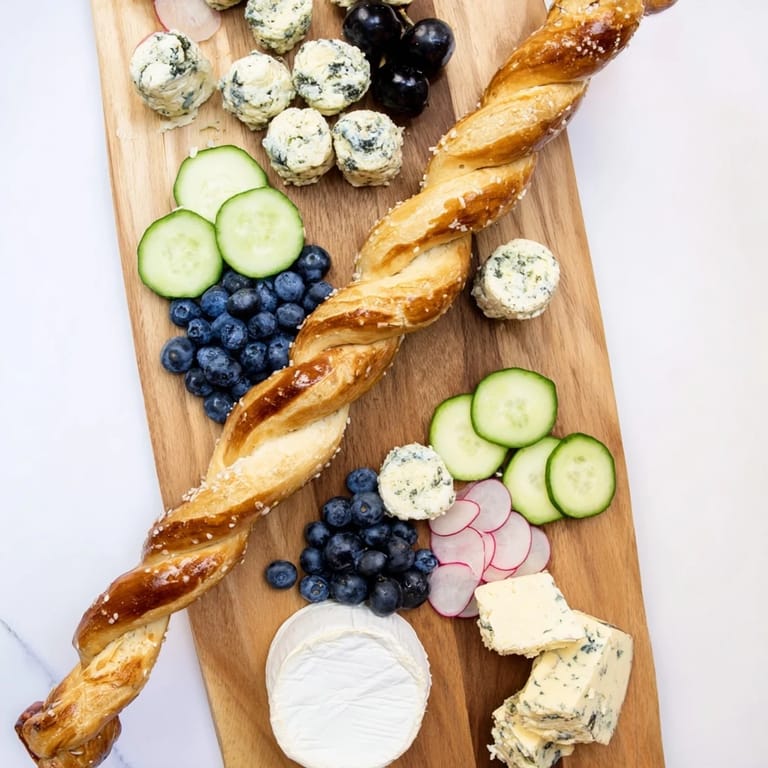
- Large twisted pretzels (100 g, rope-like): These form your anchor outline—their knobby texture mimics real nautical rope. This is the structure everything else builds around, so take your time arranging them.
- Round water crackers (80 g): Neutral enough to let other flavors shine, crisp enough to hold up under the weight of toppings. These are the workhorses of the board.
- Baguette slices (60 g): For those who want something sturdy to hold the cheeses. Toast them lightly if you have time—it makes them crispy and golden.
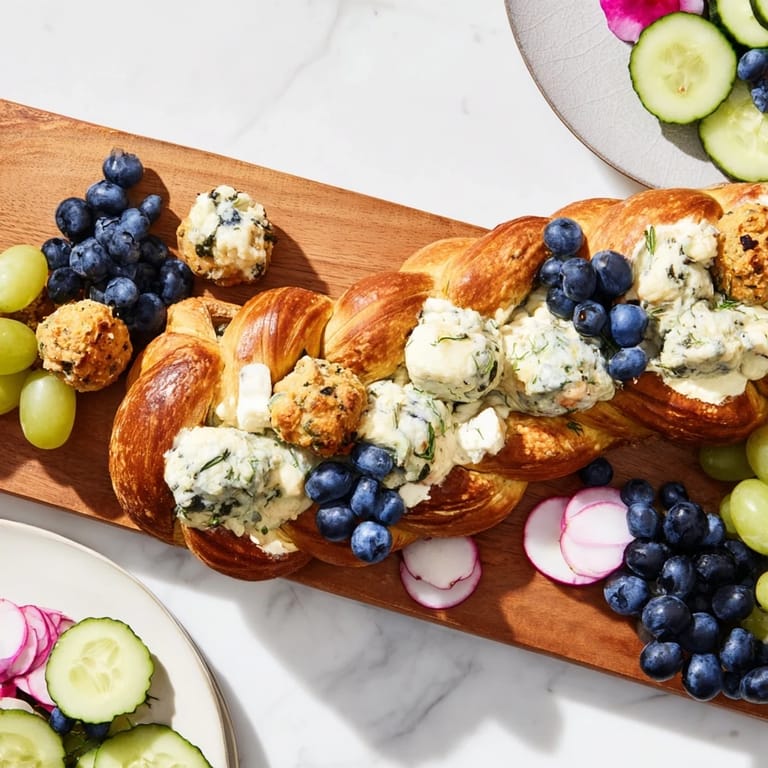
- Blueberries (100 g): Your color story. They roll slightly, so place them last or in nooks where they'll stay put. Each one is a tiny dot of the sea.
- Black grapes (80 g): These add weight and structure to your design. Their sweetness is a gentle counterpoint to the salted meats and sharp cheeses.
- Small apple, sliced (1): A touch of brightness and crunch. Toss the slices in a little lemon juice so they don't brown—this keeps your board looking fresh throughout the evening.
- Dried apricots (50 g): Chewy and sweet, these add warmth to the cool color palette. I often pair these with the goat cheese for a flavor combination that feels both simple and sophisticated.
- Cucumber slices (from 1 small cucumber): Cool and refreshing, these are the palette cleansers between bites. Slice them just before serving so they stay crisp.
- Sugar snap peas (80 g): Raw and crunchy, these add life to the board. Their green is a subtle accent to your blue-and-white theme.
- Radishes, halved (50 g): Pretty, peppery, and underrated. They add visual interest and a little bite that wakes up your palate.
- Whipped cream cheese, tinted light blue (80 g): Use spirulina or butterfly pea powder for natural color—this is what makes your board feel intentional and beachy. Whipped texture makes it spreadable and cloud-like.
- Tzatziki or herbed yogurt dip (60 g): Cool and herbaceous, this ties everything together. If you can't find tzatziki, a simple yogurt mixed with fresh dill works beautifully.
- White chocolate seashells or candies (40 g, optional): These are pure whimsy—edible decorations that make guests smile. They're not essential, but they complete the nautical story.
- Fresh dill sprigs or edible flowers (for garnish): A whisper of the sea. Dill especially brings everything into focus—it's both seasoning and decoration.
Tired of Takeout? 🥡
Get 10 meals you can make faster than delivery arrives. Seriously.
One email. No spam. Unsubscribe anytime.
Instructions
- Choose your stage:
- Select a large wooden board or serving platter—wood feels warm and organic, ceramics feel modern. The size matters: you want room for your anchor to breathe. I prefer boards at least 16 inches long, but work with what feels right. Take a moment to really look at your surface; you're about to create art on it.
- Build your anchor outline:
- This is where the magic begins. Take those rope-like pretzels and, working slowly from the top, create the anchor shape in the center of your board. The pretzels will overlap naturally—let them. Adjust as you go, stepping back to see the shape taking form. Your anchor should feel organic, not rigid. This is the structure everything else will lean on.
- Plant your dip stations:
- Place small bowls of the whipped blue cream cheese and tzatziki at strategic points—the anchor's eye, or where the flukes meet the shank. These become visual anchors themselves (pun intended) and give your guests natural places to dip and taste.
- Layer in the proteins:
- Now start filling in the anchor's outline with clusters of cheese and meats. Begin with the wedges of brie, then tuck in the goat cheese balls. If you're using smoked salmon and prosciutto, fold them gently and cluster them like they're waves. Alternate colors and textures so no two similar items sit right next to each other. This is where patience becomes beauty.
- Add the jewels:
- Scatter blueberries and black grapes along the pretzel outline and into any gaps. Watch how they catch the light—these are the moments that make the board feel alive. Don't overthink placement; let them nestle naturally.
- Frame with freshness:
- Arrange your cucumber slices, sugar snap peas, and radishes around the anchor shape, respecting that blue-and-white theme. The greens and crisp vegetables should frame the richness of the cheeses, creating visual rhythm and offering lighter bites throughout the evening.
- Scatter the vehicles:
- Place crackers and baguette slices around the outside of the anchor, beyond the pretzel outline. These are how people eat everything else, so make sure they're accessible but not crowding the centerpiece.
- Crown with magic:
- Add white chocolate seashells and edible flowers as the final touch. Position fresh dill sprigs throughout—they'll add color and aroma. This is the moment your board transforms from beautiful to unforgettable.
- Serve with presence:
- If you're serving immediately, carry this board to your table with pride. If you're refrigerating, cover it loosely with plastic wrap, leaving the dips exposed so they don't sweat. When it's time to serve, let it come to room temperature for about 15 minutes so the cheeses regain their creaminess.
 Save
Save I think about the engineer's wife who came to one of my dinner parties and, after seeing this anchor board, decided to throw a completely unexpected career-change celebration dinner for her husband. She recreated that board for their closest friends, and I heard later it became the most meaningful part of the evening—not because of what was on it, but because she'd taken the time to make something beautiful during a moment of uncertainty. Food, I learned, is often the language we use when words aren't enough.
Making It Your Own
This board is a template, not a prescription. I've made it with three cheeses, and I've made it with seven. I've created versions heavy on the meats and versions that lean entirely vegetarian. The anchor shape is the constant, but everything else can shift based on what's in your kitchen and what your guests love. One winter, I used roasted red peppers instead of fresh fruit, and it was stunning. The joy of a charcuterie board is that it invites creativity rather than demanding precision.
The Color Story
There's something almost meditative about working with a limited color palette. Blue and white might seem restrictive, but it's actually liberating. The blues of the berries and tinted cream cheese don't fight with the white of the chocolate seashells and the cream of the cheeses. The blacks and corals of the meats become focal points rather than visual noise. If you ever struggle with board design, start with a color story—choose two or three colors and let that guide every choice. Your board will feel intentional and cohesive, even if you've just grabbed what's available.
Pairing and Serving Wisdom
I serve this with a crisp Sauvignon Blanc or, if it's a warm afternoon, sparkling water with fresh lemon. The acidity cuts through the richness of the cheeses and complements the seafood. For a non-alcoholic option, a good sparkling water with a citrus element is genuinely beautiful. One thing I've learned: your drink choice matters as much as your food choices. It either enhances the experience or distracts from it. Give it the same thought you've given to your board.
- Set out small plates and napkins nearby—guests will want to build their own combinations without worrying about dripping cheese on themselves
- Arrange small cheese knives or spreaders near the dips so people can be generous without feeling wasteful
- If you're serving this as a main course rather than an appetizer, scale it up and consider adding some hearty elements like mixed nuts or seed crackers
 Save
Save This board is ultimately about creating a moment where people slow down, gather together, and experience something beautiful before even tasting anything. That's the real anchor—not the shape, but the memory you're creating together.
Recipe FAQs
- → How is the anchor shape created?
Large twisted pretzels are arranged to form the rope-like outline of the anchor in the center of the serving board.
- → Can this board be made vegetarian?
Yes, simply omit smoked salmon and prosciutto to keep it vegetarian without compromising flavor.
- → What cheese varieties are used?
Creamy brie wedges, herbed goat cheese balls, and crumbled or sliced blue cheese create a rich cheese selection.
- → How is the blue color achieved on the cream cheese dip?
Natural food colorings like spirulina or butterfly pea powder tint the whipped cream cheese to a light blue shade.
- → What garnishes enhance the nautical theme?
White chocolate seashells, edible blue and white flowers, and fresh dill sprigs add coastal charm and visual interest.
- → What are good beverage pairings?
A crisp Sauvignon Blanc or sparkling water with lemon complements the fresh, coastal flavors beautifully.