 Save
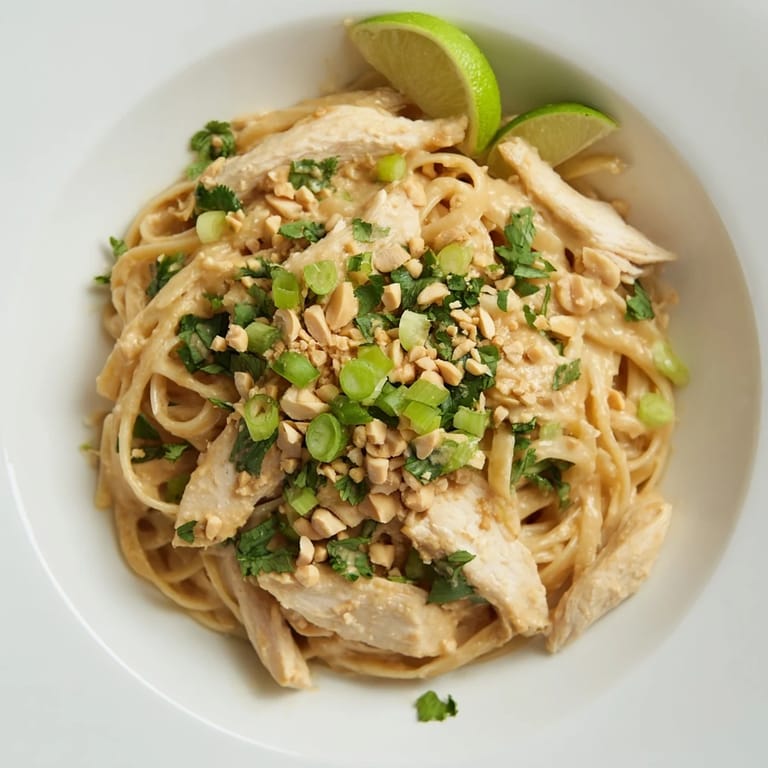
Save There's something about the way a spoon glides through warm peanut sauce that makes me think of a balmy evening when my neighbor brought over a container of homemade Thai curry and I realized I'd been overthinking noodle dishes all along. That night, I started experimenting with pasta instead of rice noodles, and this Thai peanut chicken pasta emerged—a dish that tastes like it took hours but comes together in barely half an hour. It's become my go-to when I want something bold and satisfying without the exhaustion.
I made this for friends during a heat wave, and watching them actually clean their bowls instead of politely pushing food around felt like a small victory. One guest asked for the recipe with her phone already out, which is always the highest compliment a cook can receive.
Ingredients
- Linguine or spaghetti (340 g): The thinner pasta varieties cling beautifully to the sauce without becoming heavy; I learned this after a disappointing experiment with rigatoni.
- Boneless, skinless chicken breast (450 g), thinly sliced: Slicing against the grain ensures tenderness and faster cooking—a knife technique that genuinely matters here.
- Vegetable oil (1 tbsp): High smoke point is essential for getting that golden sear without burning the chicken.
- Ready-made Thai peanut sauce (1 cup): This is where I give myself permission to use a shortcut without guilt; quality matters, so find one you'd eat straight from the jar.
- Soy sauce (2 tbsp): The umami anchor that ties everything together and prevents the dish from tasting one-dimensional.
- Lime juice (2 tbsp): Freshly squeezed makes a noticeable difference—bottled juice won't give you that brightness.
- Fresh ginger (1 tsp, grated): A small amount adds warmth and complexity that takes the dish beyond basic peanut flavor.
- Garlic (2 cloves, minced): Always use fresh; garlic powder won't provide the same aromatic lift.
- Fresh cilantro (1/4 cup, chopped): This herb feels essential here, bringing a herbaceous note that modern culinary instinct craves.
- Fresh mint (2 tbsp, optional): When I include it, the dish becomes more layered and Thai-inspired; when I skip it, it's still excellent.
- Green onions (2, thinly sliced): Part goes in at the end for freshness, part garnishes—this split adds texture.
- Roasted peanuts (1/4 cup, chopped): The garnish that adds crunch and reminds you why peanuts belong in this equation.
- Lime wedges: For squeezing at the table, because some people are picky about acidity levels and deserve agency.
Tired of Takeout? 🥡
Get 10 meals you can make faster than delivery arrives. Seriously.
One email. No spam. Unsubscribe anytime.
Instructions
- Set your pasta in motion:
- Fill a large pot with salted water and bring it to a rolling boil—it should taste like a pleasant ocean. Add pasta and cook until al dente, which means it still has a slight firmness when you bite it, then drain and set aside.
- Sear the chicken until golden:
- Heat oil in a large skillet over medium-high heat until it shimmers slightly. Add your thin chicken slices in a single layer, season with salt and pepper, and let them sit undisturbed for a minute before stirring—this creates that golden crust that tastes like restaurant quality. They'll be done in about 5 to 7 minutes, and you'll know when the flesh turns opaque all the way through.
- Build the sauce gently:
- Reduce heat to medium and add the peanut sauce along with soy sauce, lime juice, ginger, and garlic directly into the skillet. Stir slowly for 2 to 3 minutes, letting the flavors warm through and meld without any aggressive boiling that might break down the sauce.
- Bring it all together:
- Add the drained pasta and cooked chicken to the skillet and toss with confidence, making sure every strand gets coated in that glossy, fragrant sauce. This is the moment where individual components transform into one cohesive dish.
- Finish with freshness:
- Remove from heat and stir in the cilantro, mint if you're using it, and half of the sliced green onions. The residual heat will soften the herbs just slightly while keeping them vibrant.
- Plate and garnish:
- Divide among bowls and top with chopped peanuts, the remaining green onions, and extra lime wedges. This is where you let people control their own flavor intensity.
 Save
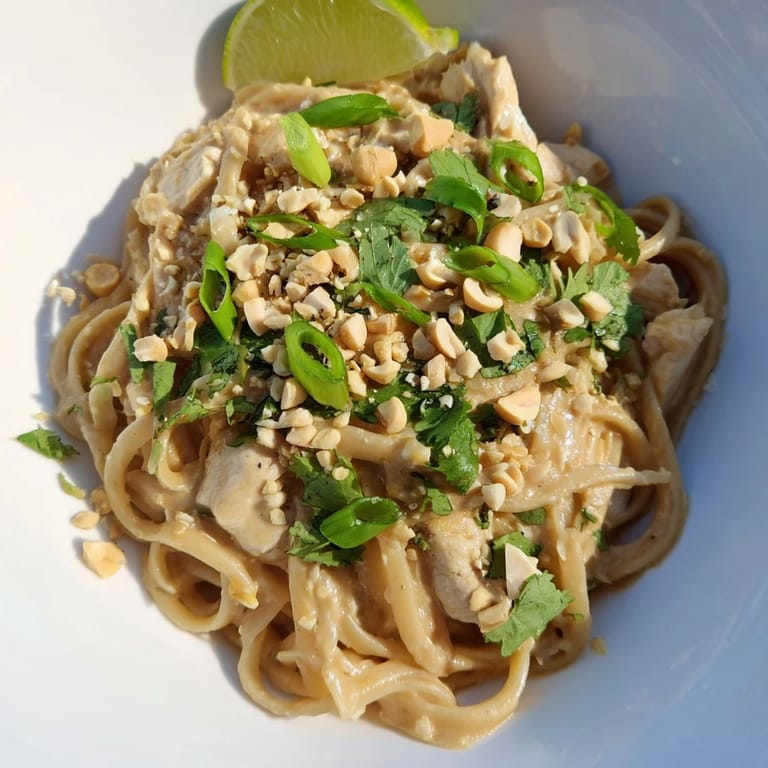
Save There's a quiet moment in my kitchen when someone asks for seconds, and that's when this dish feels like more than just dinner. It means the balance worked, the flavors sang, and I'd made something worth remembering.
Why This Fusion Works
Thai flavors have always been about creating harmony between heat, sweetness, saltiness, and sourness, and pasta as a vehicle actually makes sense when you think about it—it's neutral enough to carry bold sauce but substantial enough to feel complete. I was skeptical at first, but the way the sauce coats each strand and the pasta absorbs the peanut essence is genuinely elegant. It's not pretending to be authentic Thai food; it's something better—it's honest fusion that respects both traditions.
Making It Your Own
This recipe is forgiving because the structure is simple, which means you have room to play. If you like heat, a dash of sriracha or fresh red chili flakes stirred into the sauce will add bite without overwhelming everything else. For those avoiding meat, tofu cubes pressed and pan-fried until crispy work beautifully, and gluten-conscious eaters can swap in rice noodles or any pasta alternative without losing the dish's character. I've made it with extra ginger when I was fighting a cold, and the warming effect was therapeutic.
Pairing and Serving Suggestions
This dish doesn't demand a complicated wine pairing, but a crisp Riesling with a touch of sweetness balances the peanut richness elegantly. If you're in the mood for something non-alcoholic, iced Thai tea with its creamy sweetness creates a conversation in your mouth alongside the savory pasta. Some people prefer eating this at room temperature the next day, which is when the flavors deepen and meld into something almost more interesting than fresh.
- Make a double batch on Sunday and enjoy it throughout the week—it reheats gently without drying out.
- Serve alongside a simple cucumber salad or steamed vegetables if you want to lighten the feel of the meal.
- Fresh lime wedges at the table let everyone adjust the final flavor to their preference.
 Save
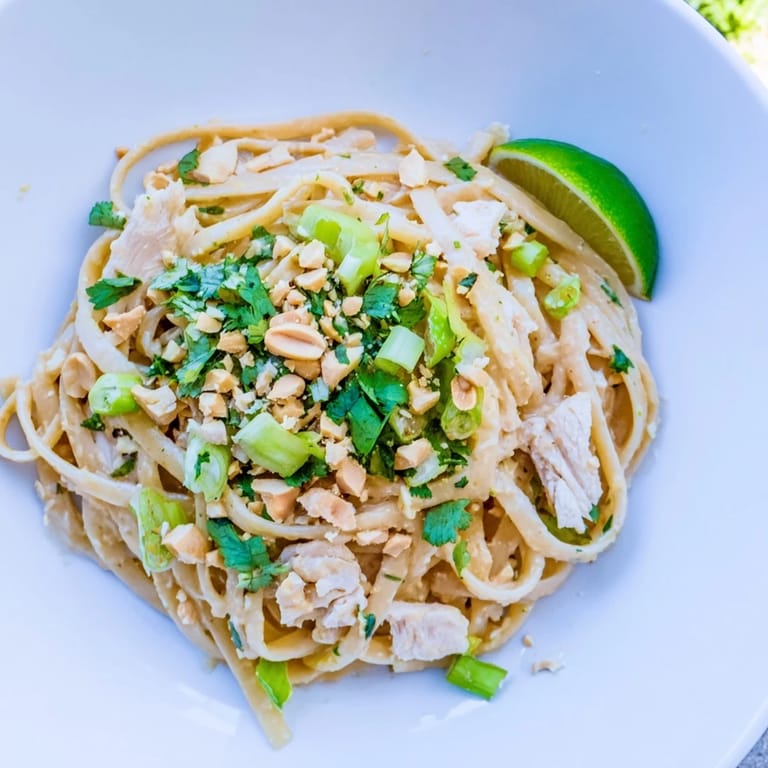
Save This Thai peanut chicken pasta has become the recipe I make when I want to feel capable in the kitchen without stress. It's quick enough for a Tuesday night, interesting enough for friends, and simple enough that nothing can really go wrong.
Recipe FAQs
- → What type of pasta works best in this dish?
Linguine or spaghetti are ideal as they hold the peanut sauce well and complement the chicken slices.
- → Can this dish be made gluten-free?
Yes, substituting traditional pasta with rice noodles makes it suitable for gluten-free diets.
- → How can I add spice to this meal?
Add a dash of sriracha or sprinkle red chili flakes into the peanut sauce to introduce heat.
- → Are there vegetarian options available?
Replacing chicken with tofu creates a vegetarian-friendly version with the same rich flavors.
- → What garnishes enhance the final presentation?
Chopped roasted peanuts, green onions, fresh cilantro, mint, and lime wedges add crunch, color, and brightness.
- → How do I prevent overcooking the chicken?
Sauté thinly sliced chicken over medium-high heat for 5–7 minutes until golden and cooked through to retain juiciness.