 Save
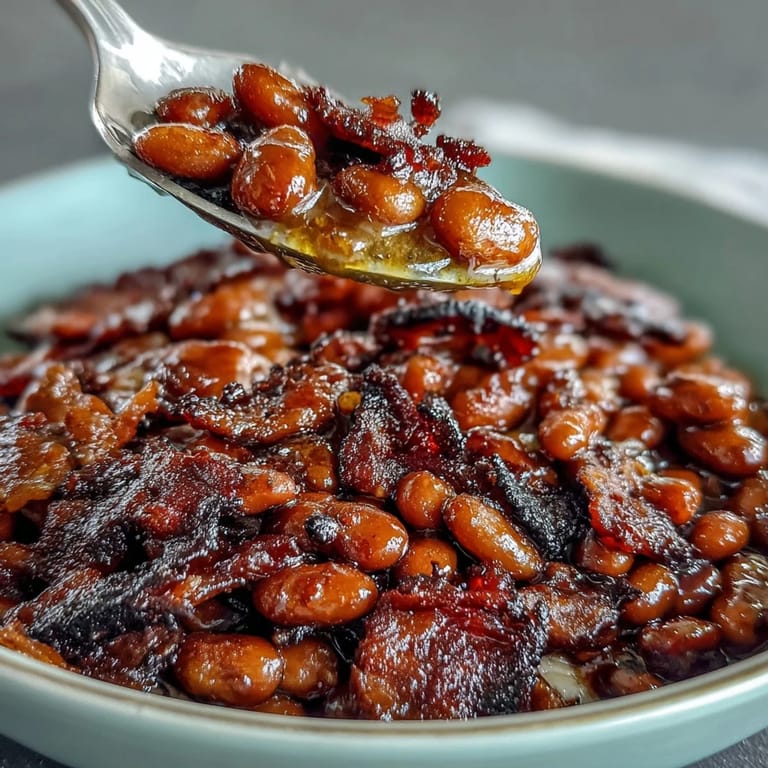
Save There's something about the smell of bacon hitting a hot skillet that instantly transforms a quiet Sunday into a barbecue day, even if you're just cooking at home. My neighbor knocked on the fence one July afternoon, drawn by that exact aroma, and watched me layer beans and brown sugar into a Dutch oven with the kind of curiosity you get when something smells impossibly good. She asked if it was complicated, and I realized then that the best picnic dishes are often the simplest ones—just honest ingredients doing what they do best. This recipe became her go-to side dish after that day, and now it shows up at every cookout she hosts. It's one of those recipes that tastes like it took hours but actually rewards you for moving quickly.
I made this for a potluck where everyone brought something supposedly healthy, and somehow my baked beans—loaded with brown sugar and bacon—disappeared first. The host's teenage son actually asked for the recipe, which never happens. That's when I knew this wasn't just comfort food; it was the kind of dish that breaks through picky eating and becomes genuinely memorable.
Ingredients
- Canned navy beans (4 cups, about 2 cans): Rinsing them removes excess sodium and starch, making the sauce coat each bean instead of turning gloppy.
- Thick-cut bacon (8 slices, chopped): The thicker cuts stay crispy longer and actually taste like bacon rather than dissolving into the sauce.
- Yellow onion (1 medium, diced): Dicing it small means it softens completely and mingles with the sauce rather than staying as distinct chunks.
- Green bell pepper (1, diced): It adds brightness and texture without overpowering the smoky sweetness of the dish.
- Ketchup (3/4 cup): This is your umami anchor and helps the sauce cling to the beans.
- Dark brown sugar (1/2 cup, packed): Pack it down when measuring so you're actually getting enough sweetness and depth.
- Molasses (1/4 cup): This brings a subtle bitter complexity that prevents the dish from tasting one-note sweet.
- Dijon mustard (2 tablespoons): It cuts through richness and adds a gentle sharpness that your palate will register even if you don't taste mustard directly.
- Worcestershire sauce (2 tablespoons): This is pure savory depth; use gluten-free if that matters to your table.
- Apple cider vinegar (1 tablespoon): A small splash balances the sweetness and makes the flavors pop.
- Smoked paprika (1 teaspoon): Even if you're not grilling the meat separately, this spice brings that smoky character.
- Garlic powder (1/2 teaspoon) and black pepper (1/2 teaspoon): These are quiet players that round out the flavor without announcing themselves.
- Salt (1/4 teaspoon) and cayenne pepper (1/4 teaspoon, optional): Salt is restrained because bacon and Worcestershire already carry salt, and cayenne is for anyone who likes a gentle heat whisper.
Tired of Takeout? 🥡
Get 10 meals you can make faster than delivery arrives. Seriously.
One email. No spam. Unsubscribe anytime.
Instructions
- Get your oven and pan ready:
- Preheat to 350°F and have your oven-safe skillet or Dutch oven nearby—this is your main vessel for the whole process.
- Render the bacon until it's properly crispy:
- Cook it over medium heat until the edges are dark and it sounds crunchy when you bite it, which takes about 8 minutes. Scoop it out with a slotted spoon and leave about 2 tablespoons of that precious fat behind.
- Soften the vegetables in bacon fat:
- Add the onion and bell pepper to the hot pan and let them sit for a minute before stirring, so they pick up some color. After 4 to 5 minutes, they should look soft and slightly translucent at the edges.
- Combine beans, bacon, and sauce:
- Mix the drained beans back in along with most of the cooked bacon (save a small handful for topping). Pour in all the sauce ingredients at once and stir until everything is coated and unified.
- Bring it to a simmer before baking:
- Let it bubble gently for just a minute on the stovetop, then remove from heat. This helps the flavors start mingling.
- Transfer if needed and add the bacon garnish:
- If your skillet isn't oven-safe, pour everything into a baking dish now. Scatter the reserved bacon over the top—it will crisp up again as it bakes.
- Bake until bubbling and thick:
- Slide the uncovered dish into the oven for about 1 hour, until the edges are bubbling actively and the sauce has visibly thickened. You'll know it's ready when you can see the sauce coating the beans rather than pooling underneath.
- Let it rest before serving:
- Pull it out and let it sit for 10 minutes—the sauce continues to thicken as it cools slightly, and the flavors settle into something rounder and more complete.
 Save
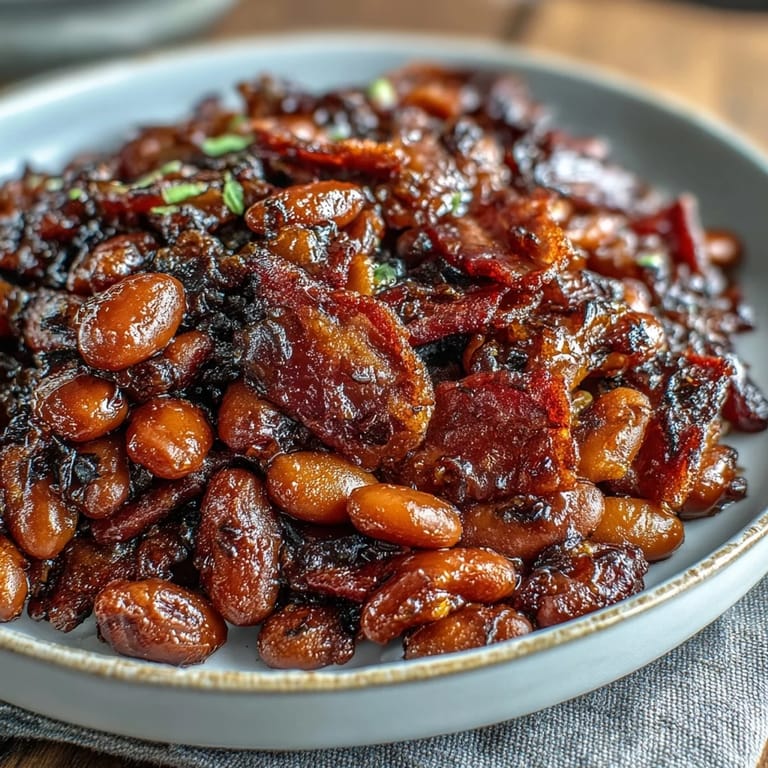
Save The moment I realized this dish had staying power was when someone asked me to bring it to a family reunion and then wanted to know if I'd make it again the following year. Food that becomes tradition does something quiet and powerful—it stops being a recipe and becomes a reason people look forward to gathering.
Why the Sauce Matters So Much
The sauce is where all the personality lives, and mixing it from scratch—rather than dumping in canned baked beans—means you control exactly how sweet, smoky, and tangy it becomes. That molasses and Worcestershire combination creates a depth that plain brown sugar never achieves alone. The balance of ketchup's subtle sweetness, mustard's bite, and vinegar's brightness is what keeps people reaching for more instead of stopping after one spoonful.
Timing and Temperature Secrets
350°F might seem low for a full hour, but that's intentional—it lets the beans absorb the sauce gradually instead of the outside getting overly caramelized before the inside softens. I learned this the hard way by turning the heat up to 375°F once, thinking it would save time, and ended up with dark crusty edges and beans that still felt slightly firm. The slower bake is also forgiving if you're keeping this warm for a gathering or if you need to adjust your timing slightly.
Make It Yours and Keep the Rest
This recipe is sturdy enough to take on your preferences without falling apart—add a splash of hot sauce if you like heat, stir in a teaspoon of smoked salt if you want more depth, or throw in diced jalapeños with the bell pepper for a different kind of brightness. Leftovers actually improve after a day or two in the refrigerator as the flavors marry together, and they reheat gently either on the stovetop with a splash of water or covered in the oven.
- If you're cooking vegetarian, skip the bacon and use 2 tablespoons of olive oil to sauté the vegetables—the dish stays delicious, just slightly less rich.
- Bring this to a potluck in a slow cooker on warm, and people will think you fussed over it for hours.
- Make a double batch and freeze half in a shallow container—it thaws and reheats beautifully for an instant side dish when you need one.
 Save
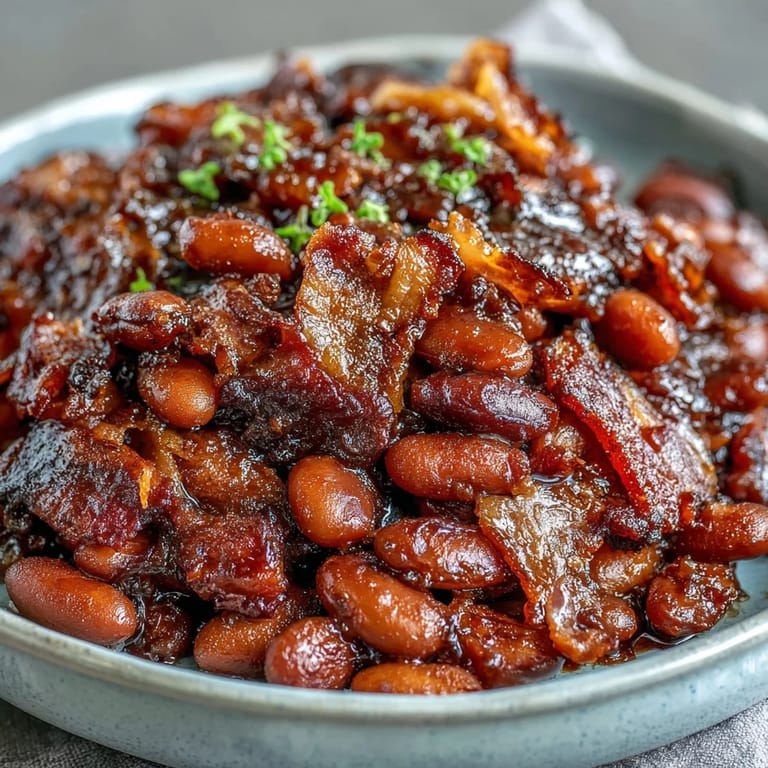
Save This is the kind of recipe that proves simple food done well beats complicated food done carelessly. Serve it warm at your next gathering and watch what happens.
Recipe FAQs
- → What type of beans work best in this dish?
Canned navy beans are ideal due to their tender texture and ability to absorb flavors well during baking.
- → Can I make a vegetarian version?
Yes, simply omit the bacon and sauté the vegetables in olive oil to maintain flavor and moisture.
- → How do the spices affect the flavor?
Smoked paprika adds a smoky depth, while garlic powder and cayenne pepper offer subtle heat and complexity.
- → Is it necessary to pre-cook the bacon?
Cooking bacon first renders fat for sautéing and ensures crispy texture to sprinkle on top after baking.
- → What can I serve with these baked beans?
They pair well with grilled meats, burgers, cornbread, or as part of a summer picnic spread.