 Save
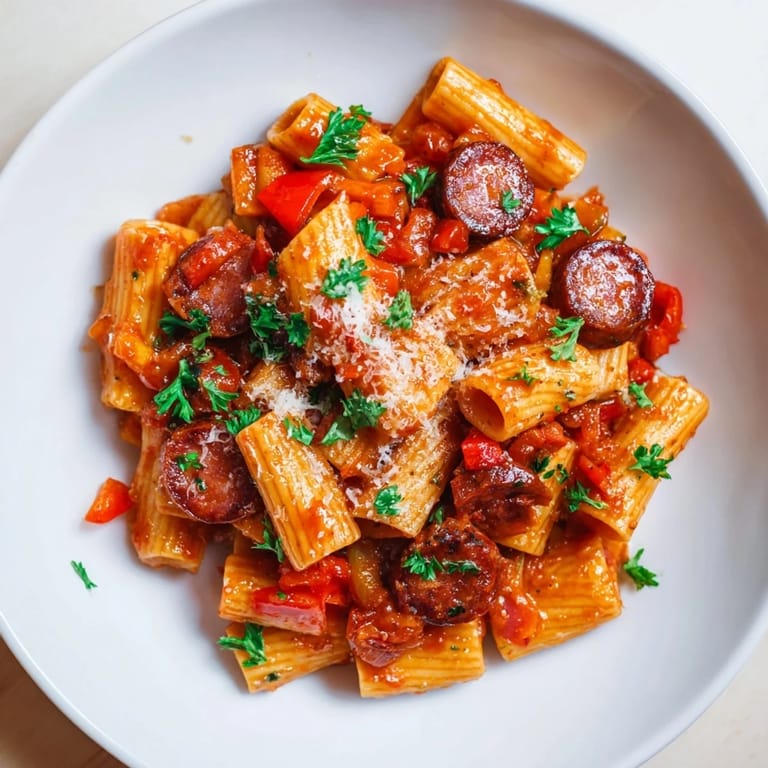
Save There's something about the sizzle of chorizo hitting a hot skillet that instantly transports you somewhere warm and sun-drenched. I discovered this pasta on a rainy Tuesday, actually—nothing romantic about it—when I was rummaging through my pantry and found a forgotten ring of Spanish chorizo hiding behind some flour. Twenty minutes later, my entire kitchen smelled like smoked paprika and something I couldn't quite place but absolutely needed more of. That's when I realized this wasn't just a quick dinner fix; it was a little adventure that happened to fit between work and bedtime.
I made this for my neighbor once, who'd mentioned loving bold flavors but said she never cooked anymore. Watching her face light up when she tasted it was the moment I stopped thinking of this as just pasta and started seeing it as the kind of dish that reminds people why they fell in love with eating in the first place.
Ingredients
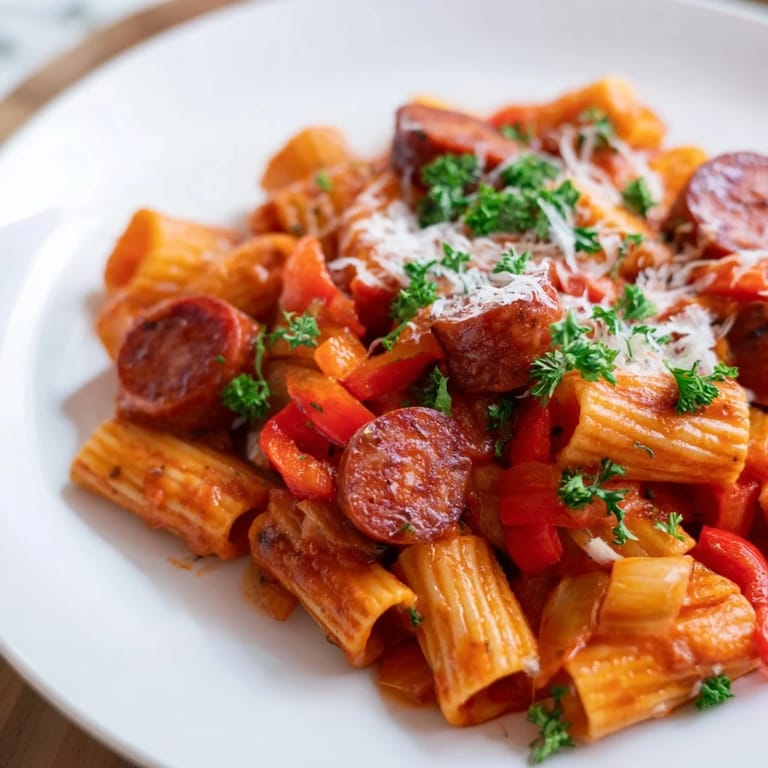
- Penne or rigatoni (350 g): The ridges here matter—they catch that smoky oil and tomato sauce in all the right places. Al dente is non-negotiable; you want resistance when you bite.
- Spanish chorizo (200 g, sliced thin): This is the star, and thin slices mean more surface area to release that gorgeous crimson oil. Don't skip the Spanish kind; the smoked paprika that's already built in is the whole point.
- Onion (1 medium, finely chopped): This becomes almost translucent and sweet as it softens, adding depth without announcing itself.
- Garlic (2 cloves, minced): Add it after the vegetables soften so it doesn't burn and turn bitter on you.
- Red bell pepper (1, diced): The sweetness here balances the heat and smoke perfectly; don't swap it for green.
- Canned chopped tomatoes (400 g): Canned is actually better than fresh for this—it's concentrated and already broken down, which means your sauce develops faster.
- Smoked paprika (1 tsp): This is what makes it taste authentically Spanish; regular paprika won't give you that smoky depth.
- Chili flakes (½ tsp, optional): Use them if you like a lingering heat that builds as you eat, not just a front-loaded spice.
- Extra virgin olive oil (2 tbsp): Good quality matters here since you're tasting it directly, not hiding it in a long braise.
- Fresh parsley (for garnish): The fresh herbaceousness cuts through the richness and wakes up your palate.
- Manchego or Parmesan cheese (optional, for serving): Manchego is more authentic and has a sharper, nuttier edge; Parmesan works beautifully too.
Tired of Takeout? 🥡
Get 10 meals you can make faster than delivery arrives. Seriously.
One email. No spam. Unsubscribe anytime.
Instructions
- Get your water going:
- Fill a large pot with generously salted water—it should taste like the sea—and bring it to a rolling boil while you prep everything else. This takes about 5 minutes and you want that violent bubble action when the pasta goes in.
- Brown the chorizo first:
- Heat your olive oil in a large skillet over medium heat, then add those chorizo slices. Let them sit for a good 2–3 minutes without stirring too much so they develop a slight crust and release that magical crimson oil into the pan. You'll smell it getting complex.
- Add the vegetables and let them soften:
- Toss in your chopped onion and diced bell pepper, stirring occasionally. They need about 4–5 minutes to lose their raw edge and start turning golden at the corners; this is when the sweetness develops and the pan starts smelling like a real meal.
- Wake it up with garlic and spices:
- Once the vegetables are soft, add your minced garlic, smoked paprika, and chili flakes if you're using them. Stir constantly for just about 1 minute—you want the spices to toast slightly and release their oils, but not long enough for the garlic to catch and burn.
- Simmer the tomatoes into submission:
- Pour in your canned tomatoes with their juices and let everything bubble gently for 8–10 minutes. The sauce will thicken slightly and lose that raw tomato taste, becoming something deeper and more rounded. Stir it occasionally so nothing sticks.
- Bring it all together:
- By now your pasta should be cooked to al dente—drain it but save that starchy pasta water like it's liquid gold. Add the hot pasta directly to the skillet with the sauce and toss everything together over the heat for a minute, then start adding pasta water a splash at a time if things look too thick. You want a sauce that coats the pasta without swimming in liquid.
- Season and serve:
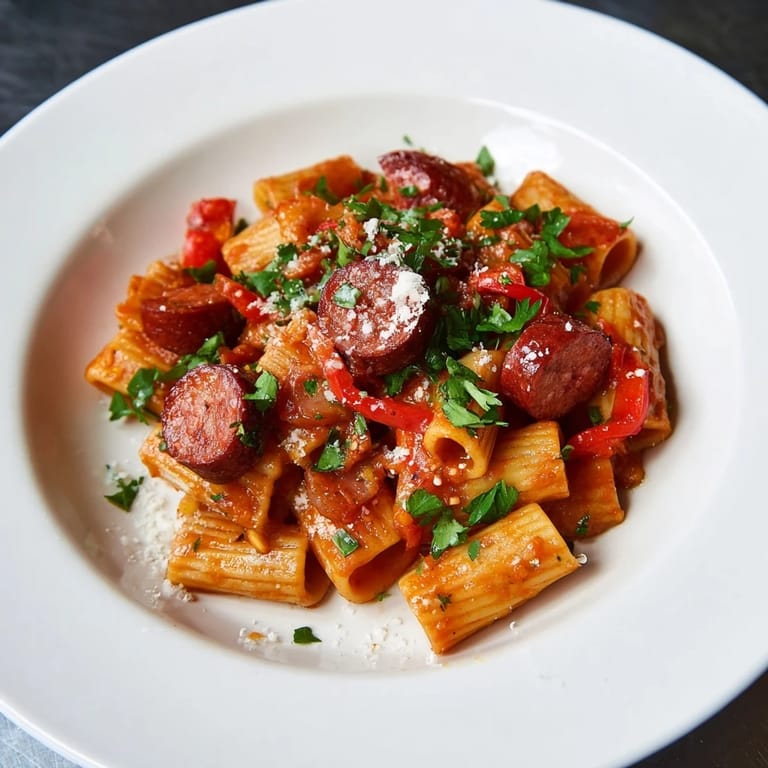
- Taste it and crack fresh black pepper over the whole thing. Remove from heat, scatter your fresh parsley on top, and add that grated cheese if you're using it. Serve it hot, with extra cheese and parsley on the side for people who are that kind of person.
 Save
Save There was a moment when my teenage daughter, who usually pushes food around her plate with the enthusiasm of someone doing penance, actually went back for seconds without being asked. That's when I understood this dish does something quiet but powerful—it tastes like care without being fussy, and somehow that matters more than complexity.
Why This Dish Works
Spanish chorizo is one of those ingredients that feels like it's already been cooked with intention by someone else. The paprika, the garlic, the salt—it all comes built in, which means you're not starting from scratch; you're amplifying something that's already delicious. The tomato sauce acts as a gentle backdrop that lets the chorizo and paprika do their thing without overwhelming them. Add pasta to absorb everything, and you've got a dish that tastes like it took much longer than thirty minutes.
Small Changes That Matter
I mentioned that splash of white wine in the notes, and I genuinely do add it sometimes—after sautéing the vegetables, I'll deglaze the pan with maybe a quarter cup of dry white wine, let it bubble down for a minute, and then add the tomatoes. It adds a brightness that feels less heavy, especially if you're eating this on a warm evening. Some nights I add a handful of baby spinach or arugula right at the end, letting the residual heat wilt it just enough. These aren't essential changes, but they're the kind of small pivots that keep a dish from ever feeling the same twice.
Serving and Stretching This Meal
Four servings is what the recipe yields, but I've stretched it to five or six by adding more pasta without diluting the sauce too much—the flavoring is strong enough to hold up. Leftovers reheat beautifully over low heat in a skillet with just a splash of water. If you make extra, you can toss it with fresh bread the next day for a kind of open-faced sandwich situation, or scatter it over a simple green salad for something completely different.
- Make sure your chorizo is actually Spanish chorizo (look for smoked paprika in the ingredients), not Mexican chorizo, which is entirely different and raw.
- If Manchego is hard to find or too pricey, Pecorino Romano gives you that same sharp, salty bite.
- Taste as you go and remember you can always add more chili flakes but you can't take them out, so go easy if heat isn't your usual thing.
 Save
Save This is the kind of recipe that lives in your rotation forever once you make it once. It asks very little of you but delivers something that tastes intentional and warm.
Recipe FAQs
- → What type of pasta works best for this dish?
Short tubular pastas like penne or rigatoni work well, allowing the sauce to cling to each piece for balanced flavor.
- → Can I substitute Spanish chorizo with other sausages?
Yes, spicy Italian sausage is a good alternative that preserves a similar smoky and spicy profile.
- → How can I adjust the spice level in the dish?
Control heat by adding or omitting chili flakes according to your preference.
- → Is there a way to make the sauce creamier?
Sprinkling grated Manchego or Parmesan cheese adds creaminess and depth to the sauce.
- → What side ingredients can enhance this dish?
Adding greens like baby spinach or arugula towards the end adds freshness and color.