 Save
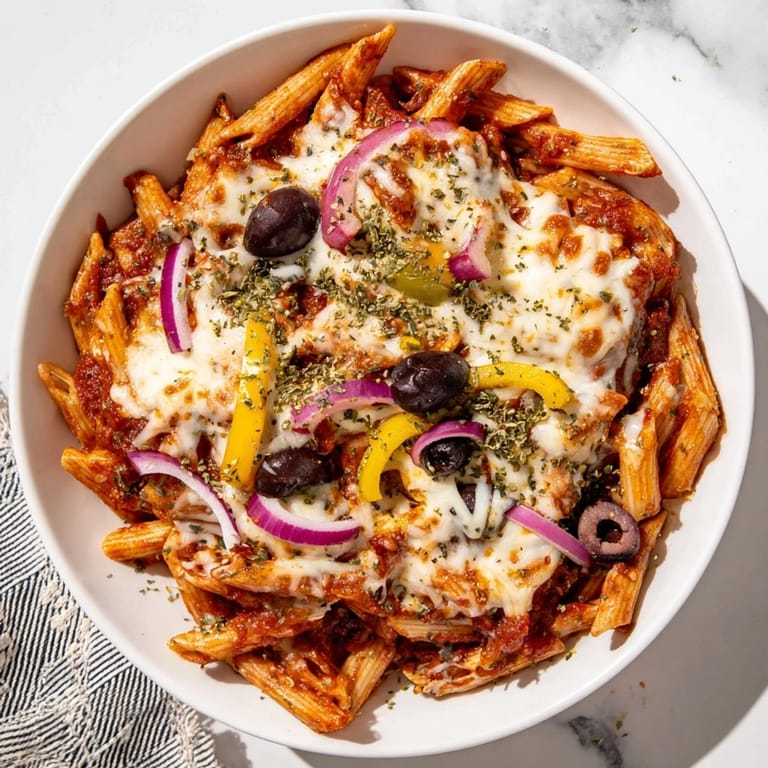
Save My kid came home from school declaring she was starving, and I had maybe fifteen minutes before chaos erupted in the kitchen. I opened the pantry, saw a jar of marinara, some pasta, and cheese in the fridge, and thought: what if I just threw it all in one pot? The result was this one-pot pizza pasta—a dish that somehow captures everything we love about pizza night but gets dinner on the table before anyone melts down.
I still remember the first time my partner tasted this, skeptical that combining everything raw would actually work. Then she took a bite and said, 'Wait, this is actually really good,' which felt like winning an unspoken competition in our kitchen.
Ingredients
- Short pasta (penne, fusilli, or rotini): Use 12 oz—shorter shapes hold the sauce better than long pasta and cook more evenly in this method.
- Marinara sauce: One 24 oz jar is your base; don't use the really cheap stuff because you'll actually taste it here.
- Water: Half a cup sounds small, but it lets the pasta absorb just enough liquid without turning into soup.
- Pre-shredded mozzarella and Parmesan: Yes, buy pre-shredded—this is a weeknight dinner, not a test of your patience.
- Black olives: Half a cup sliced; they add a salty bite that makes everything taste more interesting.
- Pepperoni: Optional, but if you're making this for pizza lovers, slice it thin so it crisps slightly in the heat.
- Red onion: Just a quarter of one, thinly sliced, gives you a little sharpness without overpowering.
- Bell pepper: Diced small so it softens quickly and distributes throughout.
- Oregano and basil: Dried herbs are fine here; they bloom in the warm sauce and tie everything together.
Tired of Takeout? 🥡
Get 10 meals you can make faster than delivery arrives. Seriously.
One email. No spam. Unsubscribe anytime.
Instructions
- Build it raw:
- Pour the pasta, marinara, and water directly into your large pot or deep skillet. Stir everything together until the pasta is coated and loosely floating. It'll look thin, but trust the process.
- Bring it to life:
- Crank the heat to medium-high until you see a rolling boil, then dial it back to medium. Cover the pot and let it simmer for 7 to 8 minutes, stirring occasionally so nothing sticks to the bottom. The pasta should be getting tender but still have a slight bite.
- Add the toppings:
- Stir in the olives, pepperoni if you're using it, red onion, and bell pepper. Leave the lid off now and cook for 2 more minutes—just enough time for the vegetables to soften slightly while the pasta finishes.
- Melt the cheese:
- Scatter the mozzarella and Parmesan evenly over the top, cover the pot, and cook for 1 to 2 minutes until everything is melted and bubbly. You'll smell when it's ready—that warm, savory cheese aroma is unmistakable.
- Season and serve:
- Sprinkle the oregano and basil over the top, taste, and add salt and pepper as needed. Serve it straight from the pot into bowls while it's still steaming.
 Save
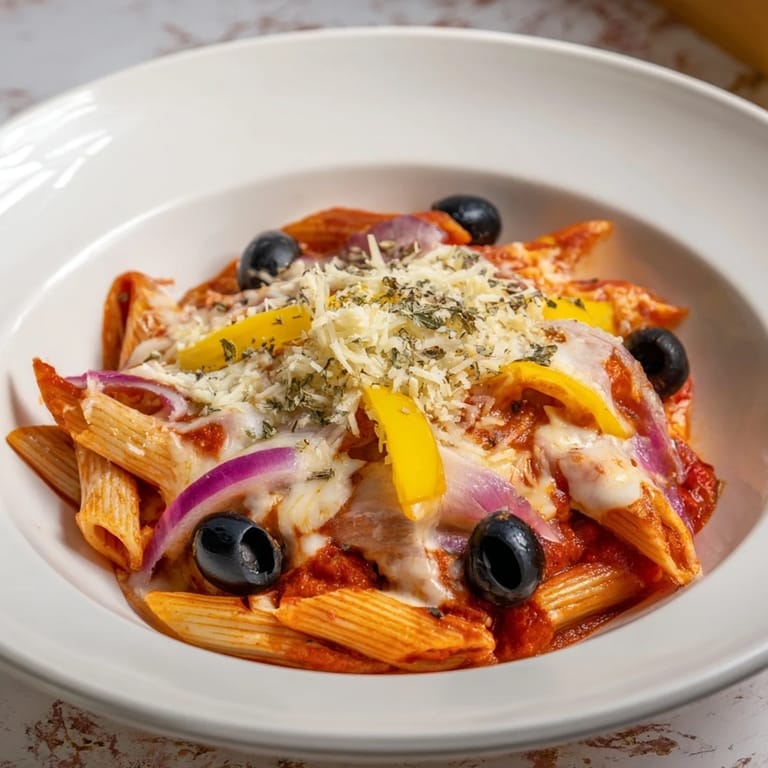
Save There's something almost magical about watching your family dig into a meal you threw together in the time it would have taken to order takeout. My kid looked up from her bowl and asked if we could have this again tomorrow, and I realized I'd accidentally created a weeknight staple.
Why This Works on Busy Nights
The genius of this dish is that it breaks every rule about cooking pasta separately from sauce, and somehow that's exactly why it works. Everything absorbs flavors together from the moment the heat hits, so the pasta tastes seasoned and intentional rather than like bland noodles drowning in sauce. You're also not standing over a stove juggling multiple pans, which during the witching hour between work and bedtime feels like the most valuable thing a recipe can offer.
Making It Your Own
This recipe is a skeleton waiting for your personal touch. Some nights I add sliced mushrooms for earthiness, other times I throw in a handful of spinach right before the cheese so it wilts into the dish. A friend of mine uses smoked provolone instead of mozzarella and swears it's superior, and honestly, she might be right. The beauty is that the base is so solid that variations feel like improvisations rather than desperation moves.
Serving and Storage
Serve this hot, straight from the pot if you're feeding hungry people, or portion it into bowls if you want to be civilized about it. Garlic bread on the side makes it feel more substantial, and a simple green salad with lemon vinaigrette cuts through the richness nicely. Leftovers last about three days in the fridge and reheat gently in a skillet with a splash of water if they've dried out.
- Cold leftovers are oddly good eaten straight from the container the next day at lunch, if you're into that sort of thing.
- You can freeze this for up to a month, though the texture of the cheese changes slightly when thawed—still delicious, just a bit different.
- Don't add extra sauce thinking it'll keep things moist; one 24 oz jar is calibrated for 12 oz of pasta, and the math works.
 Save
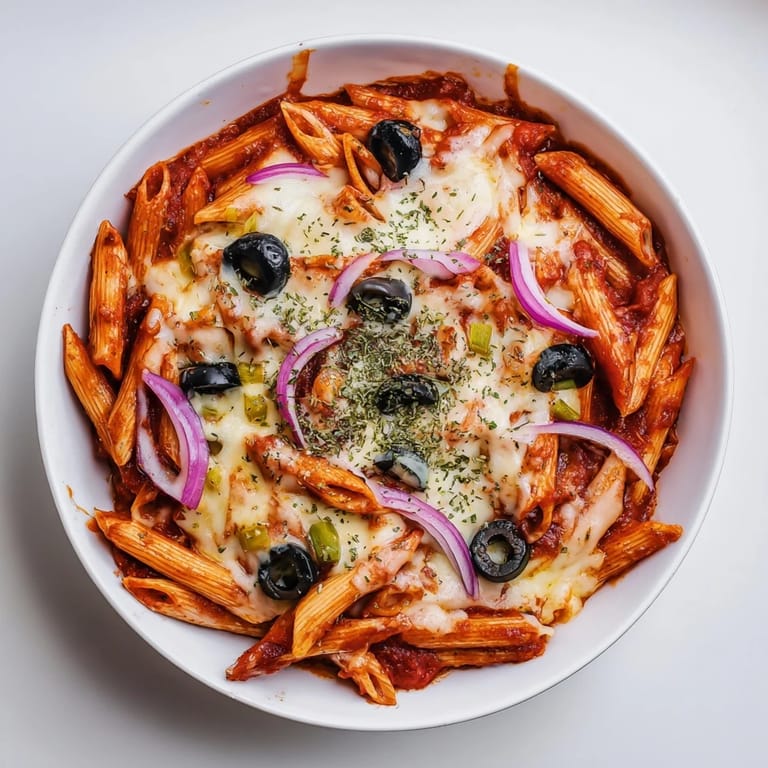
Save This is the kind of recipe that proves the best meals aren't always the most complicated ones. It's become the thing I make when I need dinner, not when I want to prove something in the kitchen.
Recipe FAQs
- → What pasta types work best for this dish?
Short pasta varieties like penne, fusilli, or rotini hold the sauce well and cook evenly in one pot, providing the best texture.
- → Can I prepare this as a vegetarian dish?
Yes, simply omit pepperoni or use plant-based alternatives. The combination of cheese, olives, and vegetables keeps the dish flavorful.
- → How do I know when the pasta is done?
Simmer until pasta is nearly tender, about 7–8 minutes, then cook uncovered for an additional 2 minutes with vegetables, achieving an al dente texture.
- → What cheeses are recommended for melting on top?
Mozzarella and Parmesan cheeses melt beautifully, creating a creamy, bubbly layer that complements the sauce and toppings.
- → Are there any suggested side dishes?
Garlic bread or a fresh green salad pair well, balancing the rich flavors and adding variety to the meal.
- → Can I add other vegetables or proteins?
Definitely—try sliced mushrooms, cooked sausage, or spinach to customize the dish to your taste and dietary needs.