 Save
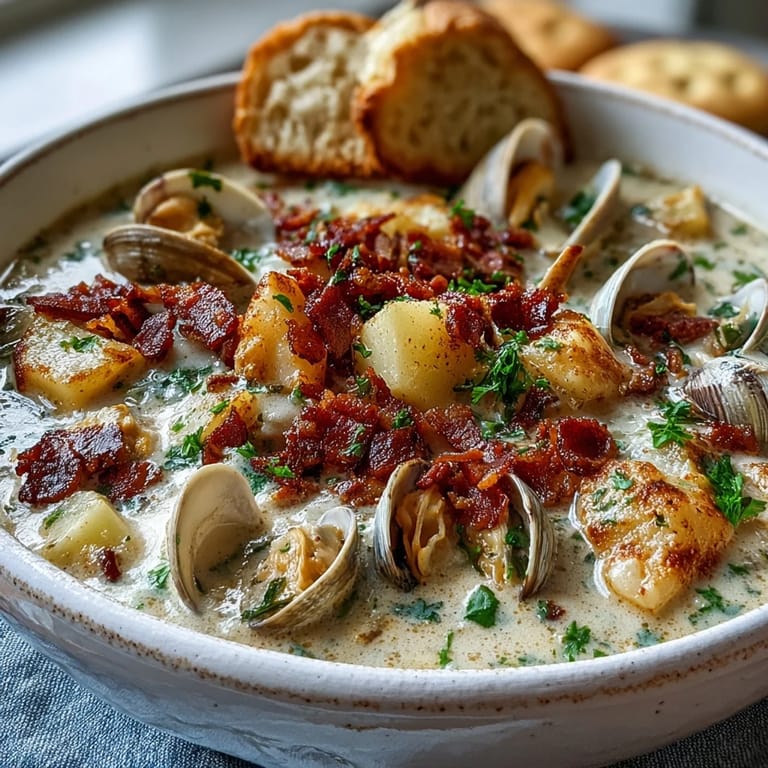
Save My uncle's kitchen in Boston always smelled like the ocean, even in winter. One Saturday afternoon, he pulled out a massive pot and started shucking clams with the kind of casual confidence that comes from decades of practice. I watched him work, asking why he wouldn't just use canned ones, and he smiled knowingly before handing me a spoon to taste his broth. That first sip of New England clam chowder changed how I understood comfort food—it wasn't just about warmth, it was about the layers of flavor that only patience and the right ingredients could build.
Years later, I made this for my roommate on a snowy evening when she was feeling homesick for the coast. She closed her eyes after the first spoonful and didn't say anything for a full minute—just sat there with her spoon halfway to the bowl. That's when I realized this soup does something magical: it transports you somewhere warm and safe, even if that somewhere is just a memory you're tasting for the first time.
Ingredients
- Fresh clams (littlenecks) or canned chopped clams: If using fresh, the briny sweetness is incomparable, but canned works beautifully when fresh clams aren't available—just make sure you save every drop of that juice.
- Yukon Gold potatoes: They hold their shape better than russets and have a buttery flavor that complements the clams perfectly.
- Salt pork or bacon: This renders fat that becomes the flavor foundation of your entire pot; don't skip it or substitute with oil.
- Heavy cream and whole milk: The combination creates richness without being overwhelming—use both for the best texture.
- Clam juice: Bottled clam juice is your secret weapon for deepening that ocean flavor without needing pounds of fresh clams.
- Bay leaf and thyme: These herbs whisper in the background, adding sophistication without announcing themselves.
- All-purpose flour: This creates a roux that thickens the chowder to that perfect creamy consistency.
Tired of Takeout? 🥡
Get 10 meals you can make faster than delivery arrives. Seriously.
One email. No spam. Unsubscribe anytime.
Instructions
- Prepare your clams:
- Scrub fresh clams under cold water until they feel clean, then steam them in a pot with 1 cup water until their shells pop open—you'll hear them crack open and smell that intoxicating briny aroma. Discard any stubborn ones that refuse to open, chop the meat into bite-sized pieces, and strain that cooking liquid like it's liquid gold.
- Render the salt pork:
- Dice your salt pork into small pieces and cook it slowly in your Dutch oven over medium heat until the fat starts releasing and the edges turn golden and crispy. This takes about 5 minutes, and you'll know it's done when you can smell the savory richness filling your kitchen.
- Build your aromatic base:
- Pull out the cooked salt pork, add butter to those rendered fats, then throw in your diced onion and celery and let them soften for about 5 minutes until they're translucent and smell absolutely wonderful. Add your minced garlic for just 1 minute more—you want it fragrant, not brown.
- Create the roux:
- Sprinkle flour over your softened vegetables and stir constantly for 2 minutes so the flour toasts slightly and loses its raw taste. This is your thickening agent, so don't rush it.
- Add the liquids carefully:
- Pour in your clam juice, milk, and cream very slowly while whisking constantly to avoid lumps—this is the moment that separates a silky chowder from a grainy disappointment. Keep whisking until everything looks smooth and creamy.
- Cook the potatoes:
- Add your diced potatoes along with the bay leaf and thyme, then simmer uncovered for 12 to 15 minutes until the potatoes are tender but not falling apart. Stir occasionally so nothing sticks to the bottom of the pot.
- Finish with the clams:
- Add your chopped clams back to the pot along with the cooked salt pork and simmer gently for just 3 to 5 minutes—clams become tough and rubbery if you boil them, so keep the heat low and respectful. This is the final moment before magic happens.
- Season and serve:
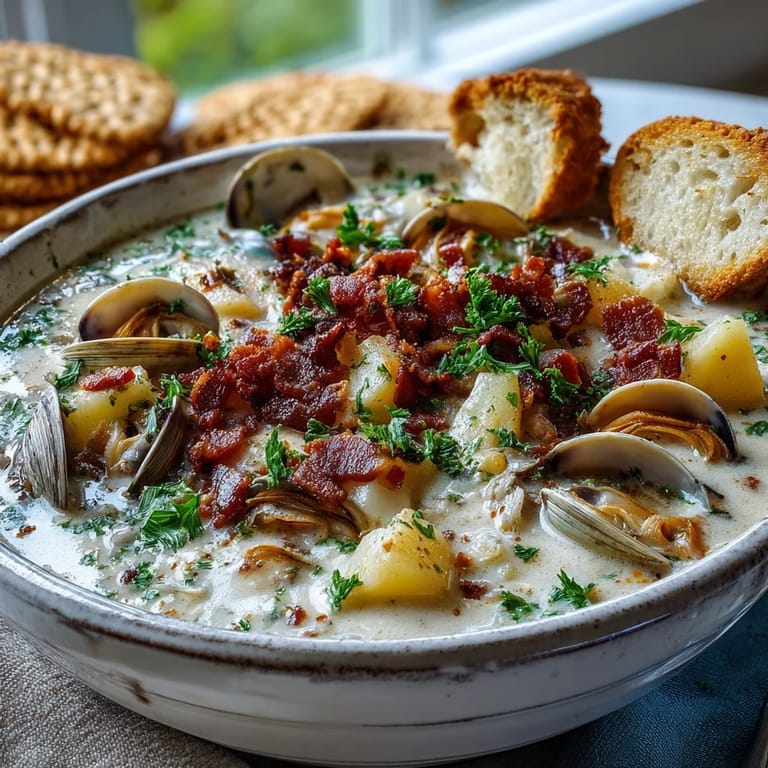
- Remove the bay leaf, stir in your fresh parsley, then taste and adjust with salt and pepper until it feels right. Ladle into bowls and serve with oyster crackers or crusty bread for soaking up every last drop.
 Save
Save I remember the day my dad tasted this soup and said it tasted like home, even though he'd never been to Boston. Sometimes food is just conversation without words, a way of saying I remember you or I understand what you're craving. This chowder became that for our family.
Fresh Clams vs. Canned: Which Should You Choose?
Fresh clams are absolutely worth seeking out if you can find them—they have a sweetness and minerality that canned clams simply can't match. But I've made this chowder dozens of times with quality canned clams and it's never been a disappointment, especially when you're working with a limited budget or it's not clam season. The real magic is in the technique, not in whether your clams came from the ocean yesterday or from a can last week.
The Roux: Why It Matters More Than You Think
That moment when you add flour to butter and vegetables is where most home cooks either nail it or falter. The roux needs to cook for at least 2 minutes—this isn't about being fancy, it's about cooking out the raw flour taste so your finished chowder is velvety, not gritty. I learned this the hard way after making a batch that tasted faintly of paste, and I've never made that mistake twice.
Storage, Reheating, and the Beauty of Leftovers
This chowder tastes even better the next day when all the flavors have gotten cozy together in your refrigerator. Store it in an airtight container for up to 3 days, and when you reheat, do it gently over low heat with a splash of milk stirred in—this keeps it creamy and prevents the dairy from separating. Here's what makes this soup special in your life going forward:
- Leftover chowder makes an incredible brunch served in bread bowls with a fried egg on top.
- Freeze it in portions for busy weeks, though the texture will be slightly different when thawed, so fresh is always best.
- This is the kind of soup that teaches you patience and respects your effort with pure comfort in return.
 Save
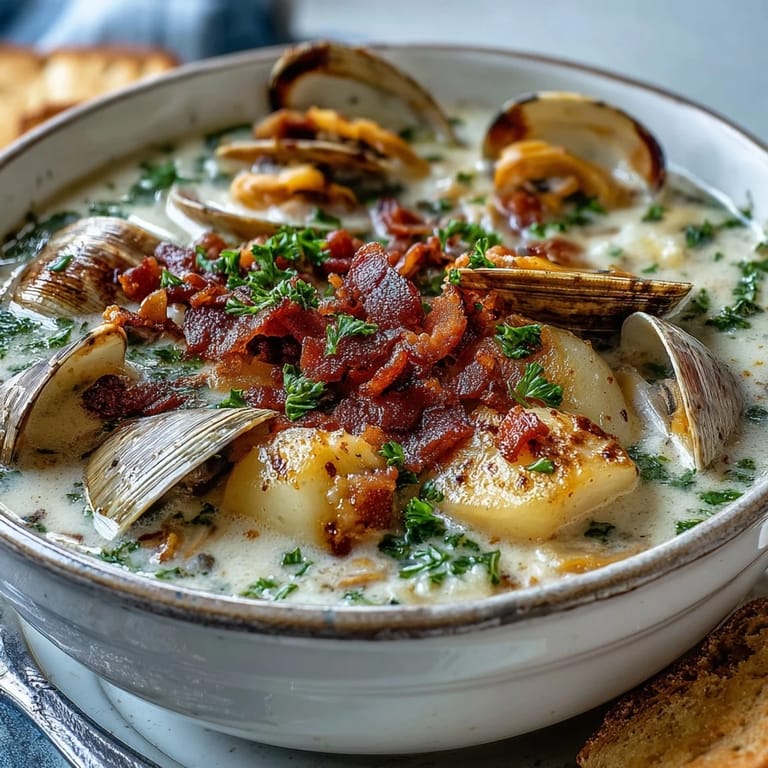
Save New England clam chowder isn't just soup—it's an invitation to slow down and taste something that took real thought to make. Serve it with confidence, knowing you've created something that belongs in someone's favorite memory.
Recipe FAQs
- → Can I use canned clams instead of fresh?
Yes, canned chopped clams work well in this chowder. Use 2 cups of canned clams with their juice. The liquid adds essential flavor to the broth, so don't discard it.
- → How do I prevent the dairy from curdling?
Add the milk and cream after the roux is fully incorporated, whisking constantly. Keep the heat at a gentle simmer and avoid boiling once the dairy is added. This maintains smooth texture.
- → Can I make this chowder ahead of time?
The chowder reheats beautifully. Make it up to 2 days ahead and refrigerate. Reheat gently over low heat, stirring occasionally. The flavors often improve after resting overnight.
- → What's the difference between salt pork and bacon?
Salt pork is cured pork fat without much meat, providing rich flavor without overpowering smokiness. Bacon works perfectly too and adds a smoky dimension. Both render fat for sautéing vegetables.
- → How do I know when fresh clams are cooked?
Steam fresh clams covered with water over medium heat for 6-8 minutes. Discard any clams that remain closed after steaming. The shells should open wide, and the meat should be opaque and firm.
- → Can I make this lighter?
Substitute half-and-half for heavy cream to reduce fat content. You can also increase the potato ratio or add more vegetables while maintaining the rich, satisfying texture.