 Save
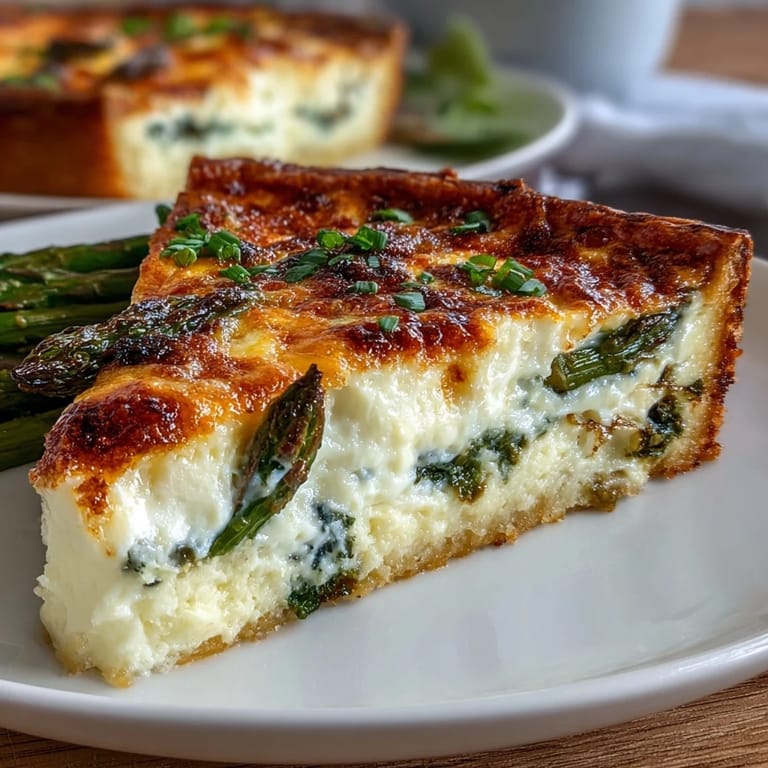
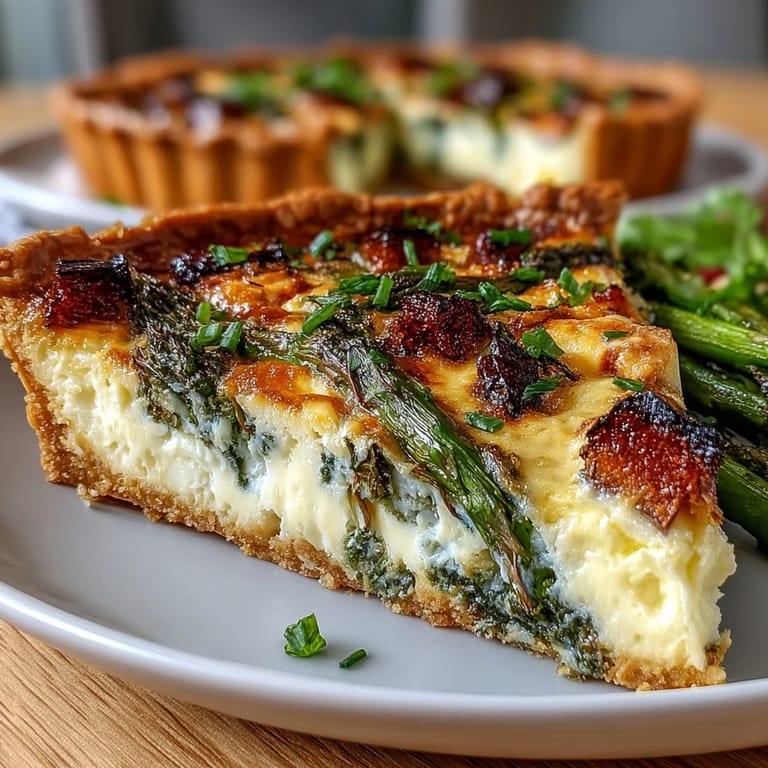
Save My sister called me Thursday night asking if I could bring brunch on Sunday—nothing fancy, she said, just something that would make her feel celebrated. I hung up and immediately thought of asparagus, the first real green thing at the farmer's market that spring, paired with Brie that melts into the custard like it was meant to be there. This quiche came together as the answer, elegant enough to feel like effort but honest enough that I could actually relax while it baked.
What I didn't expect was how my brother-in-law would come back for seconds, or how my nephew would actually eat the asparagus without complaint. We sat around the kitchen island with mimosas getting warm, and nobody checked their phones for forty minutes—the quiche had somehow turned a regular Sunday into something worth pausing for.
Ingredients
- Ready-made 9-inch pie crust: A store-bought crust saves real time and honestly tastes as good as homemade once it's baked; just prick it gently so it doesn't puff up unevenly.
- Asparagus, trimmed and cut into 1-inch pieces: The blanching step is non-negotiable—it stops the cooking process and keeps the spears tender instead of turning them into little rubber bands.
- Shallot, finely diced: Shallots taste sweeter and more refined than onions; this one small detail makes people think you spent hours on this.
- 5 large eggs: Use room temperature eggs if you have time—they incorporate more smoothly into the custard and create a less grainy texture.
- Whole milk and heavy cream: The combination gives you richness without turning the center into an egg soup; the ratio matters more than you'd think.
- Brie cheese, rind removed and cubed: Remove the rind completely or you'll end up with chewy bits throughout; the cheese itself should almost dissolve into the egg mixture as it bakes.
- Salt, black pepper, and nutmeg: The nutmeg is optional but transformative—just a whisper of it adds an elegant warmth that nobody can quite identify.
Tired of Takeout? 🥡
Get 10 meals you can make faster than delivery arrives. Seriously.
One email. No spam. Unsubscribe anytime.
Instructions
- Heat the oven and prepare the crust:
- Set your oven to 375°F and settle the pie crust into your tart pan, then use a fork to prick the bottom all over—this prevents it from puffing up like a balloon during blind baking.
- Blind bake the crust:
- Line it with parchment paper, fill with pie weights or dried beans, and bake for 10 minutes, then remove the weights and parchment and bake another 5 minutes until it's pale golden and looks set. You're aiming for a crust that's partially cooked but still flexible enough to hold the filling.
- Blanch the asparagus:
- While the crust bakes, boil salted water in a saucepan, drop in your asparagus pieces for exactly 2 minutes—the water should still be at a rolling boil—then drain them and spread them on a clean kitchen towel to cool slightly. This step locks in the bright green color and tender texture.
- Build the custard:
- In a mixing bowl, crack your eggs and whisk them with milk, cream, salt, pepper, and nutmeg until the mixture is completely smooth with no streaks of egg white visible. Take your time here—a well-whisked custard bakes more evenly.
- Assemble the quiche:
- Scatter your diced shallot and half the blanched asparagus over the bottom of the crust, then pour in the custard mixture slowly so it settles evenly. Distribute the remaining asparagus and Brie cubes across the top in a way that looks intentional.
- Bake until just set:
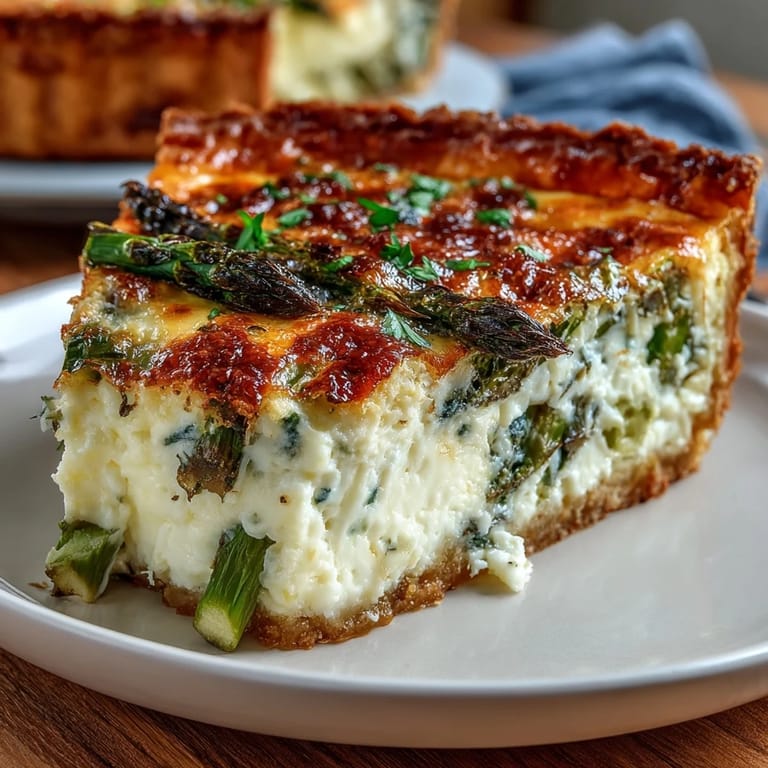
- Slide it into the oven for 30 to 35 minutes—you're looking for a quiche where the edges are just set but the very center still has the slightest jiggle when you gently shake the pan. Overbaking makes the custard rubbery and the Brie separates from the eggs.
- Rest and serve:
- Let it cool on the counter for 10 minutes before you cut into it; this resting period lets the custard finish setting and makes slicing clean instead of messy.
 Save
Save I've made this quiche maybe fifteen times now, and it's never once disappointed. It's become the dish I reach for when I want to say thank you or celebrate something small, because somehow a slice of this quiche with a cup of good coffee tastes like someone really cared.
Why Asparagus and Brie Are the Perfect Pair
The first time I combined these two, I wasn't even sure it would work—asparagus felt springy and assertive, Brie felt indulgent and soft. But they actually balance each other; the asparagus keeps the custard from feeling heavy, and the Brie adds a subtle elegance that makes the whole thing taste more refined than the effort required. I've tried other vegetables in this same quiche—mushrooms, spinach, tomatoes—and they're all fine, but asparagus and Brie feel like they were designed together.
The Blind Baking Step Is Actually Worth It
I used to skip blind baking and just throw the crust into the oven with the filling, and every single time the bottom would be soggy and pale and kind of sad. Then I invested ten minutes in pre-baking, and suddenly the crust stayed crispy and golden and actually tasted like something. It feels like an extra step, but it's the difference between a quiche that's pretty and a quiche that's actually good.
Make It Your Own
The beauty of quiche is how flexible it is once you understand the basic ratio of eggs to dairy to filling. I've added fresh chives and dill when I had them on hand, stirred in a handful of crispy bacon for my dad, scattered caramelized shallots instead of raw ones when I had time. The custard formula stays the same; everything else is permission to improvise based on what's in your kitchen or what someone you love would actually want to eat.
- Fresh herbs like chives, dill, or tarragon stirred into the custard add brightness without changing the technique.
- If you want to add cheese beyond the Brie, keep the total at about 5 ounces so the custard doesn't become too rich or greasy.
- This quiche reheats beautifully—wrap it loosely in foil and warm it at 350°F for about 15 minutes, and it tastes almost as good as it did fresh.
 Save
Save This quiche has become my go-to dish for moments when I want to cook something beautiful but not complicated, something that tastes like it came from a proper brunch spot but came from my own kitchen. It's the kind of recipe that makes you feel capable.
Recipe FAQs
- → How should asparagus be prepared for this quiche?
Trim and cut asparagus into 1-inch pieces, then blanch in boiling salted water for 2 minutes to retain tenderness and color before adding to the tart.
- → Can I use a homemade crust instead of store-bought?
Yes, a homemade shortcrust pastry works well and enhances the flaky texture for the base.
- → What is the purpose of blind baking the crust?
Blind baking prevents a soggy bottom by pre-cooking the crust before adding the filling, ensuring a crisp and golden tart shell.
- → Is it necessary to remove the rind from the Brie?
Removing the rind creates a smoother texture and distributes the creamy Brie flavor evenly throughout the quiche.
- → Can fresh herbs be added to the filling?
Yes, adding fresh herbs like chives or dill will enhance the aroma and add a subtle flavor boost to the dish.
- → How long should the quiche rest after baking?
Allow the quiche to rest for about 10 minutes after baking to settle the filling and make slicing easier.