 Save
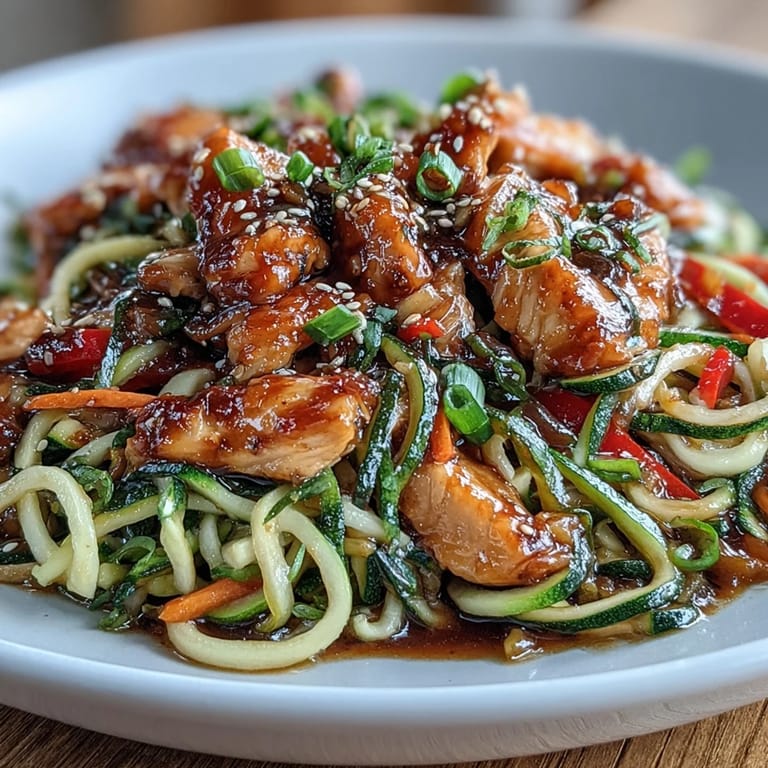
Save I discovered this stir fry on an ordinary Tuesday when my spiralizer finally arrived and sat on my counter like a challenge waiting to be accepted. My teenage nephew had just mentioned he was cutting carbs, and I wanted to prove that healthy eating didn't mean boring bowls of lettuce and chicken. Within minutes of slicing those zucchini into delicate ribbons, the kitchen filled with the aroma of ginger and garlic hitting hot oil, and I knew this dish would become a regular in our rotation.
The first time I served this to my sister, she sat down expecting something she'd tolerate and ended up asking for seconds before finishing her first plate. She kept saying it tasted like the expensive takeout place downtown, and watching her surprise made the fifteen minutes of knife work completely worth it. That moment changed how I thought about weeknight dinners, turning them into actual cooking projects instead of quick obligations.
Ingredients
- Boneless, skinless chicken breast (500 g): Slice it thin and even so it cooks in minutes without drying out; I freeze mine for 30 minutes before slicing to get cleaner cuts.
- Zucchini (3 medium, spiralized): The star of the show, but treat them gently since they release water quickly; don't prep them until you're ready to cook.
- Red bell pepper (1 large): It adds sweet crunch and becomes almost candied at the edges, so slice it thin enough to cook through in the 2-3 minute window.
- Carrots (2 medium, julienned): The slight sweetness balances the savory sauce perfectly, and julienne keeps them from overpowering the delicate noodles.
- Red onion (1 small): Brings a sharp note that mellows slightly as it cooks, adding depth without being aggressive.
- Garlic and ginger (2 cloves and 1 tablespoon fresh): These are non-negotiable; they build the umami foundation that makes the whole dish sing.
- Soy sauce or tamari (3 tablespoons): Use low-sodium so you can taste the other flavors, and keep tamari on hand if you're cooking for people avoiding gluten.
- Sesame oil (1 tablespoon): A little goes a long way; this is where the signature Asian-stir-fry aroma comes from.
- Rice vinegar (1 tablespoon): It brightens the sauce and keeps it from tasting flat or one-dimensional.
- Honey or maple syrup (1 tablespoon): A touch of sweetness rounds out the sauce and helps it coat the vegetables and chicken evenly.
- Cornstarch (1 teaspoon, optional): Only use this if you want a thicker, glossier sauce; I skip it when I want the dish lighter.
- Chili flakes (1/2 teaspoon, optional): For heat without overwhelming, start with a pinch and adjust to your preference.
- Olive oil or neutral cooking oil (1 tablespoon): Use something with a high smoke point; grapeseed or avocado oil works beautifully.
- Salt and black pepper: Season the chicken lightly before cooking, then taste again at the end to adjust.
Tired of Takeout? 🥡
Get 10 meals you can make faster than delivery arrives. Seriously.
One email. No spam. Unsubscribe anytime.
Instructions
- Make your sauce first:
- Whisk together the soy sauce, sesame oil, rice vinegar, honey, cornstarch if using, and chili flakes in a small bowl. This takes barely a minute and means you're never scrambling mid-stir-fry searching for ingredients.
- Get your oil smoking:
- Heat olive oil in a large skillet or wok over medium-high heat until it shimmers and moves easily across the pan. You'll know it's ready when a piece of garlic dropped in immediately starts sizzling.
- Sear the chicken until golden:
- Add your sliced chicken in a single layer, season lightly with salt and pepper, and let it sit untouched for about two minutes so it develops color. Then stir constantly for another 2-3 minutes until there's no pink inside; transfer to a clean plate.
- Build flavor with aromatics:
- Add your minced garlic, ginger, and red onion to the hot pan and stir constantly for exactly one minute. Your kitchen will smell incredible, and you'll see the aromatics become fragrant and slightly golden.
- Add the sturdy vegetables:
- Toss in your carrots and bell pepper, stirring continuously for 2-3 minutes until they're bright-colored and just barely fork-tender. They should still have a little snap when you bite them.
- Introduce the zucchini noodles carefully:
- Add your spiralized zucchini and toss gently for 1-2 minutes, just until they soften slightly and become flexible. Watch them closely because zucchini releases moisture quickly and can turn mushy if you're not paying attention.
- Bring everything back together:
- Return the cooked chicken to the pan, pour in your sauce, and toss everything together for 1-2 minutes so the sauce coats every strand and vegetable piece. You'll see the sauce thicken slightly and coat everything in a glossy finish.
- Taste and finish:
- Remove from heat and taste, adjusting salt or adding a squeeze of lime if something feels off. Serve immediately in bowls or shallow plates, topped with sliced green onions and sesame seeds if you have them.
 Save
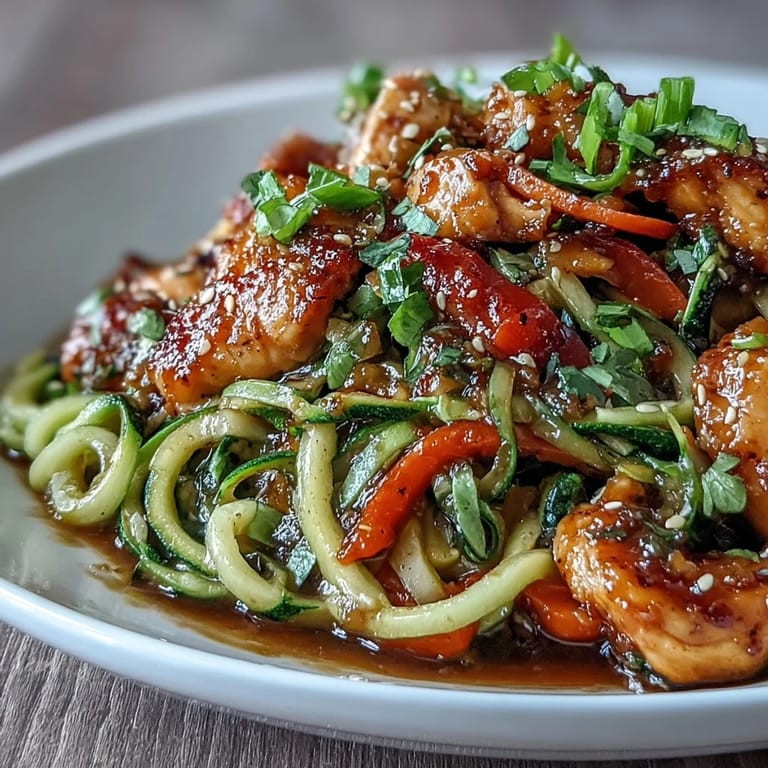
Save There's something almost meditative about the sound of a stir-fry cooking, that constant soft sizzle and the rhythm of your spatula moving everything around. My favorite part is that moment when you pour in the sauce and watch everything come together, the colors brightening and the kitchen filling with that unmistakable Asian-inspired aroma that makes people wander in asking what's for dinner.
Prep Work That Actually Matters
I learned early on that stir-frying only works when everything is prepped before you start cooking. Setting up your ingredients in separate bowls around your workspace feels obsessive until you're halfway through cooking and realize you're never scrambling or stopping the momentum. The actual cooking time is so fast that you simply cannot chop while you're cooking, so embrace mise en place like it's a restaurant secret.
Making It Your Own
While I've given you exact amounts, this recipe thrives on flexibility and your own preferences. Some weeks I add cashews or almonds for texture, other times I throw in snap peas or bok choy if that's what's in my fridge. The Asian-inspired sauce is forgiving enough that you can adjust the honey for more sweetness, add more ginger if you love heat, or increase the sesame oil if you want deeper flavor.
Why This Dish Works for Real Life
This stir-fry exists in that perfect sweet spot where it feels impressive enough for guests but simple enough for a weeknight when you're tired and hungry. I've made it when my energy was low and still felt proud of what landed on my plate, which is the true definition of a keeper recipe. Nutritionally it's a dream, protein-rich and packed with vegetables, but it tastes so satisfying that you won't feel like you're eating healthy.
- Spiralize your zucchini right before cooking, not hours ahead, or it'll start weeping liquid.
- If your pan isn't hot enough before adding the chicken, it'll steam instead of sear and taste bland.
- Taste everything before serving because salt and heat preferences are deeply personal.
 Save
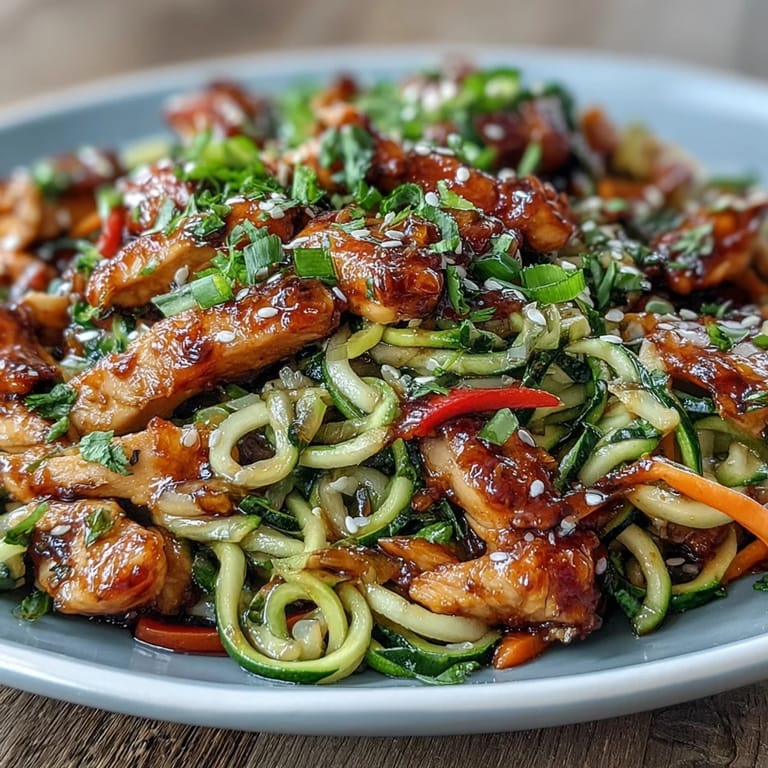
Save This dish has become my answer to so many cooking dilemmas: when I want something healthy but delicious, when I'm short on time but want to impress someone, when I need to feel like a real cook without spending hours in the kitchen. I hope it becomes that same trusted recipe for you.
Recipe FAQs
- → How do I prevent zucchini noodles from becoming soggy?
Stir-fry zucchini noodles briefly, about 1-2 minutes, to maintain their firmness and prevent sogginess.
- → Can I substitute chicken with another protein?
Yes, tofu works well as a vegetarian alternative, offering a similar texture and absorbing the sauce flavors nicely.
- → What sauce ingredients give the dish its savory flavor?
The sauce combines soy sauce or tamari, sesame oil, rice vinegar, and a touch of honey or maple syrup for balanced savory and sweet notes.
- → Is this dish suitable for gluten-free diets?
Using tamari instead of soy sauce makes the dish gluten-free, ensuring it's safe for those with gluten sensitivities.
- → What cooking tools are needed for this dish?
A spiralizer or julienne peeler for zucchini noodles, a large skillet or wok, and basic kitchen tools like a knife and mixing bowls.