 Save
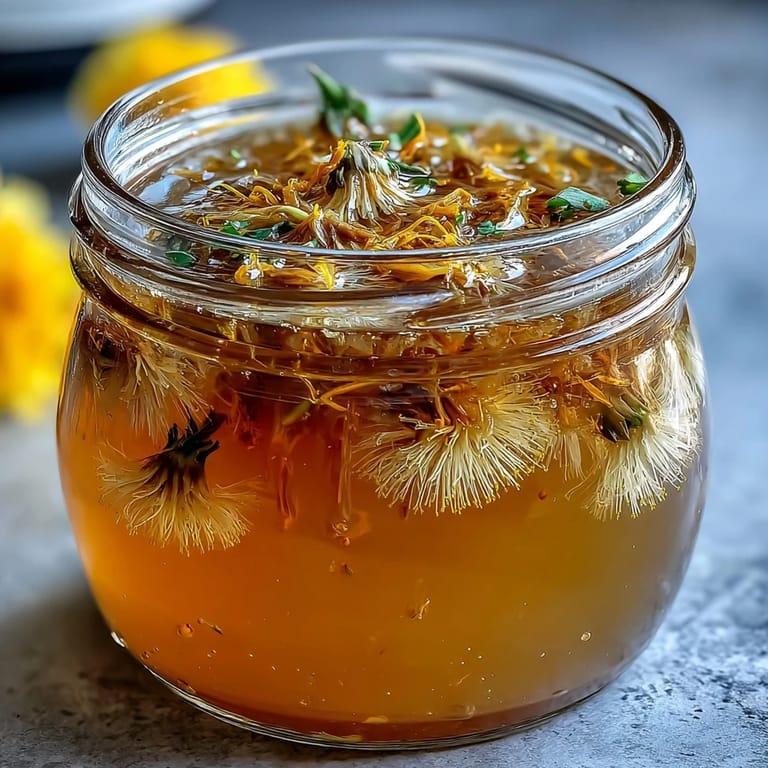
Save The first time I tried making dandelion jelly, it was out of sheer curiosity—the backyard was bursting with golden blooms and I couldn't resist their floral aroma drifting through the open kitchen window. I remember kneeling among the grass, gently collecting blossoms while laughing at my own fumbling attempt to avoid the inevitable stains on my jeans. As the petals steeped, the kitchen filled with a scent that reminded me of warm sunlight after rain. It felt slightly mischievous, transforming a common weed into something so unexpectedly sweet. Dandelion jelly has since become a favorite experiment: proof that some of the best flavors are hiding in plain sight.
One spring afternoon, I invited my neighbor's daughter to help pluck dandelions, and after a little giggling and a gentle reminder not to eat the greens, we ended up with a bowlful of petals and sticky fingers. After the jelly cooled, I watched her spoon some onto freshly baked scones—her wide-eyed delight was all the encouragement I needed to keep making this every year. Dandelion jelly has quietly become a tradition during those fleeting spring days when the yard is alive with color and promise.
Ingredients
- Dandelion petals: Harvesting just the bright yellow petals avoids bitter flavors and keeps the jelly delicate; patience pays off here.
- Water: Simmering petals in water releases their gentle sweetness, so filtered water is best for a clean taste.
- Fresh lemon juice: Adds tang and helps lift the floral notes; always use freshly squeezed for zing.
- Finely grated lemon zest: The zest brings bursts of citrus and balances the honey’s mellow depth.
- Honey: Local honey offers subtle complexity—use your favorite floral blend for extra magic.
- Granulated sugar: Essential for proper jelly consistency; measure precisely for a reliable set.
- Powdered fruit pectin: The setting agent—don't skip this unless you're prepared for a runny spread.
Tired of Takeout? 🥡
Get 10 meals you can make faster than delivery arrives. Seriously.
One email. No spam. Unsubscribe anytime.
Instructions
- Prepare the dandelion petals:
- Gather dandelions and gently rinse; pinch off only the yellow petals, taking care to leave out any green parts for a sweeter result.
- Make the dandelion tea:
- Add petals to a saucepan with water and simmer gently, letting the mixture steep afterward until your kitchen smells like spring.
- Strain and measure:
- Use cheesecloth or a fine mesh sieve to strain the tea—press those petals so you get every precious drop; measure out your liquid for the jelly base.
- Combine flavors:
- Return the tea to the saucepan and add lemon juice, lemon zest, and honey, stirring to dissolve the honey completely.
- Add pectin and boil:
- Whisk in pectin, then crank up the heat—once it's boiling and lively, keep stirring so nothing sticks.
- Add sugar and full boil:
- Pour in all the sugar at once and keep stirring; let it reach a rolling boil for one to two minutes until it's thick and aromatic.
- Jar and process:
- Skim off foam and ladle the hot jelly into prepared jars; seal and process in a boiling water bath for five minutes for lasting freshness.
- Cool and set:
- Let jars rest undisturbed until cooled—the jelly will firm up, and the color will intensify.
 Save
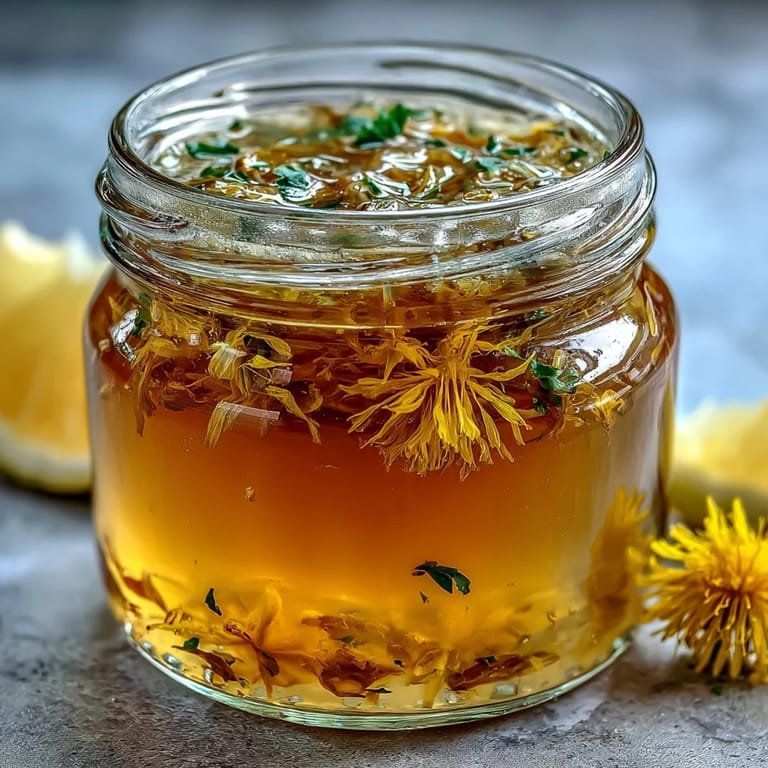
Save Last year, I took a jar to a friend's brunch and it sparked an impromptu conversation about childhood scavenging and forgotten flavors—more than a spread, it became a talking point that lingered with smiles long after breakfast ended. Sometimes, turning wild flowers into jelly feels like bottling a bit of wonder to share.
How To Forage For Dandelions Safely
Wear gloves if you're picking lots at once and avoid lawns treated with chemicals—dandelions from clean, wild patches have a fragrant sweetness that shines in the finished jelly. Early mornings are best; petals are freshest and bees haven’t had their fill yet.
Setting Troubleshooting
If your jelly is stubborn and refuses to set, it's often due to uneven pectin or undercooked sugar—reboil with a touch more pectin if needed. Sometimes patience is all it takes; give the jars a full day to firm up before considering them a lost cause.
Ideas For Serving Dandelion Jelly
Spread dandelion jelly on warm toast or swirl into plain yogurt—its sunshine hue brightens even cloudy days. A drizzle works magic on pancakes, and a spoonful transforms vanilla ice cream into a springtime treat.
- If making for guests, pair it with goat cheese for a savory-sweet surprise.
- Try whisking a spoonful into salad vinaigrette for a floral twist.
- Always label your jars—the flavor is so distinctive you’ll thank yourself later.
 Save
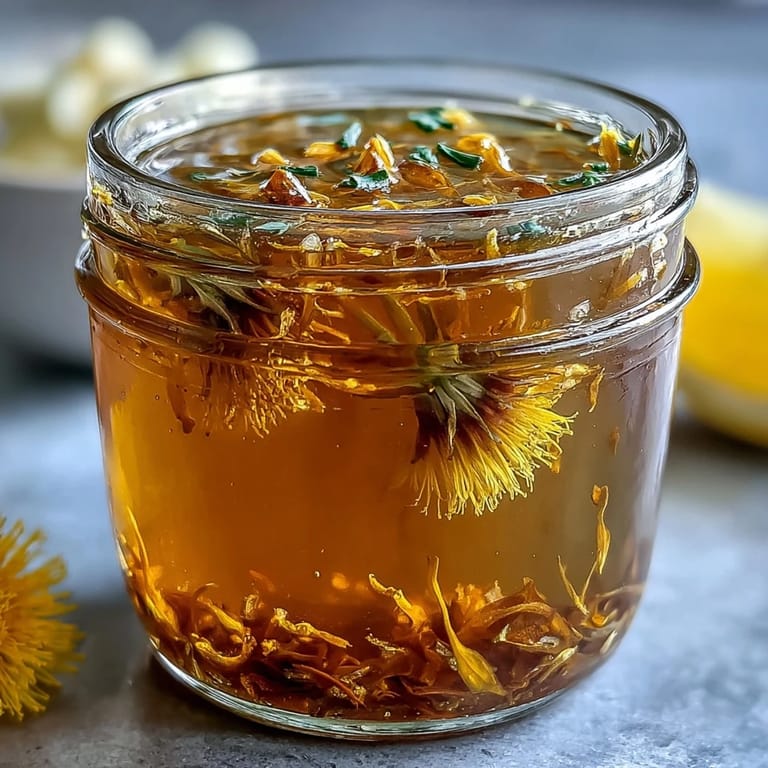
Save This jelly is a simple reminder that delight can come from unexpected places. May your next breakfast taste a bit more adventurous.
Recipe FAQs
- → Why remove dandelion greens before cooking?
Green sepals and stems impart bitterness, so only the yellow petals are used for a delicate floral flavor.
- → How do I know when the jelly is set?
After cooling, the jelly firms. Setting may take up to 24 hours, and the texture should be slightly wobbly.
- → Can honey be substituted for a vegan version?
Yes, agave syrup can replace honey for a plant-based spread while maintaining sweetness and texture.
- → What foods pair well with dandelion jelly?
It’s delicious on scones, pancakes, yogurt, or as a glaze on cakes or pastries for a subtle floral touch.
- → Is dandelion jelly safe for all diets?
Suitable for vegetarians, but avoid serving to infants under 1 year due to honey. Always check for pollen allergies.
- → What tools are required for making this jelly?
A saucepan, fine sieve or cheesecloth, sterilized glass jars, ladle, tongs, and a large canning pot are needed.