 Save
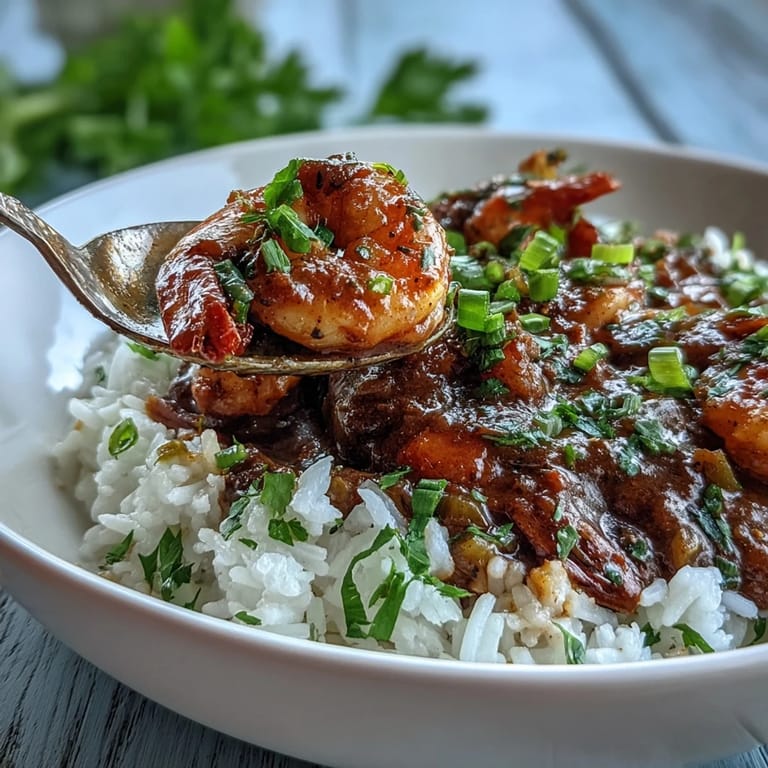
Save The first spoonful of étouffée I ever tasted was in a dim corner bistro in the French Quarter, where the air smelled like butter and cayenne and the wooden tables had grooves worn smooth by decades of elbows. I watched the chef stir a pot the size of a washing machine, his wooden spoon moving in slow, hypnotic circles. When I got home, I couldn't stop thinking about that dark, glossy sauce clinging to plump shrimp. So I cleared my Sunday afternoon, turned on some jazz, and gave myself permission to stand at the stove for as long as it took.
I made this for my book club on a rainy Thursday, and by the time I ladled it over rice, the windows were fogged and someone had opened a bottle of wine. We ate straight from the pot, passing bowls around the table, and nobody said much for the first few minutes except to hum or nod. One friend, who swore she didn't like spicy food, went back for thirds and asked for the recipe on a napkin.
Ingredients
- Vegetable oil and all purpose flour: These two humble ingredients become magic when you commit to stirring them into a deep, chocolatey roux, the soul of any good étouffée.
- Onion, green bell pepper, and celery: The holy trinity of Cajun cooking, they soften into sweetness and add texture that balances the silky sauce.
- Garlic: Four cloves might sound like a lot, but they melt into the background and add a warm, aromatic hum you'll miss if you skimp.
- Shrimp or crawfish: I prefer shrimp for ease, but crawfish brings that authentic Louisiana swagger if you can find it fresh or frozen.
- Seafood stock: This is what makes the sauce taste like the Gulf, but chicken stock works in a pinch and nobody will judge you.
- Worcestershire sauce: Just a tablespoon adds a mysterious, savory depth that people always ask about but can never quite name.
- Cajun seasoning and cayenne pepper: These bring the heat and the character, start conservatively and build to your comfort zone.
- Bay leaf: It whispers rather than shouts, but pull it out before serving or someone will bite into it and give you a look.
- Cooked white rice: The fluffy, neutral canvas that lets the étouffée be the star of the plate.
- Green onions and fresh parsley: A bright, grassy finish that cuts through the richness and makes the whole bowl feel alive.
Tired of Takeout? 🥡
Get 10 meals you can make faster than delivery arrives. Seriously.
One email. No spam. Unsubscribe anytime.
Instructions
- Start the roux:
- Heat the vegetable oil in a heavy pot over medium heat, then whisk in the flour slowly and steadily. You're building the foundation here, so don't rush.
- Cook the roux to chocolate:
- Stir constantly for 15 to 20 minutes until the roux turns the color of dark chocolate, it'll smell nutty and toasted. If you see black specks, you've gone too far and need to start over.
- Add the holy trinity:
- Toss in the onion, bell pepper, and celery, and let them cook for 5 to 7 minutes until they soften and start to release their sweetness. The roux will seize up at first, but keep stirring and it'll loosen.
- Bloom the garlic:
- Stir in the minced garlic and let it sizzle for about a minute until your kitchen smells like a Louisiana porch at dinnertime.
- Whisk in the stock:
- Add the seafood stock gradually, stirring constantly to prevent lumps. The roux will drink it up and transform into a glossy, amber sauce.
- Season and add the shrimp:
- Stir in the shrimp, Worcestershire, Cajun seasoning, cayenne, bay leaf, salt, and pepper. Everything should be swimming in that gorgeous, speckled gravy.
- Simmer and thicken:
- Bring it to a gentle simmer, then lower the heat and let it cook uncovered for 20 to 30 minutes, stirring now and then. The sauce will thicken and the shrimp will turn pink and tender.
- Adjust and serve:
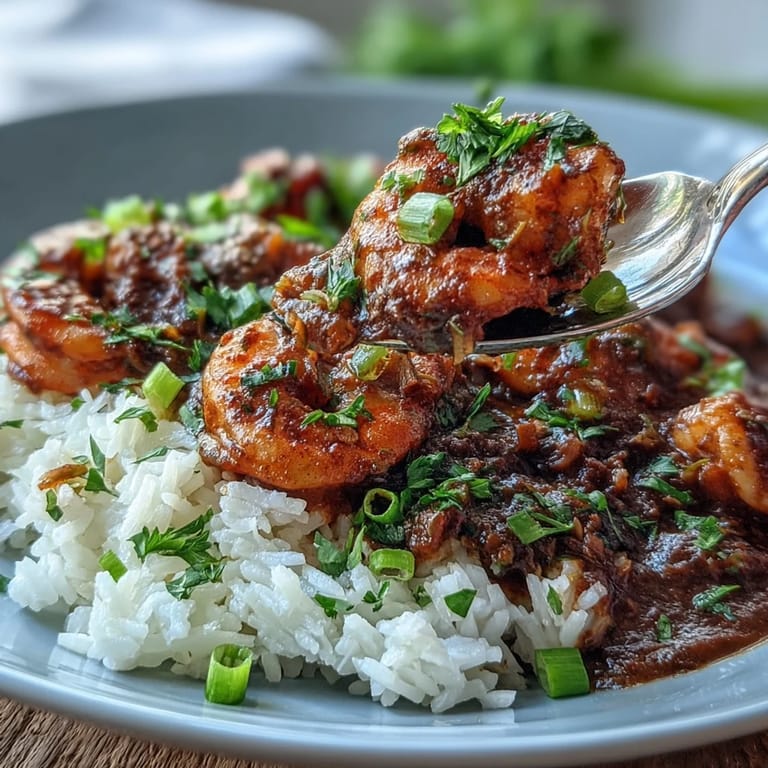
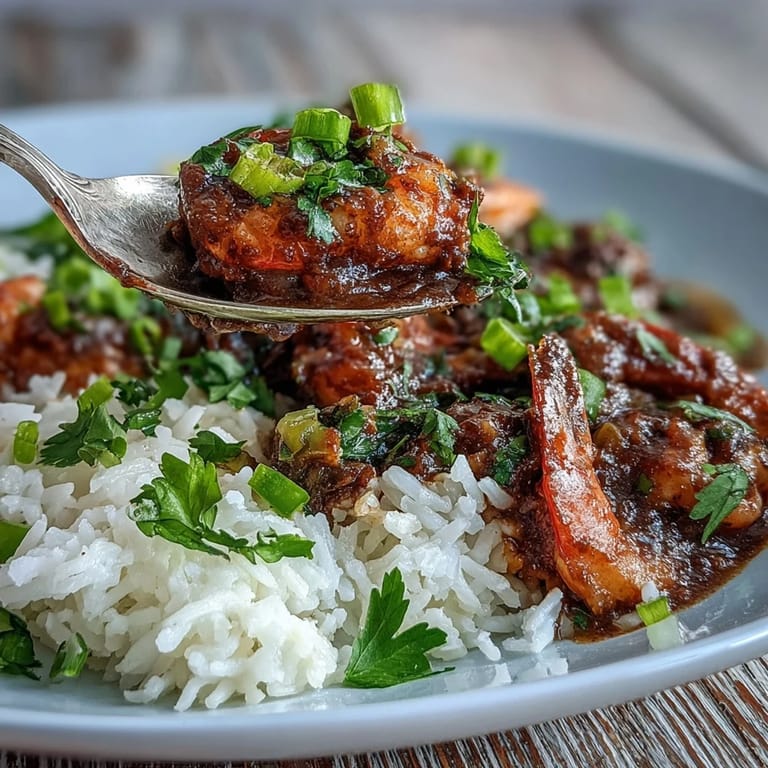
- Taste, tweak the salt or heat, and fish out the bay leaf. Spoon the étouffée over hot rice and shower it with green onions and parsley.
 Save
Save One winter evening, I served this to my dad, who grew up eating his grandmother's crawfish étouffée in Baton Rouge. He took a bite, closed his eyes, and said it tasted like sitting on her back porch in July. I'm not sure I've ever received a higher compliment.
Make It Your Own
If shrimp isn't your thing or you're cooking for someone with a shellfish allergy, swap in diced chicken thighs, sliced andouille sausage, or even chunky mushrooms. I've made a vegetarian version with oyster mushrooms and smoked paprika that had my friends scraping their bowls clean. The roux and the trinity do most of the heavy lifting, so you have more freedom than you think.
Storing and Reheating
Étouffée keeps beautifully in the fridge for up to three days, and I actually prefer it on day two when the spices have fully bloomed. Store it in an airtight container and reheat gently on the stovetop with a splash of stock or water to loosen it up. The rice is best made fresh, but if you must store it separately, a quick steam in the microwave brings it back to life.
Serving Suggestions
I like to serve étouffée with a crusty baguette for mopping up every last bit of sauce, and a simple green salad dressed with lemon and olive oil to cut the richness. If you're feeling festive, pour something cold and crisp, a lager or a chilled white wine, and let the meal stretch long into the evening.
- Add a dash of hot sauce at the table for those who like to live dangerously.
- Sprinkle a little lemon zest over the top just before serving for a bright, unexpected lift.
- Double the recipe and freeze half, it reheats like a dream and future you will be so grateful.
 Save
Save This dish taught me that good food is patient, it doesn't hurry or cut corners, and it rewards you for showing up and stirring. I hope it becomes one of those recipes you make on the nights when you want your home to feel like somewhere worth coming back to.
Recipe FAQs
- → What is the key to making a perfect roux for étouffée?
The secret is patience and constant stirring. Cook the oil and flour mixture over medium heat for 15-20 minutes until it reaches a deep chocolate brown color. Never leave it unattended as it can burn quickly and ruin the entire dish.
- → Can I substitute crawfish for shrimp in this dish?
Absolutely! Crawfish is actually the traditional protein used in Louisiana étouffée. Use the same amount and follow the same cooking instructions. Crawfish tail meat works beautifully and provides an authentic Cajun experience.
- → How can I adjust the spice level to my preference?
Start with less cayenne pepper and Cajun seasoning than called for, then taste and add more gradually. For a milder version, omit the cayenne entirely. For extra heat, add more cayenne or include diced jalapeños with the vegetables.
- → What makes étouffée different from gumbo?
Étouffée is thicker and more concentrated than gumbo, with a higher ratio of roux to liquid. It's typically served over rice rather than with rice on the side, and focuses on one main protein rather than the multiple proteins often found in gumbo.
- → Can I make this dish ahead of time?
Yes! Étouffée actually tastes better the next day as the flavors meld together. Store it in an airtight container in the refrigerator for up to 3 days. Reheat gently on the stovetop, adding a splash of stock if needed to thin the sauce.
- → What type of rice works best for serving with étouffée?
Long-grain white rice is traditional and ideal because it stays fluffy and separate, providing the perfect base for the rich sauce. Cook it simply with just water and salt to let the étouffée shine as the star of the dish.