 Save
Save The first time I made a Chipotle bowl at home, I was standing in my kitchen on a random Tuesday evening, craving that exact combination of flavors I'd been chasing from the restaurant counter. I'd ordered them so many times that I could practically recite the assembly line, but something clicked when I realized I could build this masterpiece myself—and make it even better. That night, my pork shoulder turned into tender, juicy carnitas that filled the house with the most incredible aroma, and I knew I'd never order one quite the same way again.
I remember making these for a group of friends on a Saturday afternoon, and watching them taste that first spoonful of carnitas mixed with cilantro lime rice and fresh guacamole was pure joy. Someone actually said, "Wait, you made this?" with genuine shock, and I couldn't help but grin—there's something deeply satisfying about recreating restaurant-quality food in your own kitchen and having it taste even better.
Ingredients
- Pork shoulder: Two pounds of this cut becomes impossibly tender when braised low and slow, creating that signature carnitas texture that's crispy on the edges and melt-in-your-mouth soft inside.
- Orange and lime juice: The citrus brightness is what makes carnitas taste alive—it cuts through the richness and adds that authentic Chipotle depth you're chasing.
- Cilantro, jalapeño, and fresh lime: These three ingredients show up in multiple components because they're the backbone of the whole bowl's flavor profile and keep everything tasting fresh and vibrant.
- Monterey Jack and cheddar cheeses: The combination gives you a queso that's creamy and flavorful without being one-note—Monterey Jack brings the stretch, cheddar brings the punch.
- Avocados for guacamole: Pick them the day before if possible, then make your guac right before serving so it stays that perfect green instead of turning brown.
- Sour cream and salsa: These are your cooling agents and flavor anchors, balancing the heat and richness with brightness and tang.
Tired of Takeout? 🥡
Get 10 meals you can make faster than delivery arrives. Seriously.
One email. No spam. Unsubscribe anytime.
Instructions
- Season and sear your pork:
- Pat the pork chunks dry and coat them generously with salt, pepper, cumin, oregano, and paprika—don't be shy here because this is your flavor foundation. Heat olive oil in a Dutch oven until it's shimmering, then brown the meat on all sides until you get a golden crust, which takes about 10 minutes and smells absolutely incredible.
- Braise low and slow:
- Scatter the garlic and onion into the pot, pour in the orange juice, lime juice, and chicken broth, then cover and let it cook on low heat for 2 hours until the pork falls apart at the touch of a fork. The house will smell like a restaurant kitchen, and you'll know it's done when the meat is so tender it's practically surrendering.
- Shred and finish:
- Pull out the pork, shred it with two forks right on a cutting board, then return it to the pot and simmer uncovered for about 10 minutes so it soaks up all that liquid and gets slightly caramelized on the edges. This step is where the magic happens—the meat goes from tender to deeply flavorful.
- Toast your rice correctly:
- Rinse the rice until the water runs clear, which prevents it from getting gummy, then toast it in a saucepan with olive oil and salt for about 2 minutes so each grain stays separate and gets a subtle nutty flavor. Add water and bring to a boil, then cover, reduce heat to low, and let it steam for exactly 18 minutes without peeking.
- Brighten everything with cilantro and lime:
- After the rice rests for 5 minutes, fluff it gently with a fork and fold in fresh cilantro and fresh lime juice while it's still warm so the flavors really penetrate every grain. This is where the rice transforms from side dish to something you could eat on its own.
- Warm your beans with intention:
- Heat the drained black beans in a small saucepan with cumin, garlic powder, salt, and pepper—keep them on low heat so they stay creamy rather than drying out. They're simple but they need this gentle treatment to taste like they belong in this bowl.
- Build silky queso from scratch:
- Melt butter, whisk in cornstarch to create a roux, then slowly add milk while whisking constantly to avoid lumps, cooking until you have a smooth sauce that coats a spoon. Add the shredded cheeses and minced jalapeño, then stir until everything is melted and creamy—this takes patience but results in queso that tastes like the real thing.
- Assemble with intention:
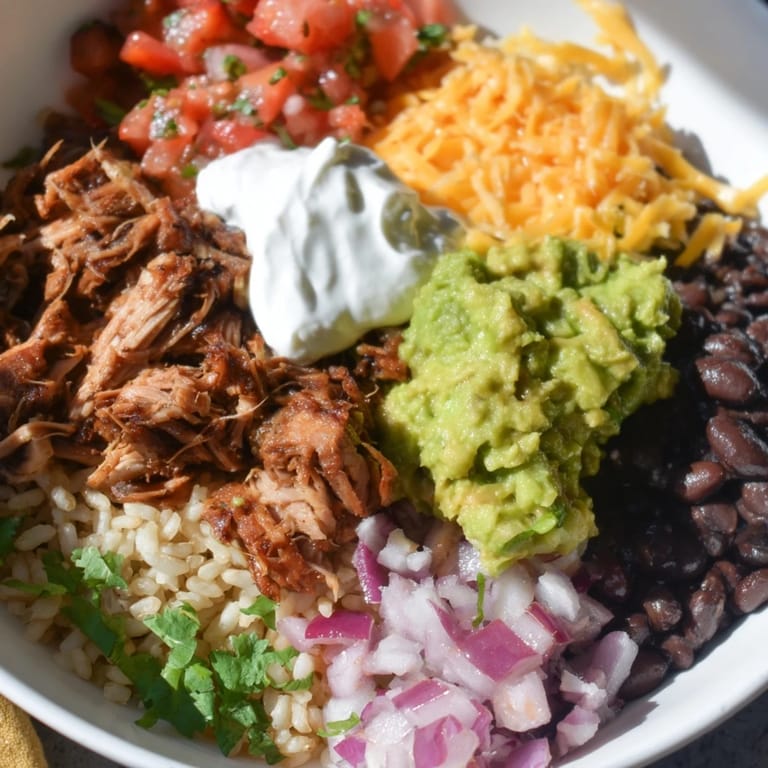
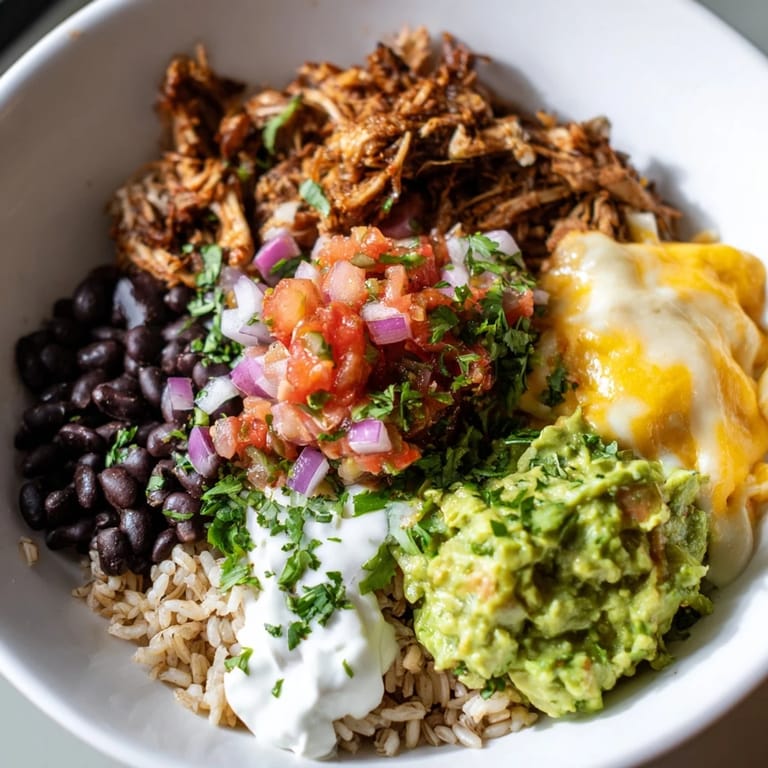
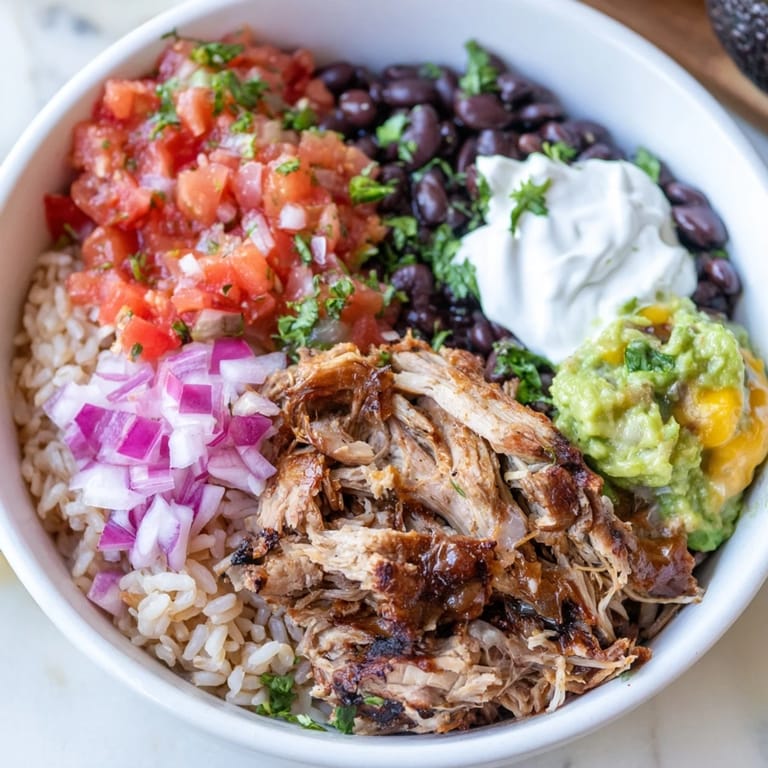
- Layer cilantro lime rice as your base, then add beans, carnitas, a generous drizzle of queso, fresh salsa, a dollop of sour cream, and a heap of guacamole—the order matters because it helps flavors mingle while you eat. Serve immediately so everything is still warm and the guacamole hasn't oxidized.
 Save
Save There was a moment when my dad tasted one of these bowls and said it reminded him of a trip we took years ago, and suddenly it wasn't just about replicating restaurant food anymore—it became a way to recreate a feeling, a memory, a conversation. Now when I make these, I'm not just following a recipe; I'm building an experience that tastes like home.
The Secret to Restaurant-Quality Carnitas
What separates homemade carnitas from the mediocre versions is patience and the citrus-broth combination that keeps the meat moist while it braises. The orange juice brings a subtle sweetness that rounds out the spices, while the lime adds brightness that prevents the dish from tasting heavy or one-dimensional. I learned this by making carnitas three different ways and realizing the magic wasn't in some secret spice blend—it was in the respect you show the cooking process by not rushing it.
Making Queso That Doesn't Disappoint
Homemade queso has a reputation for breaking or becoming grainy, but that's usually because people skip the roux step or add cheese too aggressively. The cornstarch creates a stable emulsion that keeps everything silky, and slowly incorporating milk prevents lumps from forming—it's the same technique restaurants use, and it's surprisingly simple once you understand what's happening chemically. Add the cheese off heat if you're nervous, then return it to low heat and stir gently until melted, which gives you more control over the final texture.
Building Your Bowl Like an Artist
The layering order matters more than most people realize because it affects how flavors mingle as you eat and ensures the warm components don't wilt the cold toppings prematurely. Rice goes down first as an insulating layer, beans next for substance, then the hot carnitas and queso while the bowl can still distribute their heat, followed by cool toppings that stay bright and fresh. Every bowl should taste like a conversation between all these components, not like you just dumped everything together.
- Prep all your components before you start assembling so you're not scrambling to finish a bowl while another gets cold.
- If you're feeding a crowd, set up a toppings bar so people can build their own bowls and adjust spice levels and portions to their preference.
- Leftover carnitas freeze beautifully for up to three months, so you can make a double batch and have bowl ingredients ready whenever the craving strikes.
 Save
Save This bowl became my answer to cravings that used to send me to a restaurant counter, and the confidence that comes from knowing I can make it better at home has extended to other dishes in my kitchen. There's real power in tasting something you love and deciding to master it yourself.
Recipe FAQs
- → How do I achieve tender carnitas?
Slow cooking pork shoulder in a broth with citrus juices and spices for 2 hours ensures tender, flavorful carnitas that shred easily.
- → What’s the best way to cook cilantro lime rice?
Rinse the rice before cooking to remove excess starch, then simmer with olive oil and salt. Stir in fresh cilantro and lime juice after cooking.
- → Can I substitute black beans with another bean?
Yes, pinto beans work well as an alternative and complement the flavors of the bowl similarly.
- → How can I make the queso smooth and creamy?
Use a combination of Monterey Jack and cheddar cheese, slowly whisking melted butter, cornstarch, and milk to create a silky sauce.
- → What adds freshness to the salsa and guacamole?
Fresh tomatoes, jalapeño, cilantro, lime juice, and red onion brighten both, providing vibrant, zesty contrast to richer bowl elements.
- → Any tips for assembling the bowl for best flavor?
Layer ingredients starting with the cilantro lime rice, followed by beans, carnitas, queso, salsa, sour cream, and guacamole, allowing each flavor to shine.