 Save
Save One weeknight, I stood in my kitchen staring at a nearly empty pantry—just cans of chickpeas and coconut milk left from the week before—and decided to make something warm and real. What started as improvisation became this golden, silky curry that filled the apartment with the kind of smell that makes you pause mid-breath. Now whenever I open a can of chickpeas, my hands move through the familiar motions without thinking, and I'm transported back to that moment of happy necessity.
I made this for my partner on a rainy Tuesday when they'd had a rough day at work, and watching their face soften as they took the first spoonful felt like a small miracle. They went back for seconds without saying a word, just closed their eyes and breathed in the steam rising from the bowl—that's when I knew this recipe was a keeper.
Ingredients
- Yellow onion: The foundation—it becomes nearly translucent and sweet, creating the flavor base that makes everything taste intentional.
- Garlic and ginger: These two together are your flavor shortcut; don't skip mincing the ginger fresh, as it adds a brightness that ground ginger simply can't match.
- Red bell pepper: It adds sweetness and color, but more importantly, it softens into the curry and becomes almost buttery.
- Baby spinach or kale: Stir it in at the very end so it stays vibrant and doesn't disappear into murky green; the texture contrast matters.
- Chickpeas: Drain and rinse them well—the cloudy liquid that clings to them can make your curry taste canned and metallic.
- Coconut milk: Full-fat is richer and more forgiving, but light milk works if that's what you have; the curry will be slightly less luxurious but equally delicious.
- Vegetable broth: A good-quality broth elevates the whole dish; bouillon cubes work in a pinch but taste thin.
- Curry powder, cumin, and turmeric: These three are the trio that makes this taste like curry; toasting them briefly in the hot pot unlocks their oils and depth.
- Smoked paprika: A small touch that adds warmth without heat, and a subtle taste of something slightly smoky.
- Coconut oil: It has a higher smoke point and adds a subtle coconut fragrance that ties the whole dish together.
Tired of Takeout? 🥡
Get 10 meals you can make faster than delivery arrives. Seriously.
One email. No spam. Unsubscribe anytime.
Instructions
- Heat and aromatics:
- Warm your oil over medium heat and add the diced onion, letting it soften for a few minutes until it becomes golden at the edges. You're not rushing this—you're coaxing out the natural sweetness that will season the entire curry.
- Wake up the flavors:
- Add the garlic, ginger, and bell pepper, stirring almost constantly for two minutes. Your kitchen should smell alive at this point, like something important is happening.
- Toast the spices:
- This is the magic step that most people skip—pour in all your dry spices and stir for exactly one minute. You'll hear the crackling sound and smell the shift in aroma; this is what separates a curry from a spiced soup.
- Build the liquid base:
- Pour in the tomatoes, coconut milk, broth, and chickpeas, stirring everything together so there are no dry pockets of spice. This is where it transforms from individual ingredients into something cohesive.
- Gentle simmer:
- Bring it just to a gentle boil, then drop the heat to low, cover, and let time do the work. After 15 minutes, the spices will have infused fully and the flavors will taste less sharp and more merged together.
- Finish with green:
- Uncover, stir in the spinach, and let it wilt for just 2-3 minutes—you're looking for that moment when it's tender but still bright green, not gray. If your curry is too thin at this point, leave it uncovered; if it's already thick and clinging to the spoon, you're done.
- Taste and adjust:
- Before serving, take a spoonful and really taste it. More salt? A squeeze of lime? The freedom to adjust is yours—trust your palate.
 Save
Save There's something deeply satisfying about a curry that asks nothing of you except attention and patience, and then rewards you with a bowl of food that tastes like it took hours. This one does exactly that—simple enough to make on a Tuesday, good enough to serve to people you want to impress.
Why This Curry Works
One-pot meals have a reputation for being boring, but this curry proves otherwise. The magic happens because you're building flavor in stages—blooming the spices, softening the vegetables, letting the coconut milk marry with the tomato and broth. Each layer has its moment, and by the time everything comes together, the flavors have moved beyond individual notes into something unified and warm. It's the difference between throwing ingredients in a pot and actually cooking.
How to Serve and Store
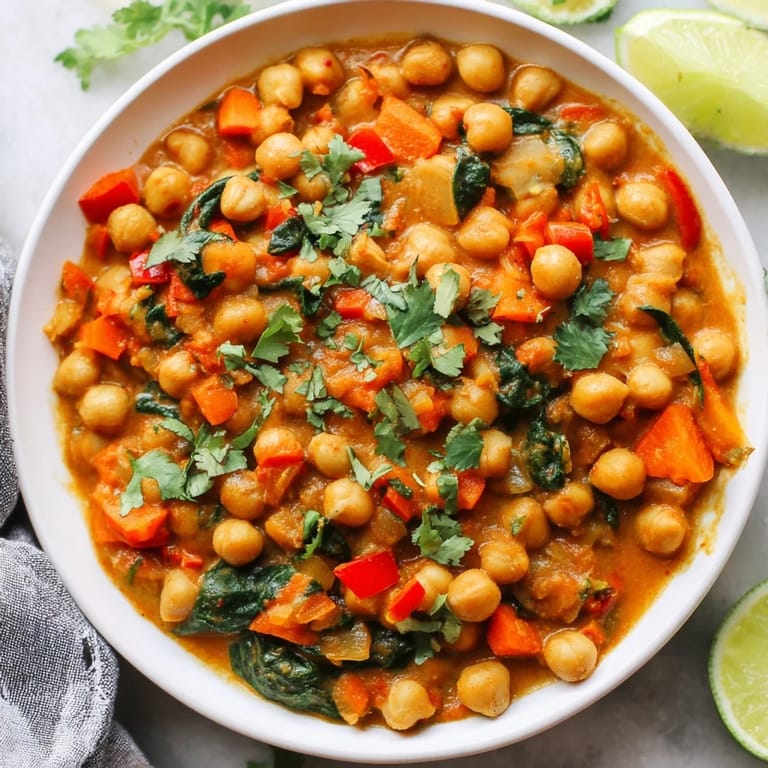
Serve this hot, topped with fresh cilantro and a squeeze of lime—the brightness cuts through the richness and reminds your palate why this tastes alive. Rice is traditional and practical, but honestly, I've eaten it straight from the bowl with a spoon, and it's equally good. Naan is excellent too if you want something to soak up the sauce.
Make It Your Own
This curry is forgiving and flexible, which is why I keep coming back to it. Add cubed tofu or tempeh if you want more protein, or swap in whatever vegetables you have on hand—zucchini, green beans, or even diced sweet potato all work beautifully. The base stays the same, but the curry becomes yours. You can dial the heat up or down by adding or removing the chili flakes, and you can make it creamier by using full-fat coconut milk or lighter by using the lite version. The spices are the constant—everything else is your choice.
- Try a splash of fish sauce if you eat it—one teaspoon adds an umami depth that makes people ask what your secret ingredient is.
- Fresh curry leaves or a stir of coconut yogurt at the end are small additions that feel surprisingly luxurious.
- Make a double batch and freeze half for a night when cooking feels like too much.
 Save
Save This curry has become my go-to on nights when I want something that tastes like care but asks for almost nothing in return. It's proof that simple ingredients, when treated with intention, become something worth remembering.
Recipe FAQs
- → Can I use fresh chickpeas instead of canned?
Yes, soaked and cooked fresh chickpeas work well but require longer cooking time. Adjust liquid accordingly.
- → What can I substitute for coconut milk?
Full-fat coconut milk adds creaminess, but you can use cashew cream or almond milk for a lighter option.
- → How can I increase the protein content?
Add cubed tofu, tempeh, or additional legumes to boost protein while keeping the dish plant-based.
- → Can this dish be made spicier?
Yes, increase chili flakes or add fresh chilies according to your preferred heat level.
- → What greens work best in this dish?
Baby spinach is ideal for wilting quickly, but kale or Swiss chard are great alternatives for heartier texture.
- → Is this dish suitable for gluten-free diets?
Yes, it contains naturally gluten-free ingredients, but verify broth and packaged items to avoid hidden gluten.