 Save
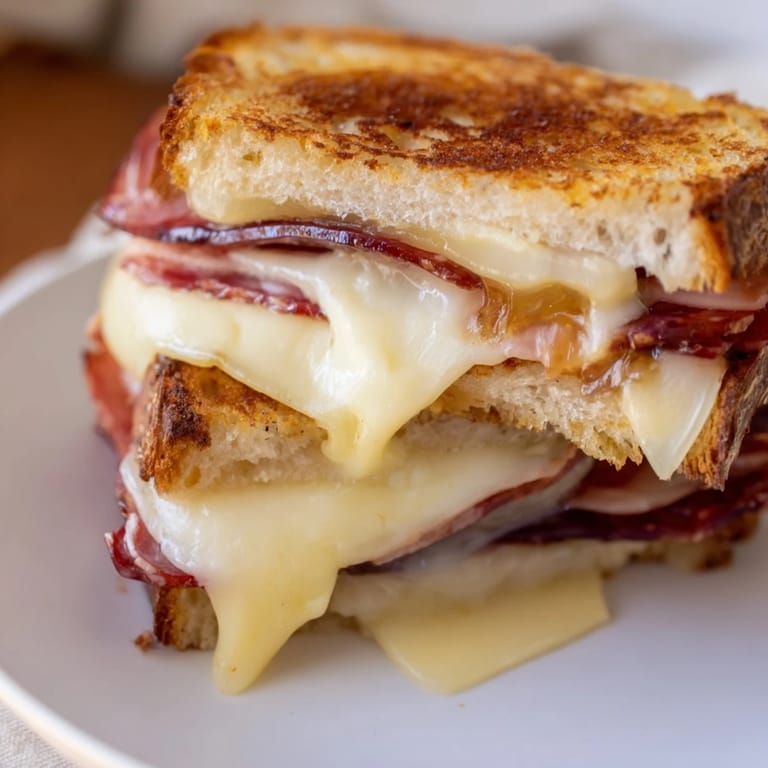
Save There's something about pressing a sandwich in a hot skillet that feels like a small act of indulgence, especially when you've stacked it with three kinds of cheese and cured meats that cost more than you'd normally spend on lunch. I stumbled into making this version during a lazy Saturday afternoon when I had some beautiful prosciutto and a wedge of brie left over from a dinner party, and instead of making something ordinary, I decided to lean into it. The fig jam was almost an afterthought—a jar sitting in the back of my fridge that needed rescuing—but the moment that sweet-salty combination hit my tongue, I understood why this sandwich deserved to be more than a quick meal.
I made these for my partner on a random Wednesday evening, and watching their face light up when they bit into that first golden corner was worth the minor mess of melted cheese on the cutting board. They kept asking what made it taste so different from my usual grilled cheese attempts, and I realized it wasn't any single ingredient—it was the combination of thoughtfulness and slight abandon in layering things I actually wanted to eat instead of just what was convenient.
Ingredients
- Rustic sourdough or country bread: Use slices thick enough to hold all these riches without falling apart, and honestly, day-old bread holds up better than fresh because it's less spongy.
- Unsalted butter, softened: This is your golden-brown insurance—softened butter spreads evenly and creates that crispy exterior that makes people actually listen when you're talking.
- Fig jam: The sweet-savory bridge that makes people wonder what's different about your grilled cheese; use quality jam if you can because cheap jam just sits there.
- Gruyère cheese: The backbone of this sandwich with its nutty depth and reliable melting behavior, the workhorse that makes everything else shine.
- Aged cheddar: Adds sharpness and complexity, preventing the whole thing from feeling too creamy and one-note.
- Creamy brie: The luxury component that makes people feel like they're eating something special, and it melts with almost no resistance.
- Prosciutto, salami, and coppa: A trio that brings different textures and flavors—the prosciutto's delicate saltiness, salami's spice, and coppa's richness—so you're not just eating one meat taste repeated.
Tired of Takeout? 🥡
Get 10 meals you can make faster than delivery arrives. Seriously.
One email. No spam. Unsubscribe anytime.
Instructions
- Butter and prep:
- Spread softened butter on one side of each bread slice, then lay them buttered-side down on your surface—this matters because you'll be building on the unbuttered side and you want to know exactly where your butter coverage is.
- Jam foundation:
- Spread fig jam on the unbuttered side of two bread slices with a light hand because fig jam is ambitious and doesn't need encouragement to spread everywhere.
- Layer the cheeses:
- Distribute Gruyère, cheddar, and brie over the jam, mixing and overlapping them so every bite gets a chance at all three flavors—this is where you create the flavor architecture that makes the whole thing work.
- Add the meats:
- Lay prosciutto, salami, and coppa over the cheese in a way that feels generous but not chaotic, thinking about how the layers will compress when you press the sandwich.
- Close and butter the outside:
- Top with the remaining bread slices, buttered-side out, and press gently so everything gets acquainted without squishing your careful layer work.
- Heat your pan:
- Get your skillet over medium heat until a small piece of butter sizzles immediately when it hits the surface—too low and you'll stew your sandwich, too high and the outside burns before the cheese melts.
- Cook to golden:
- Place the sandwiches in the hot pan and cook for three to five minutes, resisting the urge to move them around; you want golden crust, not a pale, fussy sandwich that never commits to anything.
- Flip and finish:
- Flip carefully with a spatula, cook the other side until it's equally golden and the cheese is visibly melted at the edges, then let it rest a minute before cutting because patience here prevents the whole thing from collapsing into a molten mess on your plate.
 Save
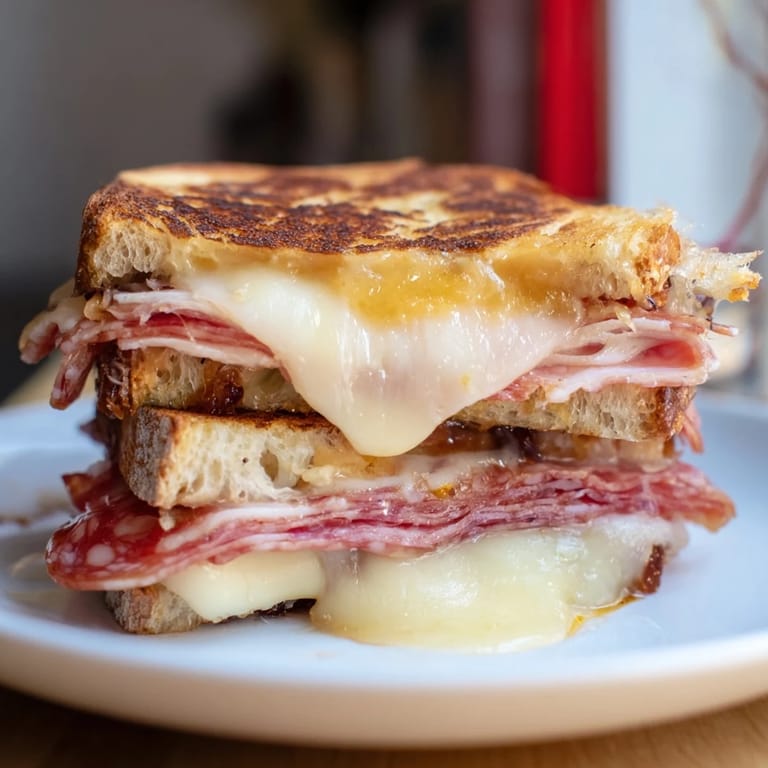
Save My moment of pride came when someone I was trying to impress actually closed their eyes while eating it, not in a performative way, but like they genuinely needed to experience it without distractions. That's when I knew this wasn't just a sandwich—it was proof that paying attention to ingredients and combinations matters, even when you're working with something as humble as a grilled cheese.
Why Cheese Matters More Than You Think
Three cheeses might seem excessive until you realize that each one contributes something different to the whole—Gruyère gives you structure and nuttiness, cheddar brings sharpness to cut through richness, and brie adds that almost-melting luxury that makes your mouth feel indulged. When these three melt together, they're not fighting for attention; they're creating a texture spectrum that would be completely different if you picked just one. I learned this the hard way after trying to simplify things with only brie and immediately missing the complexity that comes from thoughtful layering.
The Secret of the Jam
Fig jam feels fancy and unnecessary until it actually melts into that cheese layer, at which point it becomes this subtle sweetness that your brain recognizes as sophisticated without being able to identify it. It's not a condiment overlay—it's an actual flavor player that bridges the salty, fatty richness of the meats and cheeses with something bright and almost fruit-forward. The jam also prevents the sandwich from being too heavy, which sounds silly about something already this indulgent, but the sweetness creates balance that makes you want to keep eating instead of feeling overwhelmed halfway through.
Building Your Perfect Version
This sandwich is a framework, not a rigid rule, and the most interesting versions come from understanding what each component does and then playing with it intentionally. You could swap the brie for taleggio if you want something funkier, or experiment with different jams—apricot would bring something more floral, while a red pepper spread would make it brighter and slightly spicy. The point is respecting the architecture while making it yours, not just throwing random things between bread and hoping it works.
- Caramelized onions add a savory sweetness that plays beautifully with the fig jam, though they add about five minutes to your prep time.
- A handful of peppery arugula adds freshness and textural contrast, but add it just before serving so it doesn't wilt into invisibility.
- If you're cooking for someone with preferences, build the sandwich knowing their cheese and meat preferences so they feel the thoughtfulness, not just the calories.
 Save
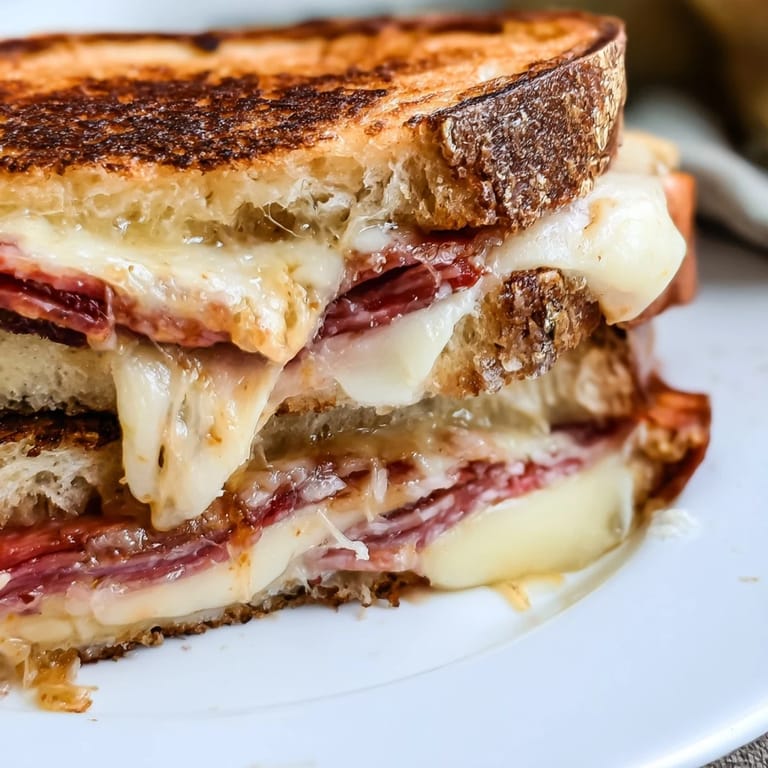
Save This sandwich taught me that 'simple' doesn't mean 'thoughtless,' and that sometimes the most memorable meals come from paying attention to quality ingredients and treating them with respect. Make this when you have time to notice what you're eating instead of just refueling.
Recipe FAQs
- → What type of bread works best?
Rustic sourdough or country bread provides the ideal crust and texture to complement rich fillings.
- → Can I substitute the cured meats?
Yes, prosciutto, salami, or coppa can be replaced with soppressata or other favorite cured meats.
- → How can I avoid soggy bread?
Press the sandwich firmly in a skillet over medium heat, cooking until golden and the cheese is melted to ensure crispness.
- → Is fig jam essential?
The fig jam adds a delicate sweetness that balances savory layers, but other fruit preserves can be used as alternatives.
- → What cheeses blend well together?
Gruyère, aged cheddar, and creamy brie create a harmonious melty texture and rich taste.