 Save
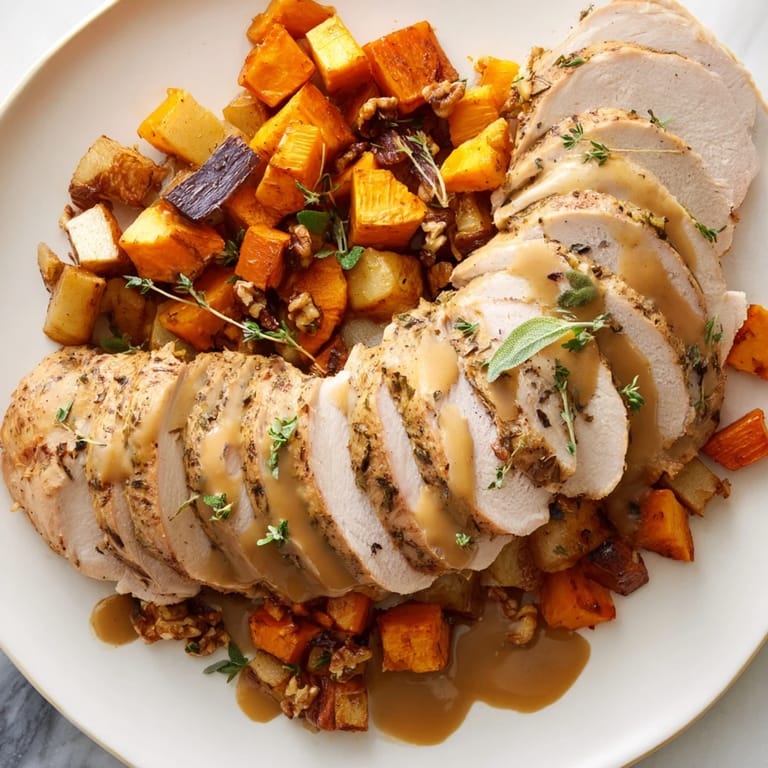
Save I'll never forget the year my grandmother first described her vision of Thanksgiving dinner arranged like a chain of linked bonds—each element connected, flowing across the table like a story being told. She wanted something that honored both the harvest and the journey of togetherness. That's when Chains of the Mayflower was born in our kitchen, a dish that transforms humble root vegetables and turkey into something that looks like it's holding hands across the platter.
I made this for a small Thanksgiving last year when only six of us could gather, and as I arranged those golden turkey slices between the caramelized vegetables in their chain pattern, I realized something: the dish was telling the story we couldn't express in words. It was about connection, about roots and nourishment, about taking something beautiful and making it even more intentional.
Ingredients
- Boneless turkey breast, skin on (1.5 kg): The skin keeps everything moist and gorgeous; don't be tempted to remove it. This size feeds six generously with maybe a slice or two left for tomorrow's sandwiches.
- Olive oil (4 tbsp total): Use good olive oil here—you taste it in the browning. I learned this the hard way when cheap oil made everything taste slightly off.
- Dried thyme and sage (1 tsp each): These are your quiet backbone. Fresh herbs would wilt in the oven's heat, so dried is actually better here, and it means you can prep everything an hour ahead.
- Carrots, parsnips, sweet potatoes, and celery root: This combination gives you sweetness, earthiness, and texture. The celery root is the secret player—underrated and absolutely worth seeking out at the farmers market.
- Smoked paprika and ground cumin (1 tsp and ½ tsp): These warm spices transform plain roasted vegetables into something that tastes intentional and special.
- Unsalted butter and cornstarch (for gravy): Cornstarch prevents lumps better than flour, and unsalted butter lets you control the final salt level perfectly.
- Chicken or turkey stock (500 ml): The quality of your stock matters more than you'd think. If you have homemade, use it. If not, look for low-sodium stock so you're not drowning everything in salt.
- Soy sauce or tamari: Just a tablespoon, but it adds depth and richness that makes people ask what your secret ingredient is.
- Fresh parsley and toasted pecans (for garnish): These finish the dish with color and a little textural surprise. Toast your pecans yourself if you can—five minutes in a dry pan changes everything.
Tired of Takeout? 🥡
Get 10 meals you can make faster than delivery arrives. Seriously.
One email. No spam. Unsubscribe anytime.
Instructions
- Ready your oven and seasonings:
- Get your oven to 200°C (400°F) and while it preheats, combine your thyme, sage, salt, and pepper on a small plate. Having everything mixed together means you won't forget an ingredient when you're working with the turkey.
- Season and set the turkey:
- Pat your turkey breast dry with paper towels—this is the move that makes skin crispy. Rub it generously with olive oil, then massage in your herb mixture, making sure to get some under where the skin lifts away from the meat. This is where the flavor lives.
- Roast the turkey low and patient:
- Place it skin-side up in your roasting pan and slide it into the oven. You're aiming for 1 hour 15 minutes, but start checking the internal temperature with a meat thermometer at the hour mark. When it hits 74°C (165°F) at the thickest part, you're done. The meat will continue cooking slightly while it rests, so don't overcook it.
- Prepare the vegetables while turkey cooks:
- Once the turkey is in the oven, cut all your root vegetables into roughly 1-inch pieces. Toss them with olive oil, smoked paprika, cumin, salt, and pepper. Spread them in a single layer on a baking sheet—don't crowd them, or they'll steam instead of roast. After about 20 minutes, give them a stir so they brown evenly.
- Create the silky gravy:
- When everything is nearly done, melt butter in a saucepan over medium heat. Whisk in cornstarch until it's completely smooth—no lumps hiding anywhere. Slowly pour in your stock while whisking constantly, like you're conducting a symphony. Keep going until there's not a hint of graininess. Add soy sauce, then let it bubble gently for 5-7 minutes until it coats the back of a spoon. Taste and adjust salt and pepper.
- Bring it all together with intention:
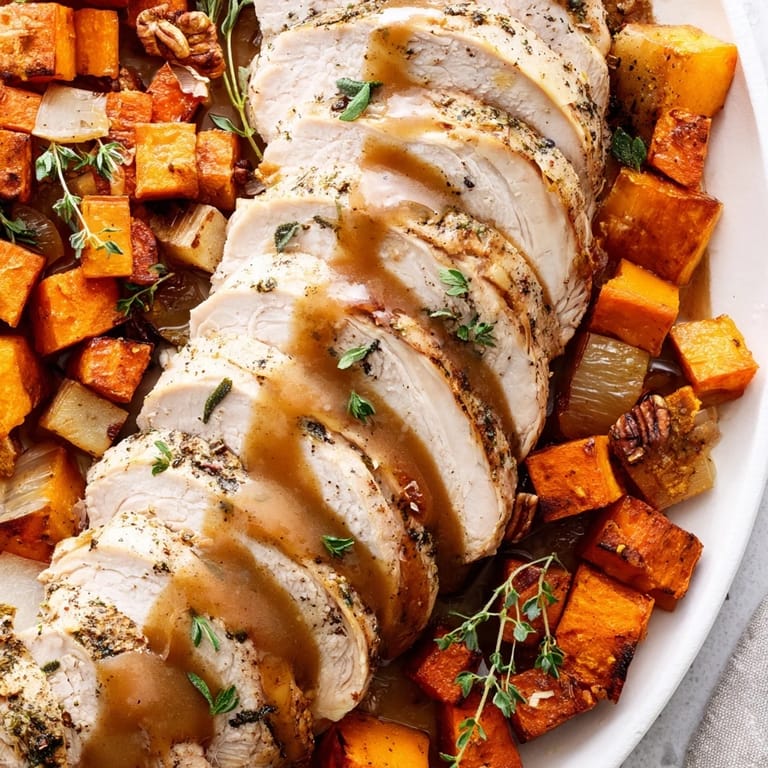
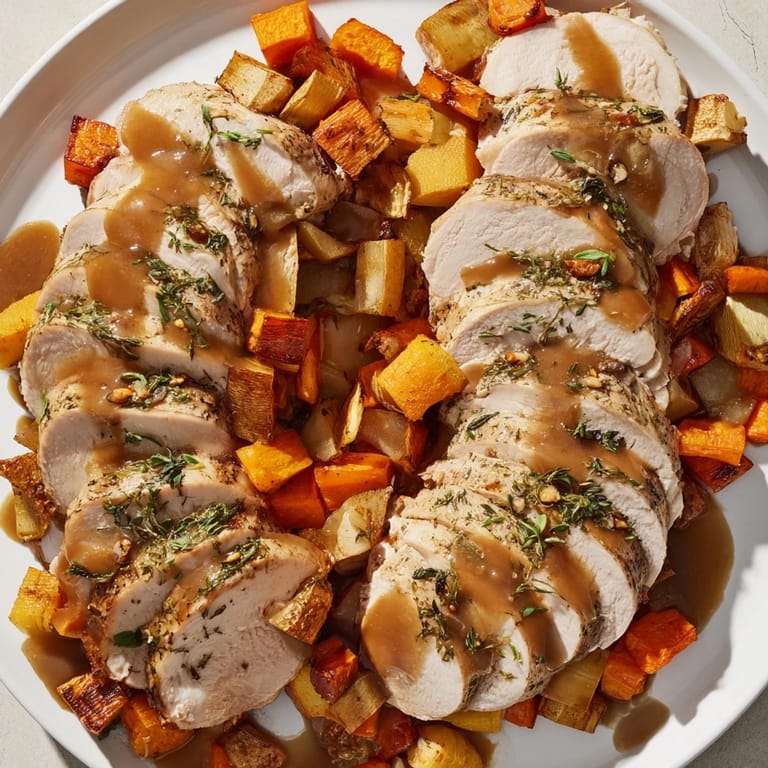
- Let the turkey rest for 15 minutes—this makes slicing easier and keeps the meat incredibly juicy. While you wait, arrange your roasted vegetables on a large platter in overlapping rows or rings, creating that chain-like pattern. Slice the turkey and tuck the slices between the vegetables, creating the linked effect. Drizzle everything with warm gravy, then scatter chopped fresh parsley and pecans across the top.
 Save
Save The moment my six guests went quiet looking at that platter, all those golden vegetables and turkey slices arranged like they were holding each other, I understood why my grandmother loved this dish so much. It wasn't about perfection—it was about showing people that you'd thought about them while you cooked.
The Story Behind the Chain
The chain arrangement isn't just pretty—it's purposeful. Each link represents connection: the vegetables to each other, the turkey to the vegetables, and all of it to the people sharing the meal. When you take a slice of turkey and it comes with a bit of carrot or sweet potato still touching it, that's the whole philosophy of the dish right there on your plate.
Root Vegetables as the Real Star
I used to think vegetables were supporting players, but roasted until their edges caramelize, seasoned with warmth and smoke, they absolutely shine. The celery root especially gets sweet and creamy inside while staying crispy outside. If you can't find celery root, parsnips alone will still be gorgeous, but I encourage you to hunt down the celery root at least once. It changes how you think about root vegetables forever.
Making This Meal Your Own
This recipe is generous enough to welcome your own touch. Some people roast Brussels sprouts or add beets for earthiness and color. Others serve it with cranberry sauce on the side for brightness and tang. The vegetarian version using portobello mushrooms instead of turkey works beautifully—treat the mushrooms exactly like you would the turkey, and they'll develop that same savory depth.
- If you have homemade stock, this is the moment to use it; the depth will shine through in every spoonful
- Make the gravy up to an hour ahead and keep it warm in a small saucepan; it actually tastes better when the flavors have time to settle
- Arrange everything on the platter no more than 15 minutes before serving so the vegetables stay warm and the turkey doesn't dry out sitting out
 Save
Save This dish is about more than feeding people—it's about making them feel thought of. Serve it with intention and watch what happens at the table.
Recipe FAQs
- → How do I ensure the turkey stays moist when roasting?
Rub the turkey breast with olive oil and herbs, roast at 200°C, and cover with foil to rest after cooking. This helps retain juices and tenderize the meat.
- → Can the root vegetables be prepared ahead of time?
You can peel and chop the vegetables earlier, but toss them with oil and spices just before roasting to maintain freshness and flavor.
- → What can I substitute for soy sauce in the gravy?
Use gluten-free tamari or a mild broth if avoiding soy; just adjust seasoning to keep the gravy savory and balanced.
- → How is the chain-like arrangement achieved when plating?
Arrange sliced turkey and roasted vegetables in overlapping rows or rings to symbolize connected links, creating a visually striking presentation.
- → Are pecans necessary for the garnish?
Pecans add crunch and a nutty flavor but can be omitted or substituted if needed, maintaining the dish's hearty character.
- → Is this dish suitable for gluten-free diets?
Yes, use gluten-free stock and tamari, and ensure all ingredients are verified gluten-free to accommodate dietary needs.