 Save
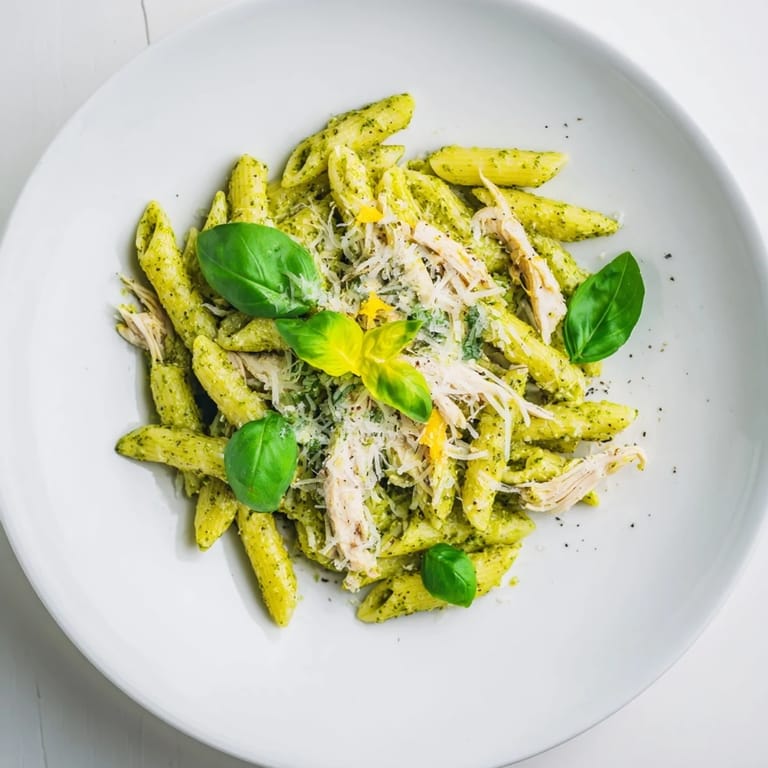
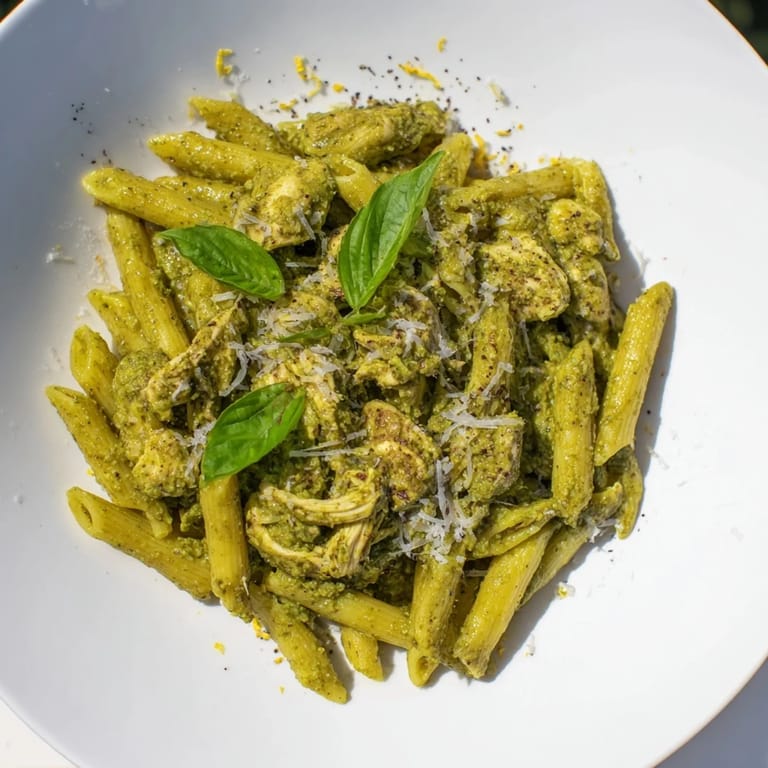
Save There's something almost magical about the evening I realized I didn't need to spend hours cooking to impress people. My neighbor had just dropped off a container of fresh pesto from her garden, and I had some leftover rotisserie chicken in the fridge. Twenty minutes later, everyone at my table was asking for seconds. That moment taught me that the best meals aren't always the most complicated—sometimes they're just the most thoughtful. This 10-minute pesto pasta became my secret weapon for those nights when time is tight but flavor can't be.
I made this for my sister during one of those busy weeks where she hadn't sat down for a proper meal in days. She took one bite, closed her eyes, and just smiled—the kind of smile that made me realize food isn't really about the ingredients or the clock. It's about showing someone you care enough to feed them well, even when you're short on time.
Ingredients
- Dried short pasta (penne, fusilli, or farfalle), 340 g (12 oz): Choose the shape you love—each one catches the pesto differently, creating little pockets of flavor.
- Salt for the pasta water: Don't skip this; it's your only chance to season the pasta itself.
- Rotisserie chicken, 2 cups shredded or chopped: This is where the magic happens—quality matters more than technique here.
- High-quality store-bought pesto, 120 g (1/2 cup): Taste it first; good pesto should taste bright and alive, not dull or overly oily.
- Extra-virgin olive oil, 2 tbsp: This adds silkiness and helps the pesto cling to every strand of pasta.
- Grated Parmesan cheese, 40 g (1/4 cup) plus more for serving: Freshly grated tastes incomparably better than pre-shredded, which contains anti-caking agents.
- Freshly ground black pepper: Grind it right before serving for maximum bite and aroma.
- Fresh basil leaves, 1/2 cup torn (optional): Add this if your pesto tastes heavy or if you want a burst of fresh herbal notes.
- Lemon zest from 1 lemon (optional): A whisper of brightness that lifts the entire dish.
Tired of Takeout? 🥡
Get 10 meals you can make faster than delivery arrives. Seriously.
One email. No spam. Unsubscribe anytime.
Instructions
- Boil the pasta:
- Fill a large pot with water, salt it generously until it tastes like the sea, and bring it to a rolling boil. Drop in your pasta and stir occasionally so it doesn't stick; you'll hear it bubble and smell that toasted grain scent when it's ready. Cook until al dente—tender but still with a slight bite—then set aside about half a cup of that starchy water before draining, because that liquid is pure gold for making the sauce cling.
- Prepare the chicken:
- While the pasta bubbles away, pull your rotisserie chicken apart into bite-sized pieces. Don't worry about making it perfectly uniform; rustic chunks feel more homemade anyway.
- Bring it together:
- Return the drained pasta to the warm pot over low heat, then add the olive oil, pesto, and a splash of that reserved pasta water. Stir constantly so the heat doesn't cook the pesto raw; you're just warming it through and letting it coat every strand. The starches in the water will help create a silky sauce that clings to the pasta.
- Add the chicken and cheese:
- Toss in your chicken pieces and the Parmesan, stirring gently until everything is heated through and the sauce feels creamy and cohesive. If it looks dry, add more pasta water a tablespoon at a time—you're looking for a light, glossy finish, not a heavy coating.
- Taste and adjust:
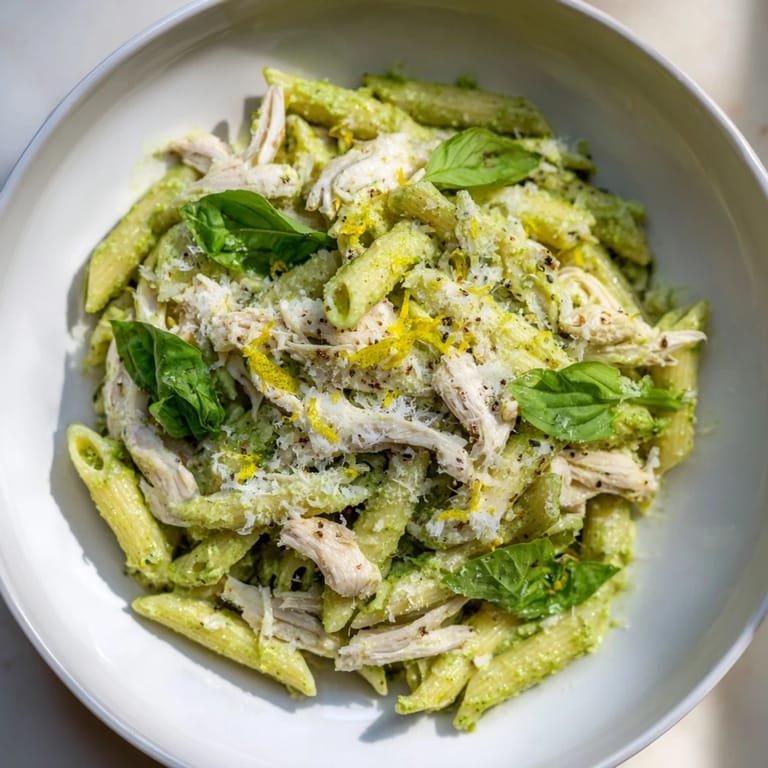
- Crack fresh pepper over the top, then taste it. This is when you decide if you want the brightness of fresh basil or lemon zest, or if the pesto is singing all on its own.
- Serve right away:
- Divide among bowls and shower each serving with extra Parmesan while everything is still steaming hot.
 Save
Save I learned the real power of this recipe when I made it for my daughter's friend who'd been vegetarian for years. Watching her face light up as she realized she could enjoy something so delicious without any meat, just by swapping in summer vegetables, taught me that the best recipes aren't rigid—they're invitations to make them your own.
Why Pesto Pasta Became My Weeknight Salvation
There was a season in my life when cooking felt like another item on an impossible to-do list. I'd open the fridge and feel defeated before I even started. This pasta changed that because it proved that delicious doesn't have to mean complicated. The act of tossing a few quality ingredients together in a warm pot became meditative rather than stressful, a way to feed people I love without sacrifice.
Building Flavor in Minutes, Not Hours
Good pesto already contains garlic, basil, pine nuts, olive oil, and Parmesan—essentially an entire flavor foundation. Rather than layering flavors over time like you would in a slow-cooked sauce, you're simply assembling them. The warm pasta softens and carries those flavors, while the pasta water acts as an invisible hand, tying everything into one cohesive dish. It's not magic; it's just understanding that sometimes the shortest path between ingredient and table is the most elegant one.
Playing with What You Have
One night I made this with sun-dried tomato pesto because that's what I had, and it became unexpectedly my favorite version. Another time, I stirred in some sautéed zucchini from the farmers market and it felt like a completely different meal. The genius of this recipe is that it's really just a framework—pesto, pasta, protein, heat, and time. Everything else is conversation between you and your pantry.
- Try swapping the pesto for sun-dried tomato paste or a creamy cashew sauce for entirely different moods.
- Roasted vegetables like cherry tomatoes, zucchini, or fresh spinach work beautifully if you're skipping or supplementing the chicken.
- A handful of toasted pine nuts stirred in at the end adds texture and reminds you why they're in pesto in the first place.
 Save
Save This recipe reminds me that some of the most meaningful meals aren't built on technical skill or hours of chopping—they're built on knowing what matters. Fresh ingredients, respect for their flavors, and the willingness to get dinner on the table in time to actually enjoy it.
Recipe FAQs
- → What pasta types work best for this dish?
Short pasta shapes like penne, fusilli, or farfalle hold the sauce well and complement the shredded chicken perfectly.
- → Can I use homemade pesto instead of store-bought?
Absolutely, homemade pesto adds fresh flavor and can be adjusted to taste, enhancing the dish’s vibrant character.
- → How can I make this dish vegetarian?
Skip the chicken and substitute with sautéed vegetables such as zucchini or cherry tomatoes for a delicious vegetarian variation.
- → Is it important to reserve pasta water?
Yes, reserved pasta water helps loosen the sauce and allows it to coat the pasta evenly, creating a creamy texture.
- → What are good garnishes to serve with this dish?
Extra grated Parmesan, fresh basil leaves, and a sprinkle of lemon zest add brightness and enhance the overall flavor profile.